By Harsh Vardhan Shringla
The New Delhi summit enhanced India’s global stature and its growing reputation as a bridge builder in a divisive world by channelising interests and aspirations of the Global South in the BRICS’ core agenda, says Harsh Vardhan Shringla.
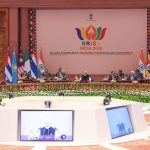
India’s chairship of BRICS gave institutional expression to the civilizational conviction of Vasudhaiva Kutumbakam — the world as one family — at a scale rarely attempted in contemporary multilateral diplomacy. Under India’s stewardship, eleven nations spanning the full diversity of the developing world converged, in the true BRICS spirit of consensus, sovereign equality and mutual respect, on a single declaration adopted without dissent. This outcome bears the imprint of India’s sustained diplomatic investment: years of principled, even-handed engagement that earned it the standing to be trusted simultaneously by partners of markedly different political systems, economic models, and strategic orientations.
The chairship discharged this mandate at a moment of genuine consequence for the international order. Geopolitical contestation, the fracturing of global supply chains, and a technological transition redrawing the distribution of national capability has converged with a developing world increasingly assured in its demand for voice and representation commensurate with its economic weight. India met this moment by championing reformed multilateralism as a practical programme rather than a distant aspiration, by advancing South-South cooperation through concrete instruments of development finance and technology- sharing, and by demonstrating that a rules-based, multipolar order can accommodate the legitimate claims of nations long positioned at its periphery.
What distinguishes this presidency, above all, is the manner in which India has converted diplomatic trust into institutional durability. India’s credibility as a first responder in regional crises, as the custodian of open digital public infrastructure shared on its own initiative, and as a net security provider in its neighbourhood has given its BRICS chairship a substantive foundation that few convening powers could claim.
In this respect, the New Delhi Declaration encapsulates India’s persistent, long-standing investment in earning the trust of the Global South — a trust that is now actively constructing a more balanced international architecture.
A Wider Platform
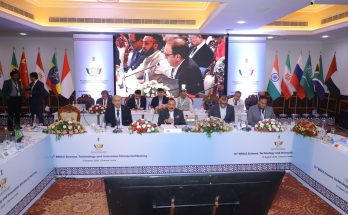
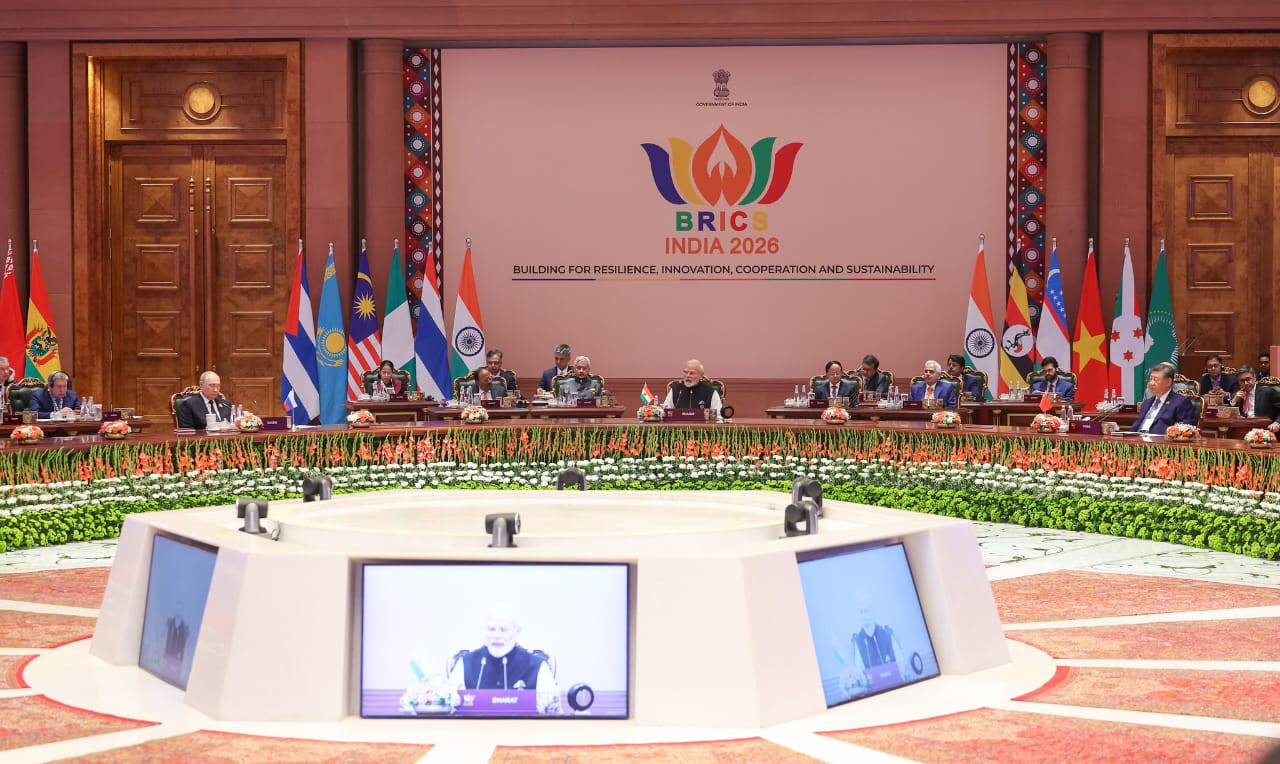
The theme for the 2026 summit was “Building for Resilience, Innovation, Cooperation and Sustainability.” This was not a New Delhi-centred diplomatic exercise, with more than 350 meetings and high-level engagements spread across the Indian geography, extending the summit beyond the leaders into agriculture, education, trade, finance, science and technology, development, and public health. This is reflective of what BRICS now stands for, as an ecosystem of institutions, businesses, universities, civil society organisations, and government agencies.
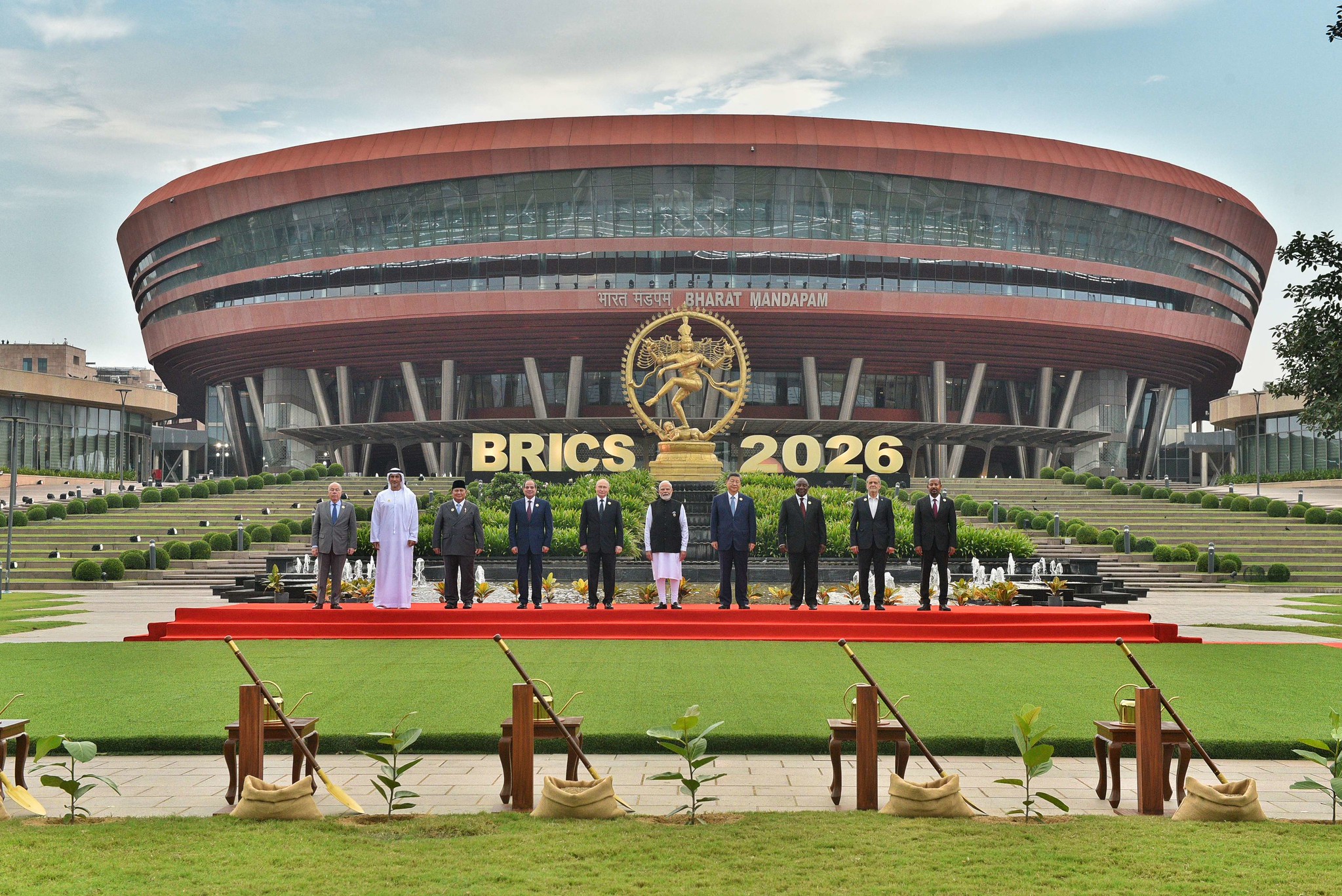
The expanded membership makes this even more consequential. BRICS now brings together countries from Asia, Africa, the Middle East, and Latin America, while its partner-country framework extends its reach further into the developing world.
The challenge of diversity – in political systems, foreign policy priorities, and economic models – remains, but this is also what keeps BRICS a platform for collaboration rather than a rigid bloc.
Key Outcomes
The 140-point New Delhi declaration can be best read at three levels.
Normatively, it reaffirmed the UN-Charter and multilateralism and called for reforms in the United Nations and international financial institutions to give developing countries a stronger voice. It also endorsed expanded roles for India and Brazil in the UN and the Security Council. With the assent of two permanent members, the declaration reinforces the case that the post-1945 order must evolve with the changing global realities. The declaration also strongly condemned the terror attack in Kashmir, India, in 2025.
Economically, members opposed unilateral tariffs, secondary sanctions, and carbon border measures inconsistent with WTO rules. No common currency was announced. Instead, the focus was on interoperability while using personal currencies.
Institutionally, the chairship brought tools for the developing world: a strengthened New Development Bank, larger resources that members can draw on for developmental needs, a bigger outlay for climate action, a proposed startup fund and incubator network, an MSME portal, a shared science repository, agricultural research platforms and an early-warning mechanism for disease outbreaks. The declaration also endorsed India-led initiatives on financial risk, AI, and big-cat conservation.
Enhancing India’s Global Stature
Four features of this declaration help explain what the chairship has added to India’s global standing.
The first is India’s ability to convene and connect. BRICS brought together a group of countries with vastly different landscapes and priorities. The value of India’s chairship partly lies in its ability to keep diverse interests within common conversation and transform that into practical cooperation tools. BRICS also saw India-wide engagement. The New Delhi Declaration’s emphasis on consensus, cooperation and a more representative multilateral order reflects India’s close bilateral relationships with each of these countries that helped in keeping this diverse group together.
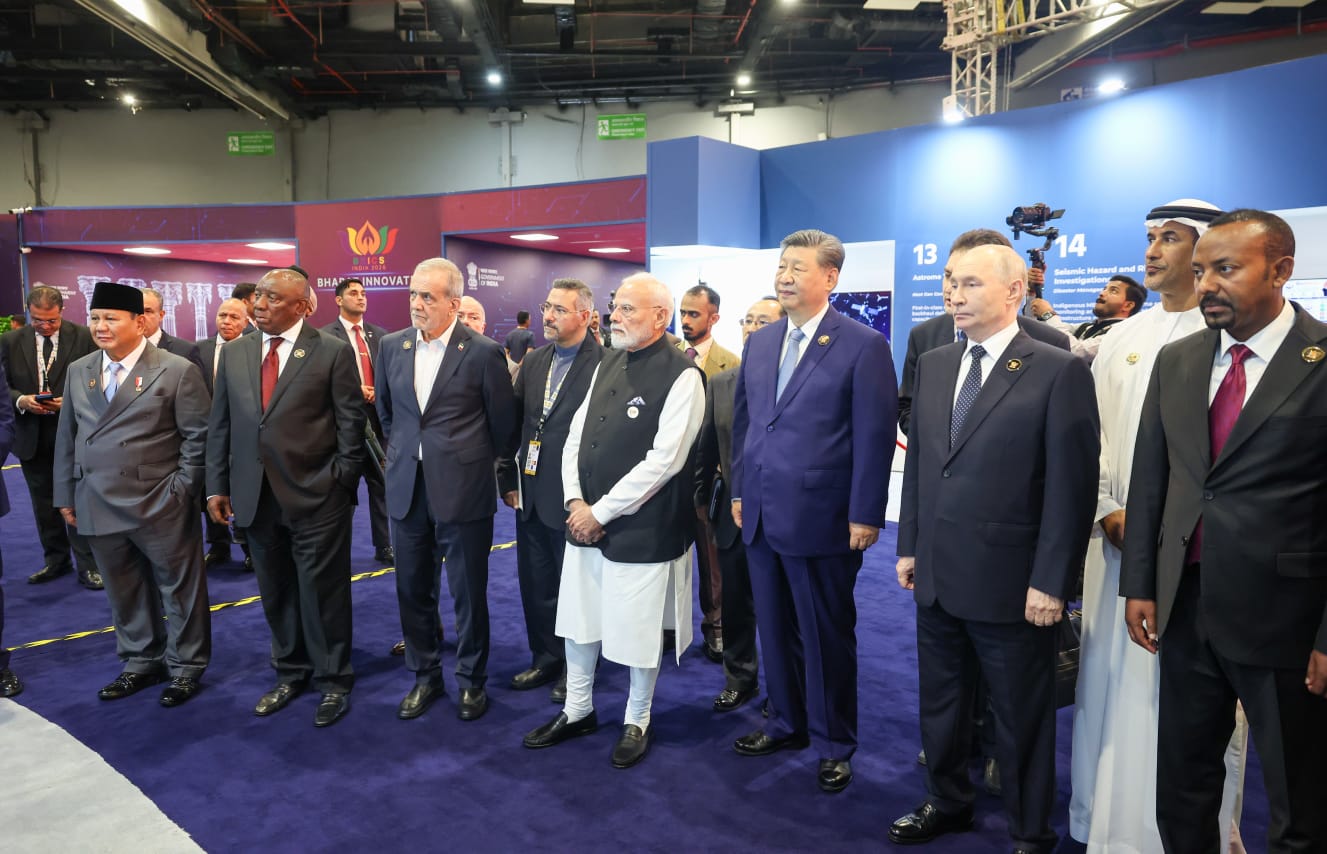
The second is India’s distinctive diplomatic position. Few major countries operate across as many overlapping, prominent platforms as India does. It works with the United States and other partners through the Quad, engages advanced economies through the G7 framework, and participates simultaneously across the G20, SCO and BRICS. Without aligning to a single ideological belief or bilateral partner, India has the ability to speak across political and economic lines. BRICS, in this sense, is an additional and not an alternative partnership to expand strategic engagement.
The third is process legitimacy. With hundreds of meetings engaging different sections of society across the country, the Indian chairship had an institutional depth that only a leaders’ summit might not have been able to provide. The only way a diplomatic initiative like this can be durable is when these working relationships and institutions can continue even after the chairship is passed on.
The fourth is India’s ability to weave its own development experience into the BRICS agenda. Digital public infrastructure, digital skills, cross-border payments, innovation ecosystems, and startup cooperation are areas in which India has progressed rapidly from a participant to a leader. Work on cross-border payment interoperability and the development of the BRICS Payments Task Force, while India’s chairship also advanced cooperation on digital public infrastructure, startups, and innovation. India’s experience has evidently become a reference point for collective growth, with national capabilities acquiring international influence.
The scale gives these four elements greater weight. The 11 BRICS members account for roughly 40 per cent of global GDP and around half of the world’s population; BRICS countries also account for more than a quarter of global trade. For initiatives in payments, finance, technology, trade and development, BRICS provides the right scale for extended collaborations as well.
India as a Bridge
Towards the Global South, India transmits demands for representation, finance and technology into institutions that have been slow to accommodate them. Historically, the world turned to the UN and the Bretton Woods Institutions for help with climate, public health management, and payments. What has changed is that BRICS now also provides some of these solutions from within the developing world.
India’s credibility is the perfect example. It led the vaccination drive after COVID-19. It now shares its digital public infrastructure experience on open-source terms. It acts as a first responder in crises and as a net security provider in its neighbourhood. This is India’s idea of the world as one family, and it distinguishes India from other major members, who contribute capital or commodities.
The New Delhi summit was not just built to deliver a singular decisive announcement. Its significance lies in showing that a heterogeneous network can be held together, and that an emerging power can empower this network with working institutions at a moment of strain on the international order.
Harsh Vardhan Shringla is Member of Parliament (Rajya Sabha) Former Foreign Secretary, India.

Author Profile

- India Writes Network (www.indiawrites.org) is an emerging think tank and a media-publishing company focused on international affairs & the India Story. Centre for Global India Insights is the research arm of India Writes Network. To subscribe to India and the World, write to editor@indiawrites.org. A venture of TGII Media Private Limited, a leading media, publishing and consultancy company, IWN has carved a niche for balanced and exhaustive reporting and analysis of international affairs. Eminent personalities, politicians, diplomats, authors, strategy gurus and news-makers have contributed to India Writes Network, as also “India and the World,” a magazine focused on global affairs.
Latest entries
 India and the WorldOctober 28, 2026India at BRICS: Building Bridges in a Fragmented World
- India and the WorldOctober 27, 2026India redefining BRICS’ Role in Promoting Tech and Innovation
- India and the WorldOctober 23, 2026BRICS: Building a Vibrant Community of People
- India and the WorldOctober 21, 2026From Voice to Impact: BRICS and Push for Global Governance Reform