How India and China can create a multi-polar Asia

It is generally under-estimated how much India and China, as proximate neighbours, have had to do with each other in the course of history. The evidence of our interaction is there in front of our eyes, whether along the Silk Road or at Dunhuang, Luoyang or Datong. There are still older examples – be it in provinces like Sichuan, or indeed, later ones along the Fujian coastline. Yet, a narrative that we have always been distant from each other was successfully constructed by Western powers that had an interest in doing so. As Prof. PC Bagchi notes in his unique work on a thousand years of our cultural history, the accidents of the World War II reconnected two peoples who had almost forgotten their common past. Unfortunately, the border conflict and its political consequences interrupted this process. Although India was among the earliest Governments to establish ties and promote cooperation with the People’s Republic of China, the three lost decades compel us to still play catch up with relationships that came very much later.

Read More

No Trump worry, US envoy says India-US ties will be on upswing

Shed Trump anxiety; India-US relations will be on an upswing. This was the reassuring message from US envoy Richard Verma amid ripples of worries in some sections in India about what the incoming Trump presidency will bring for India.
Alluding to an all-round transformation of India-US relations in the last two years, Mr Verma, the first Indian-American to be appointed as the UA ambassador to India, underlined that the US will continue to support India’s rise and will be New Delhi’s closest partner in months to come. “India is a country on the rise. We will support India’s rise and continue to be your closest partner,” the US envoy told an audience of diplomats, businessmen and journalists at a luxury hotel in the Indian capital on December 6. He was speaking at an interaction organised by industry body CII and Indo-American Friendship Association.
Providing a snapshot of the dramatic upsurge in the India-US relations, Mr Verma projected that “this upward trajectory will continue.” Allaying apprehensions about any possible diminution of commitment by the Trump administration towards India, the envoy argued that the momentum in the India-US strategic partnership will continue as there is widespread bipartisan consensus across the political spectrum in Washington.

Read More

Indonesian President’s Visit to India : A Visit of Strategic Significance

Indonesian President, Joko “Jokowi” Widodo will be making an official visit to India in a couple of weeks. This will be the first bilateral bilateral visit at that level since Prime Minister Modi took charge in May 2014 and President Jokowi assumed office as President in October 2014 (after elections that brought the PDP-I headed by Megawati Soekarnoputri, daughter of the founding leader of Indonesia, Soekarno, to power), though both have traveled extensively during this period visiting key regional and world capitals. The visit should not be treated as a routine state visit with little long term outcomes. Indonesia with its size, population, strategic maritime location and natural resources, is a latent Asian power.

Read More

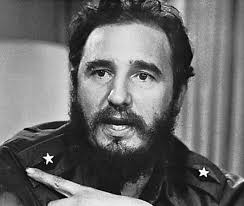
Fidel Castro says final goodbye: Legacy open to debate

Iconic revolutionary and Cuba’s former president Fidel Castro has died, leaving behind a mixed legacy that will continue to be debated for years to come.
“El Commandante” or “Fidel,” as he was fondly called by Cuban people, had become a living legend in his lifetime for defying American power and shunning temptations of market economy for decades. A lawyer who turned into the world’s most famous guerrilla leader dislodged the brutal US-backed Batista regime in 1959, and ruled his country for nearly five decades, becoming the longest-serving non-royal leader.
The 90-year-old revolutionary icon, famed for his rumpled olive fatigues, straggly bears and Havana cigars (which he had to give up due to failing health) survived many assassination attempts and years of tough US economic embargo, which he blamed for abetting poverty in his country. A trenchant critic of the capitalist system, Castro has famously said: “A revolution is not a bed of roses. A revolution is a struggle between the future and the past.” He has left a nation which remains overwhelmingly poor, but is known for free medical services and free schooling.

Read More