Cancellation of the SAARC Summit: Has India Succeeded in Isolating Pakistan Regionally?

India’s announcement that it will not participate in the forthcoming 19th SAARC summit scheduled to be held in Islamabad did not come as a surprise. There was already a rethink afoot on India’s participation after the shabby treatment meted out to Home Minister Rajnath Singh during his visit to Islamabad to attend the SAARC Home Ministers’ meeting. Unlike during past conventions, the Pakistan media blacked out the speech that Singh delivered at the meeting. India contemplating the decision of not participating was reinforced when Vikas Swarup, the spokesperson of the Ministry of External Affairs, countered Indian High Commissioner Gautam Bambawale’s remarks in Karachi that “as of today Prime Minister Modi is looking forward to visiting Islamabad for the SAARC summit.”
Bilateral Issue or Regional Consensus?
Unlike in the past when SAARC summits have been postponed due to one member state’s decision not to attend the summit, this time India is not alone. Three other member states – Afghanistan, Bhutan and Bangladesh – have decided not to attend the summit in Islamabad and have conveyed their decisions to the current SAARC chair Nepal.
The reaction of each of these countries and their frustration with Pakistan has given rise to a new regional consensus that state sponsored terrorism cannot be dealt with only at the bilateral level. Bangladesh cited the lack of a congenial atmosphere and interference in its internal affairs by “one country” as the reason, while also firmly stating that it is its own decision not to attend the summit. The Ministry of Foreign Affairs issued a statement which read – “uncalled for reactions after the execution of war criminals in Bangladesh that amount to direct interference in the internal affairs of a sovereign country, which is totally unacceptable” – as the reason for Bangladesh’s abstention.

Read More

India snubs Pakistan, says no to SAARC summit

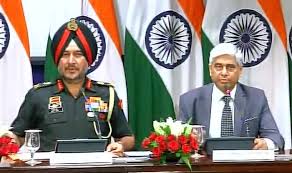
In a major step aimed at isolating Pakistan in the region, India has announced that Prime Minister Narendra Modi will not participate in the SAARC summit in Islamabad due to cross-border terrorist attacks, an obvious reference to the Uri assault by Pakistani terrorists.

In a diplomatic retaliation for Pakistan’s diversionary posturing on the Kashmir issue, India has underlined that the current environment is not conducive to then holding of the SAARC summit.

Read More

India, Nigeria open new avenues to energise ties: Focus on nuclear energy, food security

Bolstering their economic and energy partnership, India and Nigeria, Africa’s largest economy, have decided to open new avenues of cooperation in areas of civil nuclear energy, energy, space and food security.

The talks between India’s Vice-President Hamid Ansari and his Nigerian counterpart Yemi Osinbajo in Abuja on September 27 culminated in an ambitious template for scaling up the India-Nigeria relations in key areas that included, among others, hydrocarbons, renewable energy, defence, space and counter-terror cooperation.

Read More

India’s response to Uri attack: Strategic patience, not restraint shows the way

The September 18 attack on the Uri military camp, launched by Pakistan-based terrorists, has agitated the entire country and ignited serious, high-decibel debate as to how these repeated provocations need to be handled by the leadership.
Pakistan appears to have hit upon a ‘no cost’ grand strategy which is backed by its nuclear weapons capability with its announced first use policy. The aim, clearly, is to show Prime Minister Modi as a weak leader, to keep India unsettled by negatively impacting its international image and a calculation that the state response to terrorism can widen India’s potential internal fault lines. By applying this strategy, it feels that it has the strategic and tactical initiative for escalation of tension and, indeed, in the bilateral relations as a whole.
Costs for Pakistan can, certainly, be raised. Its grand strategy is anchored in waging an asymmetrical, ‘irregular’ war against India, backed up by its military and nuclear capability: this ‘irregular’ war involves non-uniformed, ‘civilian’ elements trained in subversion and guerrilla warfare in urban areas and the countryside. Conventional military action, as seen in the ‘Operation Parakram’ mobilisation of the Indian troops on the India-Pakistan border after the Parliament attack, cannot be the response.
As it needs to leverage all aspects of a country’s strength, countering asymmetric warfare is a protracted affair and cannot take the form of a short, swift conventional war. Ultimately, it is the strength and resilience of a political system which actually prevails in a war of attrition, against the strategy of ‘death by a thousand cuts’. The answer to our Pakistan dilemma, in short, is not ‘strategic restraint’ but ‘strategic patience’.

Read More