
China’s Growing Influence in the Caribbean

In June 2013, during the visit of Chinese President Xi Jinping to Trinidad and Tobago, the then Prime Minister of the Caribbean nation, Kamla Persad-Bissessar, in a fawning speech, had lauded President Xi’s vision saying, “We see in your China Dream a splendid opportunity for China to become a model for the world.”1 Like a royalty holding court, President Xi thereafter hosted the leaders of Antigua and Barbuda, Barbados, the Bahamas, Dominica, Grenada, Guyana, Suriname and Jamaica in Port of Spain, capital of Trinidad and Tobago, where he announced soft loans and investments worth US$ 3 billion as well as grants of up to $8 million for the region.2 President Xi’s visit was an effective and a graphic demonstration of China’s growing influence and outreach in the English-speaking Caribbean region, coming at a time when the United States (US) had been somewhat less forthcoming with financial grants for the region.

Read More
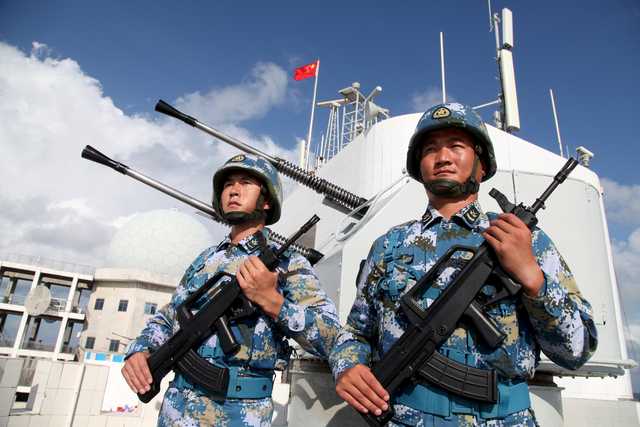
China’s defence minister warns of possible ‘people’s war’ over South China Sea

Stung by the ruling of an international tribunal rejecting its claims over the South China Sea, China has upped the stakes, with its defence minister warning of a possible “people’s war at sea” and exhorting the nation to be prepared for it.
China’s Defence Minister Chang Wanquan has asked the military, police and general population to be ready to defend the country’s territorial integrity in case of a direct confrontation in the South China Sea – a veiled reference to the US military build-up around the disputed islands.
The minister’s comments indicate China’s hardening position and the growing tide of nationalism over the South China Sea issue in the aftermath of the ruling by the Hague tribunal rejecting its historic claims over the disputed maritime region. The comments are seen as a message to the US, which has been sending warships and military planes close to the South China Sea islands as a possible hedge against China’s military assertion. Beijing has slammed the US’ provocative behaviour in the wake of the tribunal’s ruling.

Read More

Emirates plane explodes into fireball at Dubai airport, all 300 on board evacuated

It was a miraculous escape for 300 people, including 282 passengers and 18 crew, as an Emirates passenger jet crash landed at the Dubai Airport before exploding into thick black smoke.
For all the 300 people on board, it was a near death experience as they watched the Emirates Boeing 777 in which they were flown in, erupted into flames clouding the fabled Dubai skyline.
“We can confirm flight EK521 from Thiruvananthapuram to Dubai has been involved in an accident at Dubai International,” the Emirates said on its Twitter account.
All flights to the Dubai airport have since been diverted and all take-offs and landings have been suspended. The media office of the Dubai tweeted that all operations, including any departures, from Dubai International have been halted “until further notice.”

Read More

Food crunch for Indian workers in Saudi Arabia: Indian minister sent to Jeddah

In an unprecedented crisis, around 10,000 Indian workers, most of whom worked with Saudi construction companies, are stranded in Saudi Arabia without food and money, with the Indian government working overtime to alleviate their suffering. Minister of State for External Affairs Gen (retd) V.K. Singh is set to leave for Jeddah tonight (August 2) to make an on-the-spot assessment of the situation.
The pitiable plight of hungry and penniless Indian workers in Saudi Arabia has come as a shock to the Modi government, which has made diaspora outreach and welfare a key plank of its foreign policy. The food crisis afflicting Indian workers in Saudi Arabia has erupted barely four months after Prime Minister Narendra Modi visited Saudi Arabia and was assured by the top Saudi leadership about the welfare of the Indian community, including migrant workers, in the Arab world’s largest economy. Mr Modi interacted with the Indian workers as well as the well-heeled Indian community in two separate outreach events in Riyadh. Saudi Arabia is home to around 3 million Indians, the largest expatriate population in the Gulf powerhouse.

Read More

Decoding Hague tribunal’s award on South China Sea

In the immediate aftermath of the arbitration award, all sides are trying to calm the situation which, however, remains combustible with, potentially, disastrous consequences. The attention is to analyse each and every word of the principal protagonists to parse the intentions behind them. Apart from the involvement of the Coast Guards in support of the respective fishing boats which is a daily occurrence, several key countries have been exploring – and, eventually exploiting – hydrocarbon reserves within the NDL area. Militarisation of the existing infrastructure in the Spratlys and the Paracels, especially on the part of the Chinese, can completely alter the existing balance of power in the region.

Read More