Getting real: India, China to step up anti-terror cooperation, hope for NSG progress

Taking a realistic and long-term view of their burgeoning but challenging relationship, India and China have decided to adopt an incremental approach to resolving contentious issues like the UN proscription of international terrorist Masood Azhar and New Delhi’s membership of the Nuclear Suppliers Group, without letting these affect the larger relationship, bristling with possibilities.
In their third meeting this year, India’s Prime Minister Narendra Modi and Chinese President Xi Jinping discussed key issues, including terrorism, NSG and enhancing trade and investment, that have a direct bearing on the future trajectory of the relationship between the two Asian giants.
Looking ahead, India and China are set to focus on ramping up the economic relationship, which has emerged a key pillar underpinning the crucial relationship. In this context, President Xi called for co-operation between India and China in railways, industrial parks, vocational and skill training, space and ICT. This “economics first” approach suggests realism and pragmatism, but to focus only on the economic relationship has its limitations. The real breakthrough that will release pent-up energies of the India-China relationship will be Beijing’s explicit support for India’s global aspirations, including membership of the NSG and New Delhi’s long-standing claim for a permanent seat in the UN Security Council.

Read More

Rejuvenating BRICS in Goa: What’s on the agenda?

Amid the festering recession in wide swathes of the world and a conflicted geopolitical landscape, India is poised to host the 8th BRICS summit in the picturesque resort city of Goa, which is expected to unveil a raft of new ideas and initiatives,designed to provide an added strategic traction to this influential grouping of emerging powers.

India has declared I4C or IIIIC as the framing mantra for the 8th BRICS summit, which includes Institution Building, Implementation, Integration, Innovation, and Continuity with Consolidation.In a deft word game, the BRICS acronym has been reinvented, with the overarching objective of “Building Responsive, Inclusive and Collective Solutions” to pressing global challenges.

Read More

Behind India’s BIMSTEC-BRICS gamble: How to isolate Pakistan

Marking the near complete isolation of Pakistan in the region, terrorism is set to dominate the agenda of dual summits of BRICS and BIMSTEC countries India is hosting in Goa October 15-16.

With Pakistan showing no sign of abandoning terrorism as an instrument of state policy, the overarching focus of India will be to get both BRICS and BIMSTEC groupings to back a collective approach to combating the scourge. India will be pressing these groupings to support a non-segmented approach to terror, which is necessary in view of the propensity of some countries to portray terrorists as freedom fighters, as Pakistan has done in the case of militants active in Kashmir.

Read More

Isolate Pakistan: In Nigeria, Ansari targets terror-sponsoring states

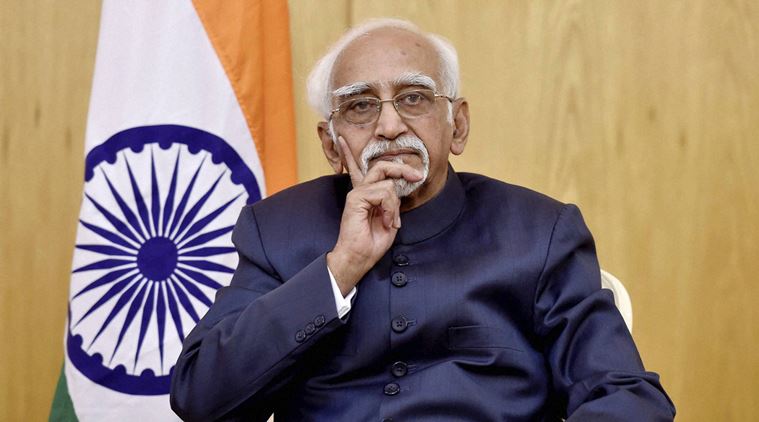
In a veiled reference to Pakistan-sponsored terrorism against India, Vice-President Hamid Ansari has made a compelling case for bolstering counter-terror cooperation with Nigeria, Africa’s largest economy, and underlined that “the use of terrorism as an instrument of state policy should be unequivocally condemned.”

Invoking the common suffering experienced by Nigeria and India from the scourge of terrorism, Mr Ansari exhorted the world community not to make any distinction between good and bad terrorists and speak in one voice against this trans-national menace.

“Your country, like mine, has suffered the horrors of this scourge of terrorism. Terrorism today has global reach, no city remains safe,” Mr Ansari said at the National Defence College in the Nigerian capital Abuja on September 28. “Use of terrorism as an instrument of state policy is to be unequivocally condemned. There can be no distinction between good and bad terrorists.” Delinking terrorism with religion, the vice-president argued that a terrorist can’t have any religion or be afforded political sanctuary.

Read More

Bypassing OIC to isolate Pakistan: Ansari to seek support of Nigeria & Mali, says OIC is just another club

India is looking to step up its outreach to Organisation of Islamic Cooperation (OIC) countries to muster their support against Pakistan-sponsored terror, with Vice-President Hamid Ansari set to take up the issue with the leaders of Nigeria and Mali. However, even as India ratchets up its ongoing diplomatic campaign to isolate Pakistan in the wake of the Uri terror attack, Mr Ansari sent a subtle but strong message across by underlining that one should not exaggerate the significance of OIC.

Mr Ansari touched down in Abuja on September 26 on a three-day visit to Nigeria, Africa’s largest economy and most populous country. Nigeria rolled out the red carpet to welcome Mr Ansari, with Nigeria’s vice-president Yemi Osinbajo personally receiving him at the Abuja International Airport. Dancers dressed in colourful attire welcomed the Vice-President, the first high-level visit from India in the last nine years since then Prime Minister Manmohan Singh visited Nigeria in 2007.

Read More

India’s Africa safari: Why Vice-President Ansari is going to Nigeria, Mali

Nigeria’s India-educated President Muahammadu Buhari is an incorrigible optimist. He is not deterred by narratives of Afro-pessimism or Africa Rising?, sparked by plunging commodity prices and festering violence in swathes of the continent, but is determined to ensure that the rising of Nigeria is real and lasting. A few hundred kilometres away, Mali, ravaged by savage terrorism, is trying to script its own resurgence amid formidable challenges. Against this backdrop, Vice-President Hamid Ansari heads to Nigeria and Mali to chart new pathways of cooperation to aid ongoing national reconstruction in these two important partners of India in West Africa.
Mr Ansari’s visits to Nigeria and Mali (September 26-30) underscore India’s strategic design to expand its footprints in the West Africa region, which had not hitherto loomed high on India’s diplomatic canvas.
Besides enhancing economic ties and development cooperation, the vice-president is expected to focus on imparting a strategic traction to India’s relations with Nigeria and Mali. Intensifying counter-terror cooperation will be on top of the agenda in both Abuja and Bamako.
The vice-president will also be seeking support of Nigeria and Mali, members of the Organisation of Islamic Conference (OIC), which forms the diplomatic support base of Pakistan on the Kashmir issue, for India’s campaign to isolate Pakistan in the wake of the terror attack in north Kashmir that killed 18 Indian soldiers.
China’s growing economic presence in West Africa is another strategic imperative for India to raise its game in the region. With a growing convergence of economic and strategic interests, India’s outreach to West Africa and the African continent is set to acquire a new narrative and resonance in days to come.

Read More

Uri attack: India confronts Pakistan with evidence, says stop sponsoring terror

It was time for some plain speaking as India’s Foreign Secretary S. Jaishankar summoned Pakistan’s High Commissioner Abdul Basit and conveyed that India has enough evidence to link Pakistani militants with the recent terror attack in Uri that killed 18 Indian soldiers.
The message was direct and sliced through duplicity and denials that have become hallmarks of Pakistan’s response in the aftermath of terror attacks in India, engineered by Pakistan-based militants, in collusion with sections of the state machinery.
The latest terrorist attack in Uri only underlines that the infrastructure of terrorism in Pakistan remains active, India’s external affairs ministry said after the meeting between Mr Jaishankar and the Pakistani envoy in New Delhi on September 21. “We demand that Pakistan lives up to its public commitment to refrain from supporting and sponsoring terrorism against India,” said the statement. This was an unambiguous statement from India, which suggests that India’s security agencies have made a considered assessment that the attack on an Army base in Uri on September 18 was perpetrated by Pakistani militants with support from state actors.
With India providing specific evidence of complicity of Pakistani militants in recent terror attacks in the country, the ball is now in Pakistan’s court. Denials and equivocations simply won’t do, and hyped-up rhetoric, which Prime Minister Nawaz Sharif is set to unleash at the UNGA tonight, will not deceive anyone. It’s time for Pakistan to act and redeem its honour, in short.

Read More

Namaste France: Celebrating Indo-French cultural connect

Namaste France, Bonjour India! The cultural alchemy between India and France is for real, and is now seen in all its glory and myriad splendour in the moveable feast of Indian culture, songs, dance, films, plays and performances which has rolled out across cities in France, inviting the French to soak in the eternal wonder that is India.
The sheer scale of Namaste France festival is staggering and attest to the expanding canvas of India-France cultural relations: 75 days, 23 cities and the crème de la crème of India’s performing arts dazzling the French audience.

Read More