Getting real: India, China to step up anti-terror cooperation, hope for NSG progress

Taking a realistic and long-term view of their burgeoning but challenging relationship, India and China have decided to adopt an incremental approach to resolving contentious issues like the UN proscription of international terrorist Masood Azhar and New Delhi’s membership of the Nuclear Suppliers Group, without letting these affect the larger relationship, bristling with possibilities.
In their third meeting this year, India’s Prime Minister Narendra Modi and Chinese President Xi Jinping discussed key issues, including terrorism, NSG and enhancing trade and investment, that have a direct bearing on the future trajectory of the relationship between the two Asian giants.
Looking ahead, India and China are set to focus on ramping up the economic relationship, which has emerged a key pillar underpinning the crucial relationship. In this context, President Xi called for co-operation between India and China in railways, industrial parks, vocational and skill training, space and ICT. This “economics first” approach suggests realism and pragmatism, but to focus only on the economic relationship has its limitations. The real breakthrough that will release pent-up energies of the India-China relationship will be Beijing’s explicit support for India’s global aspirations, including membership of the NSG and New Delhi’s long-standing claim for a permanent seat in the UN Security Council.

Read More

Rejuvenating BRICS in Goa: What’s on the agenda?

Amid the festering recession in wide swathes of the world and a conflicted geopolitical landscape, India is poised to host the 8th BRICS summit in the picturesque resort city of Goa, which is expected to unveil a raft of new ideas and initiatives,designed to provide an added strategic traction to this influential grouping of emerging powers.

India has declared I4C or IIIIC as the framing mantra for the 8th BRICS summit, which includes Institution Building, Implementation, Integration, Innovation, and Continuity with Consolidation.In a deft word game, the BRICS acronym has been reinvented, with the overarching objective of “Building Responsive, Inclusive and Collective Solutions” to pressing global challenges.

Read More

Isolated by India, Pakistan plays with ‘bigger SAARC’ idea

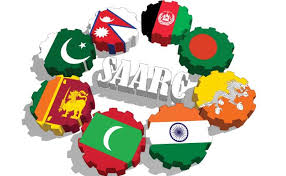
In the wake of the Uri terror strike, India announced its decision not to participate in the SAARC summit which was supposed to be held in Pakistan in November this year. All other SAARC nations followed suit, and decided to boycott the summit. Distressed by this marginalisation and mainly due to India’s increasing influence in the SAARC, Pakistan is now playing with the idea of a greater SAARC. According to a recent report in the Dawn newspaper, Pakistan is looking at the possibility of a “bigger SAARC” to check India’s increasing dominance in the eight-member forum.

According to the report, “Pakistan has pitched the idea of a greater South Asian economic alliance, one that includes China, Iran, and some neighboring Central Asian countries”. A parliamentary delegation from Pakistan during its five-day visit to Washington last week pitched this idea, the report said. “A greater South Asia is already emerging,” Senator Mushahid Hussain Syed was quoted as saying in one of his interactions with the media. “This greater South Asia includes China,Iran, and the neighboring Central Asian republics,” he said. He described the China-Pakistan Economic Corridor as the key economic route linking South Asia with Central Asia.

Read More

Behind India’s BIMSTEC-BRICS gamble: How to isolate Pakistan

Marking the near complete isolation of Pakistan in the region, terrorism is set to dominate the agenda of dual summits of BRICS and BIMSTEC countries India is hosting in Goa October 15-16.

With Pakistan showing no sign of abandoning terrorism as an instrument of state policy, the overarching focus of India will be to get both BRICS and BIMSTEC groupings to back a collective approach to combating the scourge. India will be pressing these groupings to support a non-segmented approach to terror, which is necessary in view of the propensity of some countries to portray terrorists as freedom fighters, as Pakistan has done in the case of militants active in Kashmir.

Read More

Scripting a new chapter in India-Iran relations

Building on centuries of civilisational connect and shared interests amid a shifting regional geopolitical landscape, Prime Minister Narendra Modi’s maiden visit to Tehran (May 22-23) opened a new chapter in India’s relations with an emerging power in the West Asia region. Enhancing connectivity and commerce, combined with rejuvenating cultural connections, were the overarching themes that framed the first standalone bilateral visit by an Indian Prime Minister to Iran in over a decade and culminated in a road map for advancing India-Iran relations in the next decades of the 21st century.

Read More

No thaw with India? Why Pakistan is indulging in Modi-bashing?

Prime Minister Narendra Modi is surely the hate word among Pakistan’s ruling dispensation, including the military establishment that runs its India policy. And if any proof was needed, one only needs to refer to the giveaway statement of Sartaj Aziz, Advisor to Prime Minister Nawaz Sharif. “Pakistan sees no hope of a breakthrough in relations with India under the Narendra Modi government,” said Mr Aziz, encapsulating the distaste for PM Modi among Pakistan’s ruling elite. This rancour can be understood as Mr Modi has done the unthinkable by launching surgical strikes on Pakistani terrorist camps, patronized by the Rawalpindi establishment, in Pakistan-Occupied Kashmir and launching an effective campaign to isolate Pakistan in the international arena in the aftermath of the Uri terror strike. The message from Mr Modi is quite clear, and it’s no surprise that he is hated by Pakistan’s establishment which continues to use cross-border terrorism with impunity.
Mr Modi’s message is loud and clear: terror and talks cannot go hand in hand, therefore until Pakistan stops supporting terror activities on the Indian soil there can be no fruitful talks. For this reason, Pakistan sees Mr Modi, with his capacity for out-of-box thinking and decisive action, as its arch enemy in pursuing its politically motivated activities in Kashmir.
But it seems Pakistan’s attempts to influence domestic discourse on terrorism in India is not going to succeed given across-the-board support for tough actions against Pakistan in the wake of the Uri terror strike. Pakistan must change its policy of cross-border terror against India if it wants peace with the world’s fastest growing economy, regardless of who is in power in New Delhi.

Read More

India and the NSG Membership: What Lies Ahead

In the pre-2005 period, the Indian government as well as most Indian analysts had approached the four export control regimes – the Nuclear Suppliers Group (NSG), the Missile Technology Control Regime (MTCR), the Wassenaar Arrangement (WA) and the Australia group (AG) – with suspicion. Such an approach was not unnatural considering the fact that the first two, namely the NSG and the MTCR, had actively worked against Indian interests. The NSG denied fuel for the Tarapur Atomic Power station (TAPS) while the United States used MTCR provisions to prevent the transfer of cryogenic engine technology – a purely civilian space technology – by Russia to India thereby setting back the Indian space programme by more than a decade.

Read More

It’s time to act and fix ailing UNSC: India’s envoy in UN

Today, we stand on the cusp of selecting the 9th Secretary General of the UN. The last report of Secretary General Ban ki-Moon contained in A/71/1 on the Work of the Organization is, therefore, an appropriate inflection point to examine what are the main challenges that face us and what are the means and mechanisms to mend. These are not simple issues nor are they small in number. However, due to paucity of time I will focus on just three examples relating to peace and security that are emblematic of the problems we face.

Read More

India to Pakistan: Abandon your futile quest, J& K is and will remain India’s integral part

Abandon your futile quest and stop abusing international fora for Jammu and Kashmir is an integral part of India. This is India’s strongly-worded message to Pakistan which continues to rake up the Kashmir issue to divert the world’s attention from its relentless pursuit of terrorism as an instrument of state policy.

“Our response to Pakistan is consistent. Abandon your futile quest. Jammu and Kashmir is an integral part of India and will remain so,” India’s Permanent Representative to UN Syed Akbaruddin said during a General Assembly debate on ‘Report of the Secretary General on the Work of the Organisation’ at the 71st session of the UNGA.

Read More