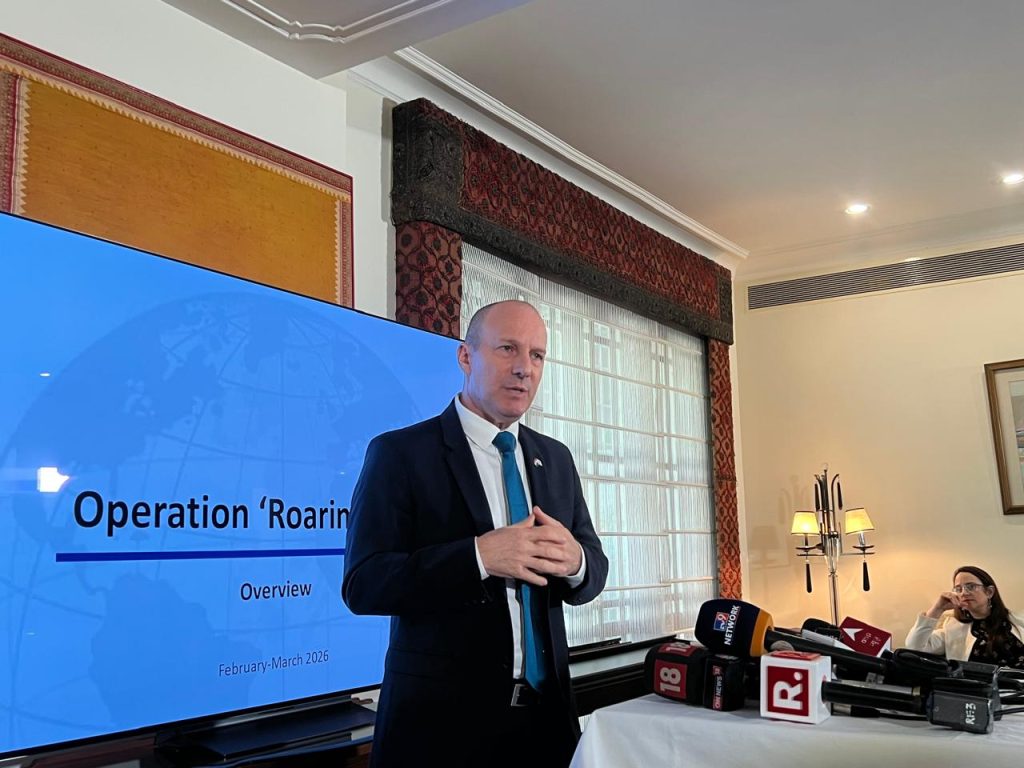
NEW DELHI: Amid a narrative war about the course and rationale of the US-Iran-Israel war, Israel’s Ambassador to India Reuven Azar has argued that Tel Aviv decided to launch attacks on Iran, in concert with Washington, after all diplomatic options were exhausted and underlined that if Iran is serious, it should follow the examples of Egypt and Jordan by engaging with Israel.
In his first interaction with media after the start of the war on February 28, the Israeli ambassador also repudiated and debunked speculation about Israel President Benjamin Netanyahu’s death, saying he is not just alive, but he met him personally more than once during his recent visits to Israel.
Providing a detailed backdrop to the chain of events leading to the US-Israel joint strike on Iran, the envoy said that the need for military strikes at this stage stemmed from the realisation that Iran has effectively “cheated” diplomacy and IAEA about the nature of its nuclear programme.
The envoy accused Iran of using international negotiations as a camouflage while continuing to advance its nuclear and ballistic missile programmes. The decision to act now followed developments after an earlier operation in June, when Iran allegedly began moving key elements of its programmes deep underground, he said. According to the envoy, the Iranian leadership decided “to go very deep underground and make their projects of annihilation immune from Israeli or American attack,” something Israel “couldn’t allow.”
The primary motivation behind the attack was to degrade Iran’s military capabilities and nuclear facilities so that Iran can’s terrorise neighbouring countries and use terror and repression against its own people. “We are not going to impose anything. Neither the United States nor Israel has the intention of invading Iran,” he said. Israel is continuing to hunt missile launchers and remaining military production facilities, some of them hidden in civilian areas, he said.
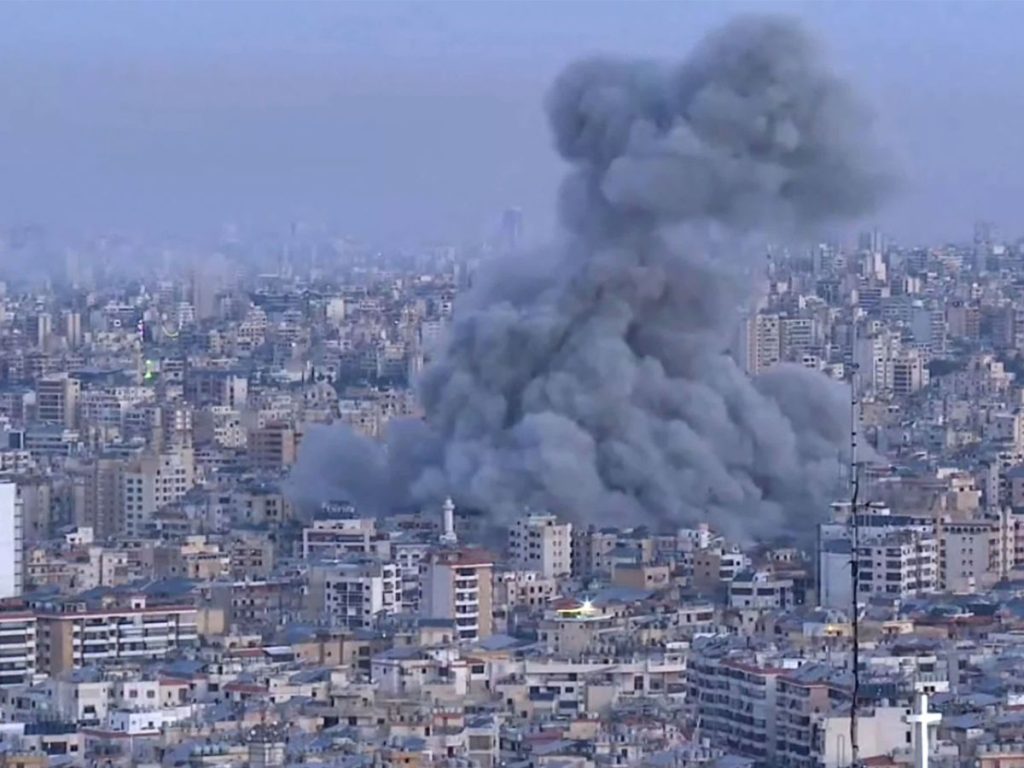
The ambassador recalled that Israeli forces initially “concentrated at the beginning on neutralising the early sensors,” but the operation then expanded to attacking “the attack capabilities, first in western Iran and then gradually into central and eastern Iran.” These strikes targeted military assets across the army, navy and air force, and “very importantly, the military production facilities.”
“The firepower of Iran has diminished, diminishing constantly,” he said, adding that the number of launches had dropped to “something like 10 launches from Iran per day.”
Looking ahead, the ambassador refrained from providing any timeline for ending the war and stressed that Israel always prefers diplomacy. Both Israel and the United States are calling on Iran “to comply with the demands that we have put forward months ago,” but Iran has refused to do so. The ambassador invoked past agreements with Egypt and Jordan as examples of how “when somebody decides that they want to stop destroying Israel and they want to engage with Israel, this brings peace pretty fast.”
The Camp David Accords, signed by President Jimmy Carter, Egyptian President Anwar Sadat, and Israeli Prime Minister Menachem Begin in September 1978, established a framework for a historic peace treaty concluded between Israel and Egypt in March 1979. As a result of military strikes, diplomacy will be relevant again, said the envoy. Saying that Israel does not want a perpetual war, the envoy hoped that the military strikes, christened Operation Roaring Lion by Israel and Operation Epic Fury by the US, will pave the way for a brighter, stable and peaceful Middle East.
Author Profile

- Manish Chand is Founder and Editor-in-Chief of India Writes Network (www.indiawrites.org) and India and World, a pioneering magazine focused on international affairs. He is CEO, Centre for Global India Insights, an India-based think tank focused on global affairs.
Latest entries
 India and the WorldApril 10, 2026Why India-Armenia ties are blossoming in a volatile world
- In ConversationApril 5, 2026Pakistan’s Mediation Role in US–Iran Conflict Raises Questions: Alok Bansal
- India and the WorldMarch 24, 2026Trump dials Modi: Focus on ending war and keeping Hormuz open
- India and the WorldMarch 23, 2026US-Iran war: Modi bats for diplomacy, assures energy security for India