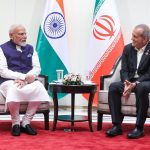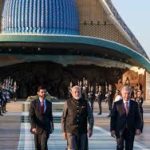
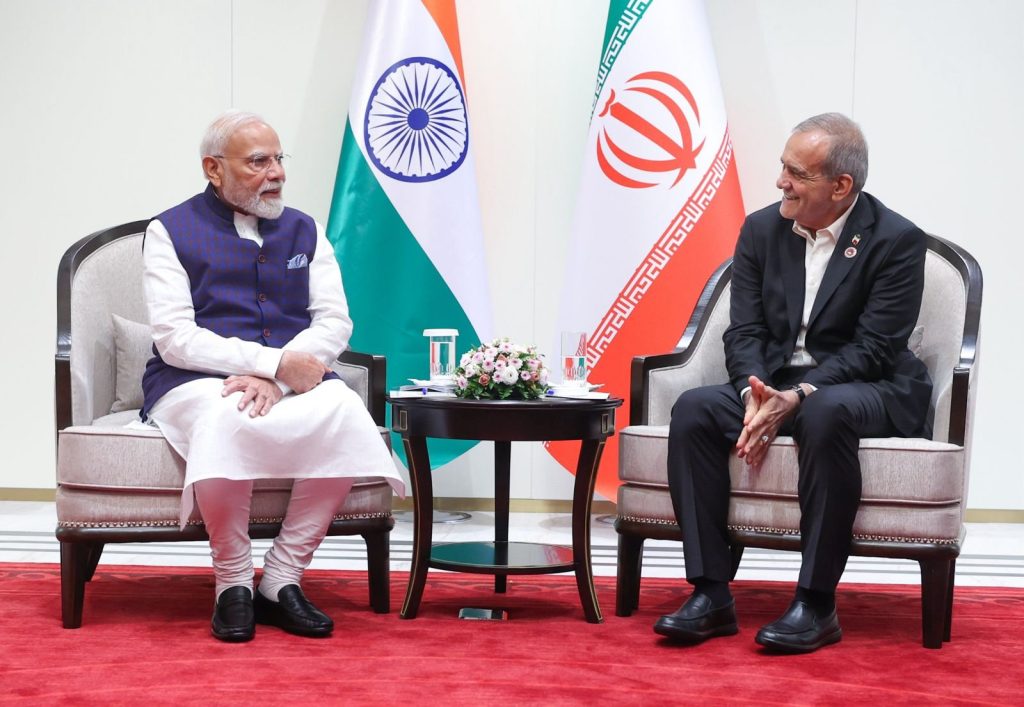
BISHKEK: In the leafy garden capital of the Kyrgyz Republic, the leaders of India and Iran jointly called for keeping the Strait of Hormuz open, with the Iranian leader urging PM Modi to dissuade the US from war and bloodshed and return to the path of dialogue and agreement.
The two leaders also discussed ways to expand trade and investment in the shadow of the prolonged US-Iran economic warfare.
India’s Prime Minister Narendra Modi and Iranian President Masoud Pezeshkian held talks for around 40 minutes on the sidelines of the SCO Summit in Bishkek. The big takeaway from the talks was mutual support for resolving all issues through dialogue and diplomacy amid the Trump administration’s imposition of new sanctions on Iran and its business partners.
The two leaders discussed the recent developments in the West Asia conflict and shared perspectives on the evolving situation. PM Modi expressed concern at the escalation of tensions in the region and reiterated India’s consistent position that all issues must be resolved through dialogue and diplomacy, said a read-out by India’s Ministry of External Affairs.
“We had a discussion on the prevailing situation in the region. India will continue to support all efforts aimed at ensuring lasting peace,” said PM Modi on X after the meeting.
“I agree with you that there are those who see their interests in war, but we must intensify our efforts to establish peace. My belief and conviction is that, ultimately, peace and security will prevail,” the Iranian statement quoted Modi as telling the Iranian leader.
Alluding to India’s important position and capacities in the region and the world, as well as deep historical and cultural ties, the Iranian leader asked Modi to “use India’s extensive contacts with various parties to help them move away from the path of war and bloodshed and return to the path of dialogue and agreement,” said the Iranian statement.
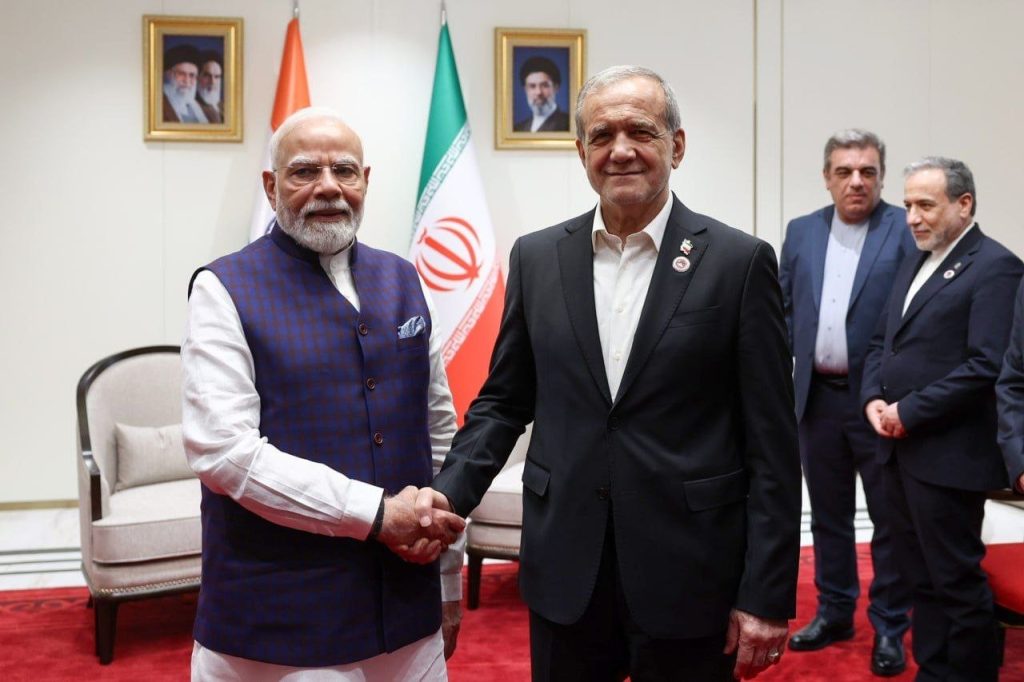
Safeguarding the freedom of navigation and commerce figured prominently in discussions between the two leaders. PM Modi stressed that civilians and civilian infrastructure, including commercial shipping and seafarers must not be harmed under any circumstances. What came across from the talks was a sincere intention by the two leaders to expand economic relations despite the US’ relentless pressure to downgrade ties. “We want to expand and diversify our trade basket in the times to come,” said PM Modi on X.
Cooperation in the fields of transportation and maritime affairs, developments related to the Strait of Hormuz, and the progress of cooperation at Chabahar Port were among the most important issues discussed by the two sides, said the Iranian statement.
The meeting between PM Modi and the Iranian leader is being tracked closely by the Trump administration amid the deadlock in the US-Iran conflict.
The Modi-Pezeshkian meeting in Bishkek took place amid intensified efforts by mediators Oman, Pakistan and Qatar to advance negotiations to bring the war to an end.
Author Profile

- Manish Chand is Founder and Editor-in-Chief of India Writes Network (www.indiawrites.org) and India and World, a pioneering magazine focused on international affairs. He is CEO, Centre for Global India Insights, an India-based think tank focused on global affairs.
Latest entries
 India and the WorldAugust 31, 2026With an eye on Trump, Iran urges PM Modi to end war with US
- DiplomacyAugust 30, 2026Modi in Tashkent: Focus on trade, terror and critical minerals
- India and the WorldAugust 29, 2026Modi’s SCO agenda: Shaping a region free of terror, widening arc of prosperity
- India and the WorldAugust 22, 2026India and Japan: Co-anchoring Indo-Pacific