TASHKENT/BISHKEK: India and the resource-rich Uzbekistan are set to galvanise their multi-faceted ties, underpinned by a shared vision of a stable and secure region.
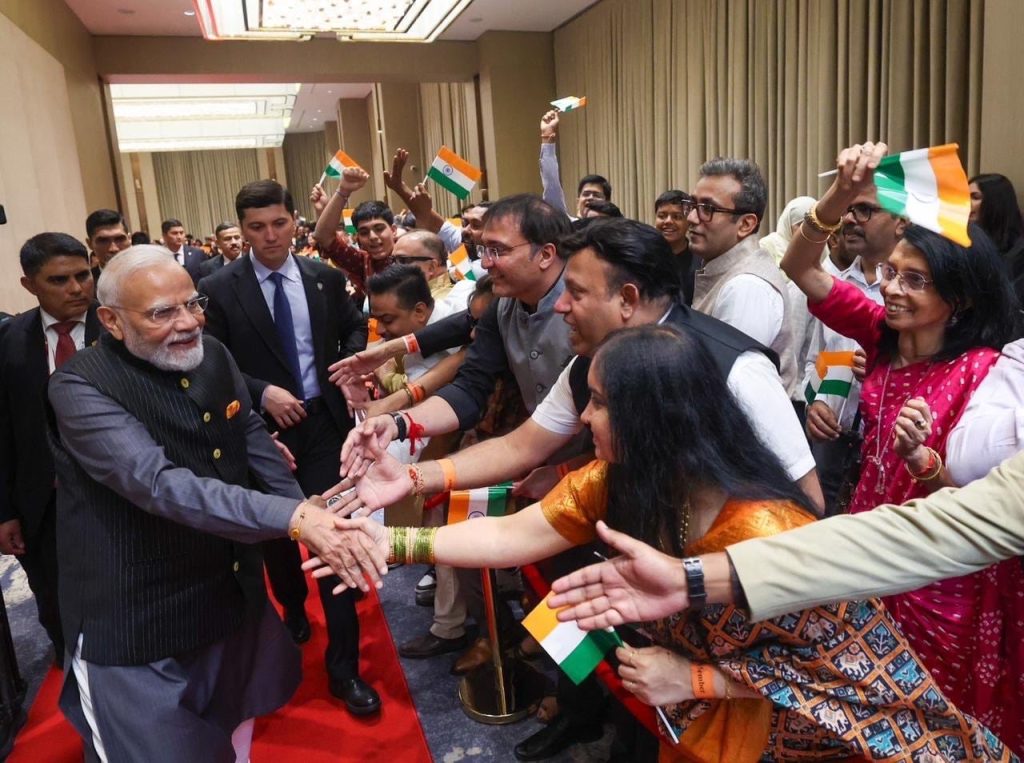
India’s Prime Minister Narendra Modi began his four-day trip to Central Asia with a dinner meeting with Uzbekistan’s President Shavkat Mirziyoyev in Tashkent on August 29. The two leaders will hold wide-ranging talks to strengthen their bilateral ties in areas ranging from trade and tourism to health, energy and defence.
The talks between PM Modi and President Mirziyoyev will focus on expanding development cooperation by aligning the ‘New Uzbekistan’ vision propounded by the Uzbek leader and the “Viksit Bharat” or developed India vision supported by the Indian leader.
Enhancing counter-terror cooperation and coordination in stabilising Afghanistan will figure prominently in the talks.
In a rare gesture underscoring mutual warmth, Uzbek President Mirziyoyev received PM Modi at the Tashkent airport. “Landed in Tashkent to a warm welcome by President Shavkat Mirziyoyev. Grateful to him for the special gesture. This is my fourth visit to Uzbekistan, reflecting the depth and growing momentum of our bilateral relations,” said Modi on X.
In his departure statement, Modi had said: “In recent years, India-Uzbekistan Strategic Partnership has seen significant advancement. I look forward to my discussions with President Mirziyoyev on further deepening our cooperation in trade and investment, digital connectivity, defence, energy, and on advancing our shared visions of Viksit Bharat and Yangi Uzbekistan.”
Critical Minerals
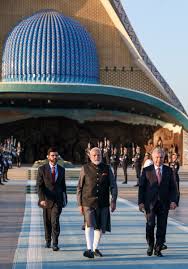
Forging exploration and production partnership in critical minerals will be a key outcome of PM Modi’s two-day visit to Tashkent. India-Uzbek collaboration will go beyond raw material exports and create higher value products through new projects and technical development. Against the backdrop of China’s domination of this crucial area, enhancing India-Uzbek collaboration in critical minerals and rare earths is an important part of New Delhi’s strategy to secure resilient supply chains for resources that are vital to the country’s clean energy transition, defence modernisation and high-technology ambitions. Uzbekistan has vast deposits of rare earth elements, lithium, tungsten, copper, molybdenum, uranium, gold, silver, graphite, and fluorspar.
With bilateral trade and investment estimated to be around only $1 billion, PM Modi will push for raising the bar for economic ties between India and Uzbekistan. The Indian side will highlight growing interest of Indian companies in investments in in the pharma sector, amusement parks, automobile components, education and hospitality industry.
The signing of the Bilateral Investment Treaty (BIT) two years ago is accelerating Indian investment in Uzbekistan. The BIT provides much-needed assurance to Indian investors who were previously concerned about issues like currency convertibility. In the days to come, one can expect more Indian investment in healthcare, education, agriculture and pharma.
Against the backdrop of China’s growing influence in Uzbekistan and the region, India is looking to deepen defence ties with Tashkent. The Modi–Mirziyoyev talks in Tashkent will “enhance engagement” in defence and explore prospects of defence-industrial collaboration between the two countries. The talks are likely to result in a host of defence-related plans and initiatives.
Author Profile

- Manish Chand is Founder and Editor-in-Chief of India Writes Network (www.indiawrites.org) and India and World, a pioneering magazine focused on international affairs. He is CEO, Centre for Global India Insights, an India-based think tank focused on global affairs.
Latest entries
 India and the WorldSeptember 13, 2026BRICS transcends Gulf divide, pitch for UN fast-tracking reforms
- DiplomacySeptember 13, 2026BRICS bonding bolsters India-Vietnam ties
- India and the WorldSeptember 11, 2026Decoding India’s BRICS moment: Forging an Inclusive World
- In ConversationSeptember 9, 2026India’s BRICS Chairship Critical for Global South: South Africa’s Envoy