By Shubangi Sharma
As the chair of BRICS, India demonstrated the capacity to convene adversaries, to build instruments that create leverage, and to define a coalition by what it builds rather than whom it opposes, says Shubangi Sharma.
BRICS paints a thrilling image. Young economies, fast growth, oil and minerals beneath the soil, vast consumer markets above it, and a membership that now speaks for nearly half of humanity. Few clubs in world politics can lay claim to so much of the planet’s future. Fewer still began life as a line in an investment bank’s research note, which is how the ‘BRIC’ acronym entered the world in 2001.
For seventeen years BRICS has been a brilliant idea in search of an instrument. It expands, it attracts applicants, it generates headlines, and yet its effectiveness has often looked like a shadow cast by its potential. So, the hard question deserves to be asked plainly: does BRICS have teeth?
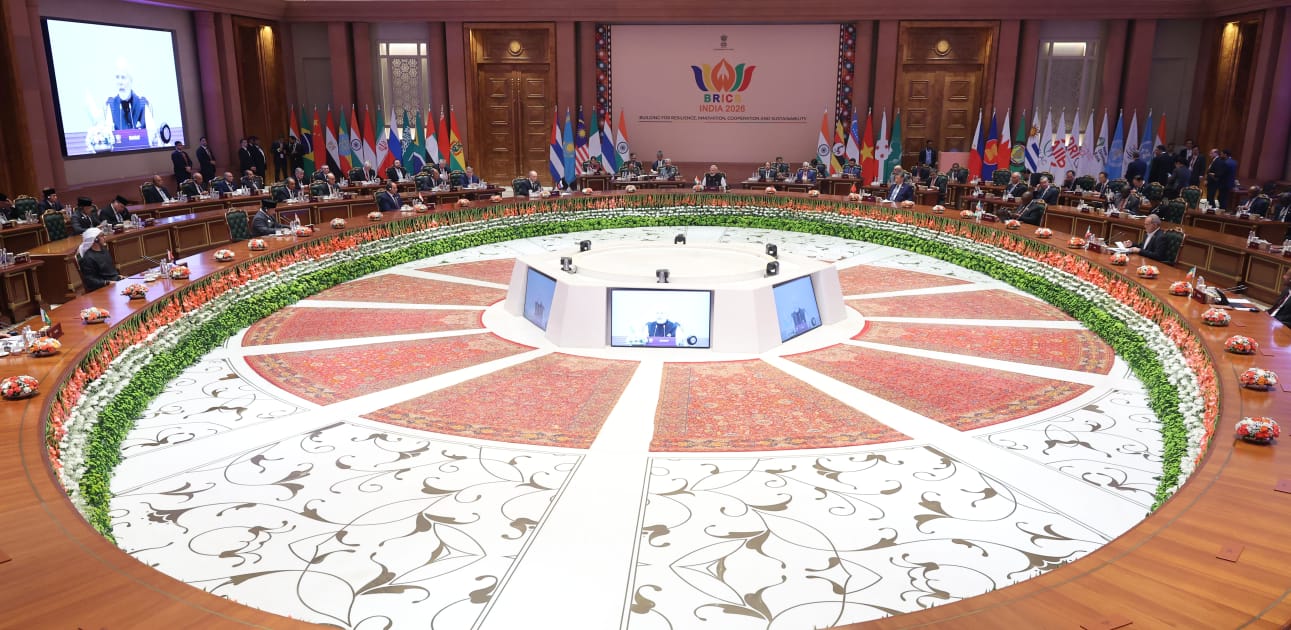
The 18th summit, hosted by India at Bharat Mandapam on September 12 and 13, did not settle that question for good. It did something more interesting. It showed what BRICS becomes when its chair decides the bloc should be useful rather than loud.
Part of the difficulty is definitional. BRICS likes to sell itself as the alternative. An alternative to what, exactly? To Western dominance of global finance? To the dollar? To a rulebook drafted in 1945 that most of the Global South never had the chance to sign? Or to something larger and more confrontational?
The answers diverge with each member. Russia, under sanctions and at war, wants a platform to show that it is not isolated. China wants scale, and a multipolar order with a less Beijing-branded face. Brazil and South Africa want a louder voice at the IMF, the World Bank and the Security Council. Similarly, India wants a seat at the high table without being drafted into a camp. Iran, six months into a war with the United States and Israel, wants a chorus of condemnation. The UAE and its Gulf neighbours want options, not a quarrel with their security guarantor. Egypt, Ethiopia and Indonesia want capital, markets and the standing that membership confers.
A grouping with no charter and no secretariat cannot reconcile these ambitions by statute. It reconciles them, if at all, through its chair. Whoever holds the pen for the year writes the bloc’s personality. In Kazan in 2024, under Russia, that personality leaned towards de-dollarisation rhetoric and an anti-Western edge. In 2026 the pen passed to New Delhi.
From Divisions to Consensus
It is easy to forget how badly the year began. In May, BRICS foreign ministers met in the same majestic hall in New Delhi and failed to agree on a joint statement. Iran wanted the bloc to condemn the war against it and accused the UAE of complicity. The meeting closed with only a chair’s statement recording differing views, the second such breakdown that spring. Some foreign coverage branded it as an Indian diplomatic shortcoming.
Four months later, the leaders adopted the New Delhi Declaration by consensus on the summit’s opening day. At 140 paragraphs it is the longest in BRICS history, and by one account every line had been settled on the eve of the summit except a single paragraph on the Iran war. The final text urged “maximum restraint”, condemned unilateral coercive measures and secondary sanctions, and called for the protection of civilians and civilian infrastructure. Iran saw its grievances recorded. The UAE was not cast as an aggressor. No one was named.
Diplomatic drafting is a craft. Consensus documents are rarely remembered for what they say, rather they are judged by whether everyone could sign them. This one, against the odds, everyone did.
Yet the most surprising show of diplomatic potency was the UAE-Iran meeting. On the sidelines of the BRICS summit in New Delhi, Iran’s President Masoud Pezeshkian sat across from Abu Dhabi’s Crown Prince Sheikh Khaled bin Mohamed bin Zayed in the highest-level meeting between the two countries since the war began. Only weeks earlier the UAE had suspended all trade and financial dealings with Tehran. Afterwards, Pezeshkian said the two sides had agreed to put the past behind them.
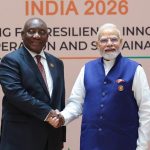
India did not broker peace and should not claim to. What it offered was rarer: a venue both sides could accept. Few capitals are trusted at once by Washington, Tehran, Abu Dhabi and Tel Aviv. That is the latent power of Indian mediation diplomacy. The warm images of Prime Minister Modi with Pezeshkian carried their own message. Sometimes, the photograph is often the real communiqué, and this one told the world that India’s partnerships with Israel and America do not come at Iran’s expense.
On Palestine, the declaration spoke with unusual bluntness. It condemned starvation as a method of warfare and attacks on hospitals, cited the ICJ’s provisional measures in South Africa’s case against Israel, and named Israel directly in demanding its withdrawal from Lebanon. That mirrors where most of the Global South stands.
India’s subtler achievement concerned identity. For two years, talk of de-dollarisation had run well ahead of anything governments had actually signed. Some of that was strategy and some was media hype, and President Trump amplified it with threats of tariffs on anyone seen to be undermining the dollar. BRICS risked being defined by a fight most of its members did not want.
Derisking, not De-dollarisation
New Delhi lowered the temperature. The declaration announces no common currency. Its payments clause makes no mention of replacing the dollar and insists there is no one-size-fits-all approach. What remains is plumbing: faster and cheaper cross-border payments, more local-currency lending by the New Development Bank, and continued work by the Payment Task Force. The accurate phrase is not de-dollarisation but de-risking.
This is not a retreat. The allure of national currency linkages has not left the room, and the experiment goes on. The message is that BRICS is building options and leverage, to be drawn on if the dollar or Western financial infrastructure is ever weaponised against its members. Insurance, in other words, rather than head-on conflict.
Balancing Act
Here India turned Dr S. Jaishankar’s popular statement into practice. India’s external affairs minister has long insisted that BRICS is non-Western, not anti-Western. The New Delhi Declaration never names the United States, and it seeks reform of global institutions from within rather than their replacement. India’s BRICS declaration may even be characterised as a departure from Kazan toward relative moderation. That matters for the bloc’s shelf life. A BRICS defined against Washington would lose the Gulf and strain India’s relationship with the West. A BRICS defined by practical cooperation grooms it for longer-term potency. It cuts diplomatic costs for diverse members and also limits the extent to which China can leverage it in its ‘G2’ dealings with the US.
BRICS in Indian Colours
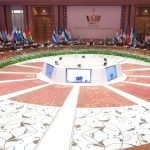
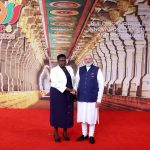
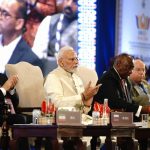
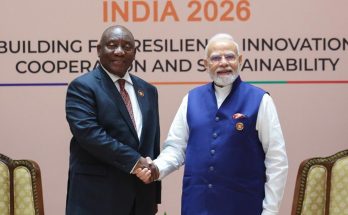
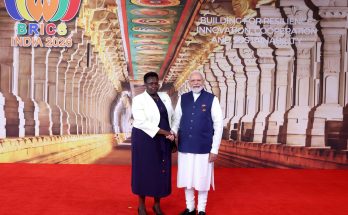
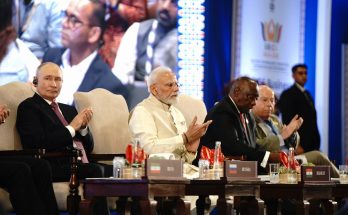
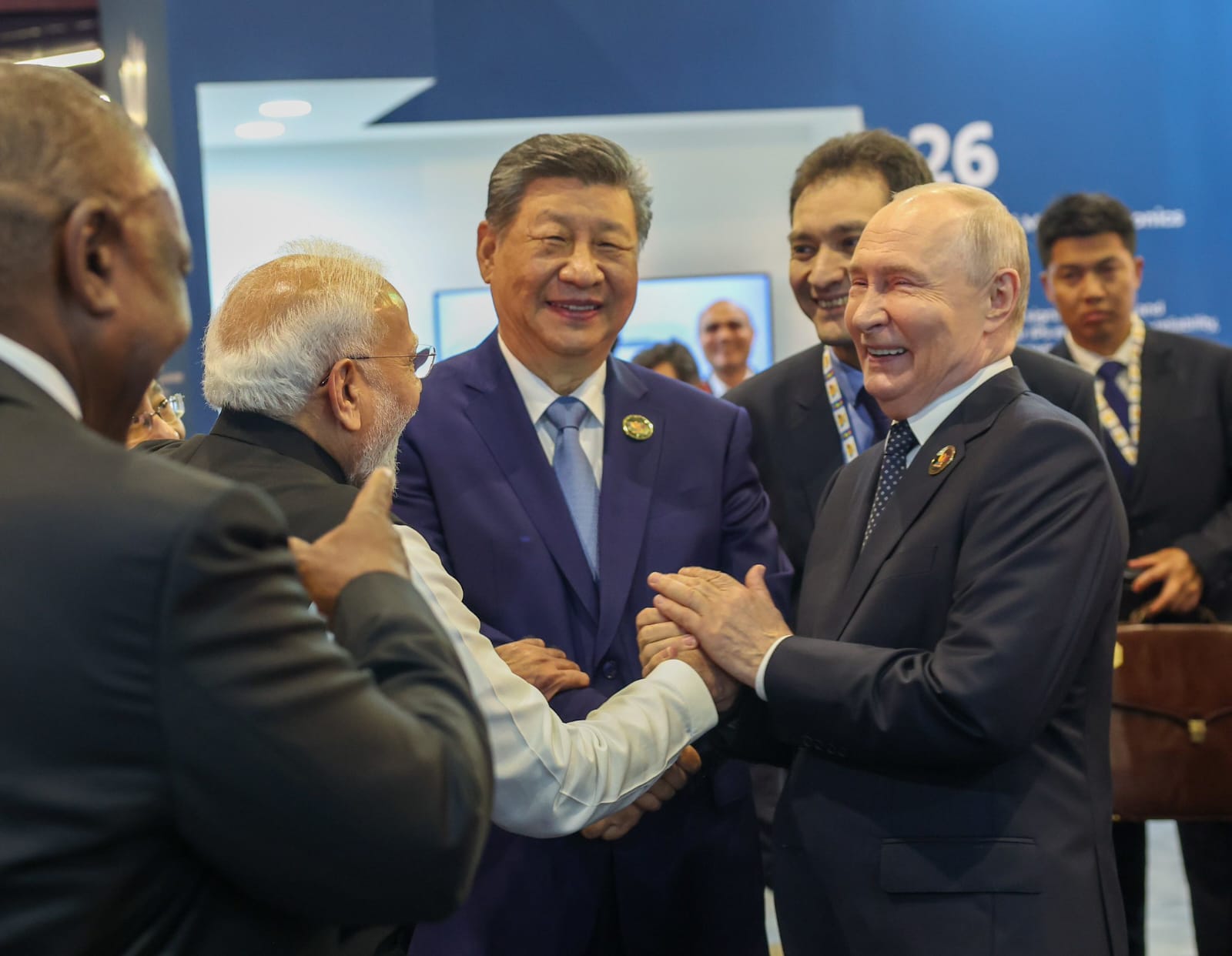
Organisation is the least glamorous form of diplomacy but among the most persuasive. India reused the playbook it refined during its 2023 G20 presidency: disperse, then converge. Over the year it held more than 350 meetings and engagements across 25 cities, so that delegates met a country rather than a convention centre. The finale returned to Bharat Mandapam. There Prime Minister Modi, Xi Jinping, Vladimir Putin, Iran’s president, Abu Dhabi’s crown prince and the presidents of Vietnam and the Philippines, the latter as this year’s ASEAN chair, shared a stage at a moment of open war.
Journalists arrived from around the world and appreciated India’s hospitality. In the media centre, journalists from Iran, the UAE, Saudi Arabia, Egypt and Kuwait worked side by side, a small mirror of the diplomacy unfolding among leaders.
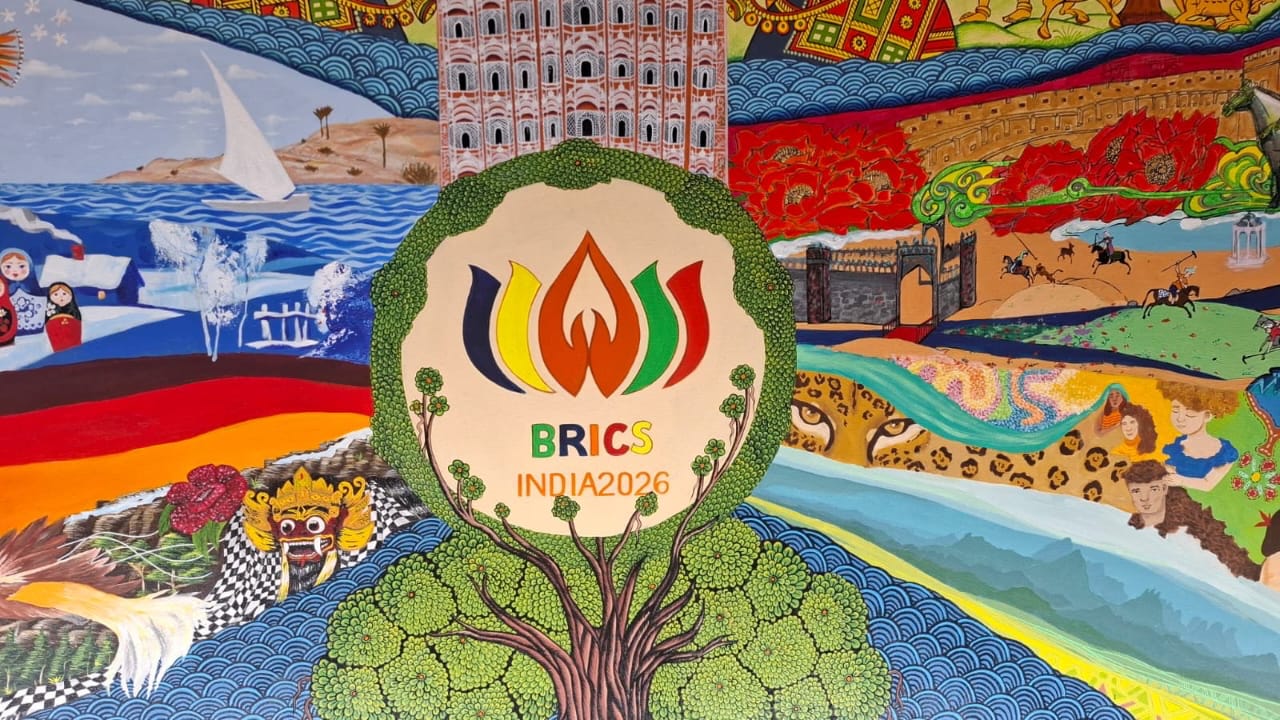
Even the media kits did some diplomatic work. Hundreds of Indian and foreign journalists covering the summit received kits filled with thoughtful, practical items that showcased Indian-made goods with genuine export potential: sattu and roasted makhana from Bihar, coffee from the Koraput hills of Odisha, and handmade purses and stoles. Our willing foreign guests were politely drenched in Indian colours.
The substance matched the spectacle. The external affairs ministry counts more than 50 practical outcomes, among them a Startup Innovation Fund and incubator network, a counter-terrorism action plan, a repository of digital public infrastructure and an urban mobility hub.
The most strategic is the proposed BRICS Risk Lab at GIFT City in Gujarat, which members agreed to take forward. Its purpose is to build reinsurance capacity for infrastructure across BRICS and the Global South, so that projects in politically awkward places are not stranded when Western insurers walk away. It is a quiet idea, and that is its strength: leverage that should threaten no one.
None of this resolves the structural question at the bloc’s core. Strip BRICS to its load-bearing walls and three remain: Russia, India and China. When the RIC moves, BRICS moves. When it splits, the bloc stalls. PM Modi used the summit to meet both Presidents Putin and Xi, but the hardest chapter opens in January, when China takes the chair. Beijing carries the weight, and it may prefer a sharper edge on currency, expansion and tone towards Washington. New Delhi’s task is to keep BRICS from becoming China-centric or a vehicle coloured in the shades of the Moscow-Beijing relationship.
India’s best defence is the precedent it has set. A declaration agreed on day one, two warring members talking on the sidelines, a long ledger of practical outcomes and an identity that sits comfortably with the Gulf and Southeast Asia. Any future chair that tilts towards confrontation must now explain why its summit achieved less. China has the weight. India has shown it has the voice most members are willing to follow.
India aced its chairship as diplomat, host and member. So, does BRICS have teeth? Not the kind its loudest champions imagine. It has no common currency, no binding commitments and no single line on the wars of the day. But New Delhi demonstrated a different kind of bite – the capacity to convene adversaries, to build instruments that create leverage, and to define a coalition by what it builds rather than whom it opposes.

Shubhangi Sharma is a journalist and anchor at Firstpost, where she covers geopolitics and international relations. Her work examines the shifting dynamics of power, India’s evolving role in the world, and geopolitical developments shaping international relations. She is the mind and face behind The Link, a geopolitical explainer series on Firstpost.)
Author Profile

- India Writes Network (www.indiawrites.org) is an emerging think tank and a media-publishing company focused on international affairs & the India Story. Centre for Global India Insights is the research arm of India Writes Network. To subscribe to India and the World, write to editor@indiawrites.org. A venture of TGII Media Private Limited, a leading media, publishing and consultancy company, IWN has carved a niche for balanced and exhaustive reporting and analysis of international affairs. Eminent personalities, politicians, diplomats, authors, strategy gurus and news-makers have contributed to India Writes Network, as also “India and the World,” a magazine focused on global affairs.
Latest entries
 India and the WorldNovember 13, 2026Africa and Future of BRICS: Reflections on the 18th Summit in New Delhi
- India and the WorldNovember 13, 2026India Aced Its BRICS Chairship As Diplomat, Host and Member
- India and the WorldNovember 10, 2026BRICS and Africa: From Representation to a Voice in Shaping the Global South
- India and the WorldNovember 3, 2026Mapping new pathways for enhancing intra-BRICS trade and investment