By Prof. Anil Sooklal
The 18th BRICS Summit in New Delhi was a gathering of global leaders at the forefront of shaping a multipolar world and pronouncing action to create a more equal and just global order. For Africa, BRICS is a vital platform to advance reform of global governance, strengthen multilateralism, and embed African priorities in the international agenda, says Prof. Anil Sooklal
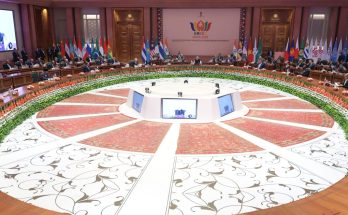
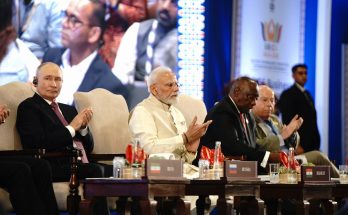
The 18th BRICS Leaders’ Summit in New Delhi convened at one of the most difficult moments in recent history. Geopolitical fault lines across West Asia, Eastern Europe, and the Sahel region in Africa continue to test the resilience of the international system, impacting not only peace and security but also economic growth, food supply, and energy stability. Under India’s chairship, the summit culminated in a substantive agenda framed by the theme “Building for Resilience, Innovation, Cooperation and Sustainability.” Over 300 ministerial and sherpa-level meetings laid the groundwork for leaders to deliberate on issues spanning the entire spectrum of global economic and political challenges.
Despite scepticism, the summit produced the 140-paragraphs New Delhi Declaration, one of the most comprehensive and ambitious in BRICS history. This outcome is testimony to the focused leadership and substantive cooperation that BRICS provides at a critical juncture in world affairs. Leaders addressed all pillars of cooperation: security, political dialogue, economic growth, and people-to-people exchanges. Reforming and strengthening the multilateral system have been central to BRICS since its inception 20 years ago.
Reforming UN and Multilateralism
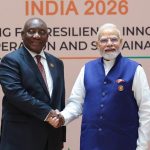
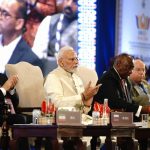
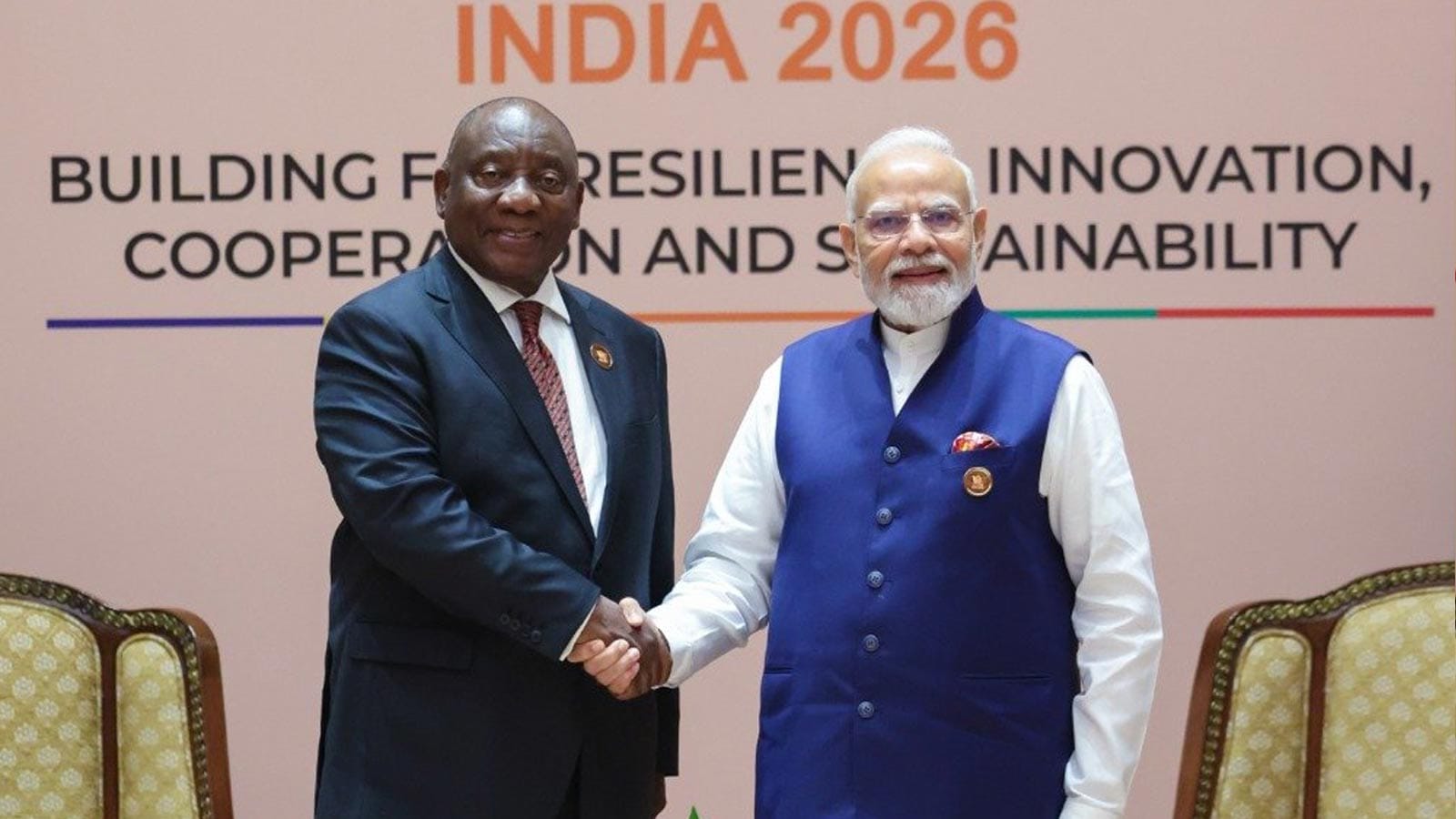
President Cyril Ramaphosa’s intervention in New Delhi captured the essence of Africa’s expectations: “The reform of multilateral institutions is essential to ensure they reflect the realities of today’s world and serve the interests of all nations, not just a few.” He reminded leaders that the greatness of BRICS lies not in uniformity but in diversity. BRICS represents a world in which no nation must choose between East and West, North, and South. It embodies a multipolar order committed to dignity, development, and equity.
At the BRICS Summit in Yekaterinburg in 2009, leaders committed to multilateral diplomacy with the United Nations at its centre and to a just multipolar order based on international law and equality. The New Delhi Summit reaffirmed this trajectory, showing that BRICS has remained consistent in championing reform even as global divisions have deepened. Ramaphosa emphasized that multilateralism must be defended and strengthened, not undermined. He warned against selective application of international law, stressing that accountability must apply universally — whether for atrocities in Palestine, Sudan, or elsewhere. His words resonated with Africa’s long-standing demand for fairness in global governance.
For Africa, reform of the UN Security Council is paramount. The Ezulwini Consensus remains our guiding framework, demanding permanent representation for Africa on the Council. It is unjust and unsustainable that Africa — home to 54 UN Member States and nearly one-fifth of humanity — remains excluded from permanent membership, even though the Council’s agenda disproportionately concerns African peace and security. The New Delhi Declaration reaffirmed support for advancing the African Union’s Agenda 2063 and the African Continental Free Trade Area (AfCFTA). As the text notes: “BRICS supports the AU’s efforts to accelerate economic integration and strengthen Africa’s role in the global economy.” This embedding of Africa’s priorities within BRICS is a significant step toward ensuring that Africa is not a passive recipient of global decisions but an active shaper of the multipolar order.
Inclusive Global Governance
President Ramaphosa outlined four ways BRICS can contribute to inclusive global governance. First, BRICS must remain a united voice for reform, advocating for a UN system that reflects current realities and ensures all regions are effectively represented. Africa’s demand for Security Council reform is central to this. Second, BRICS should demonstrate practical results. Through the New Development Bank and cooperation in infrastructure, food security, health, and climate resilience, BRICS can show that multilateralism delivers tangible benefits. Third, BRICS must shape fairer approaches to global governance, ensuring accountability, transparency, and development orientation in global institutions. Fourth, BRICS must act as a bridge across divides. In a fragmented world, dialogue matters more than confrontation. BRICS can prevent polarization by offering a platform where East and West, North and South meet as equals.
African Renaissance
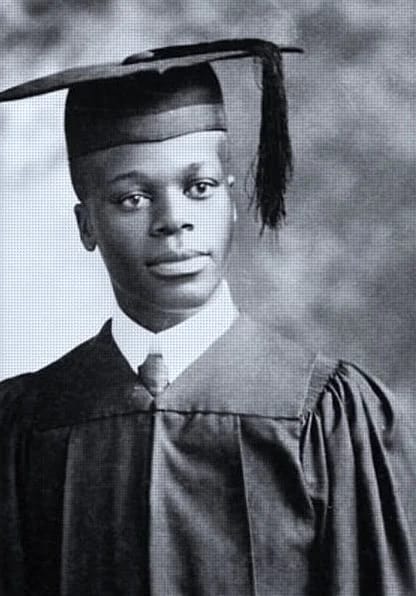
The New Delhi Summit also resonates with Africa’s own intellectual tradition of renewal — the African Renaissance. This philosophy, articulated by thinkers such as Pixley ka Isaka Seme, envisioned Africa rising from centuries of colonial subjugation to reclaim its dignity, unity, and rightful place in the world. In his famous 1906 speech “The Regeneration of Africa,” Seme declared: “The brighter day is rising upon Africa. Already I seem to see her chains dissolved, her desert plains red with harvest, her Abyssinia and her Zululand the seats of science and religion, reflecting the glory of rising nations.” Seme’s words were not merely poetic; they were prophetic. He foresaw an Africa that would contribute to global civilization on equal terms, rooted in its own values of community, spirituality, and resilience. The African Renaissance, later championed by leaders such as Thabo Mbeki, builds on Seme’s vision by insisting that Africa must be both self-reliant and globally engaged. It is about reclaiming Africa’s intellectual heritage, advancing economic integration, and ensuring that Africa is not spoken for but speaks for itself in global forums. BRICS, in this sense, is a natural platform for the African Renaissance. It provides Africa with the means to embed its priorities — from Agenda 2063 to the AfCFTA — into the global agenda. It allows Africa to shape the multipolar order not as a peripheral actor but as a central architect.
Inspired by India’s ethos of Vasudhaiva Kutumbakam — “the world is one family” — the Summit was profoundly people-centred, placing humanity’s well-being at the core of its deliberations. This resonates deeply with Africa’s philosophy of Ubuntu — “I am because we are” — reminding us that solidarity and collective progress must guide our future. The Declaration drew parallels between these philosophies, emphasizing that BRICS is not only about states but about people. It reaffirmed commitments to cooperation in education, health, culture, and youth exchanges — areas that directly impact citizens’ lives.
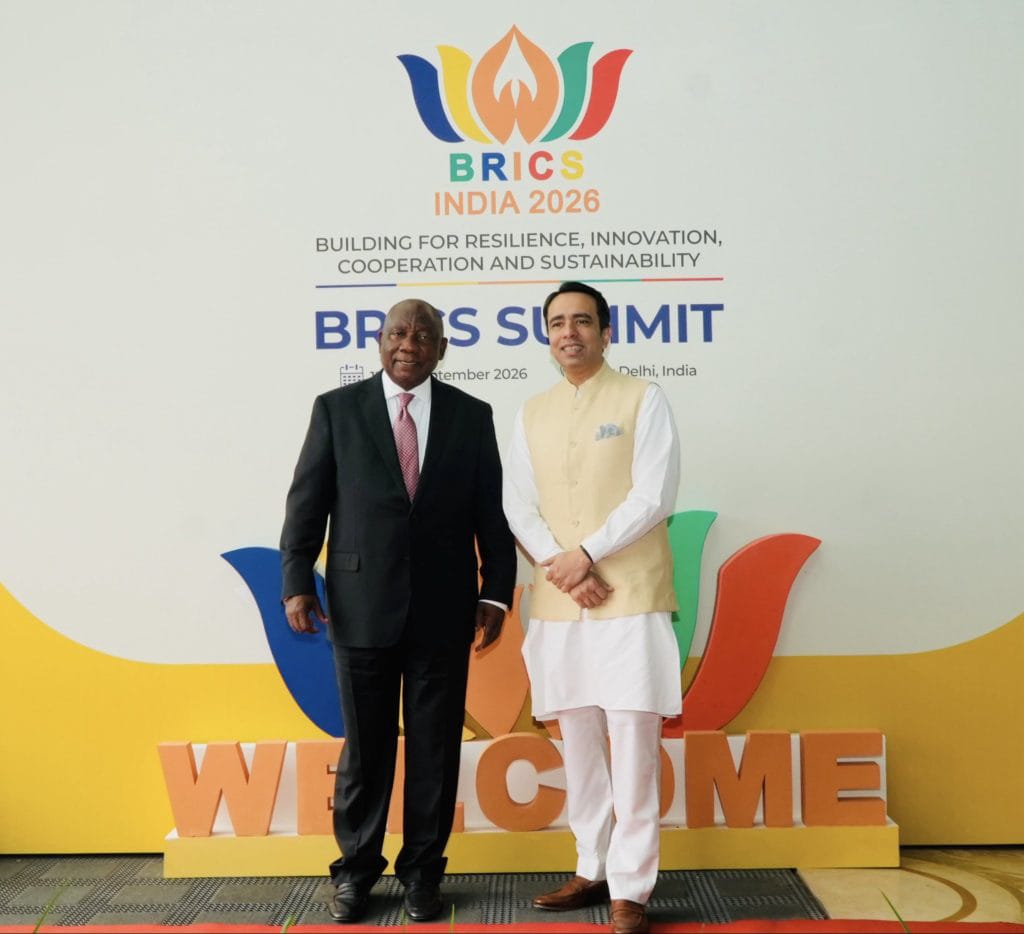
The presence of the African Union and African leaders at the Summit underscored Africa’s growing role in shaping a multipolar order. BRICS is not merely a platform for the Global South; it is a gathering of global leaders at the forefront of creating a more equal and just international system. For Africa, BRICS provides an important platform not only for permanent members but also for partner countries, ensuring that Africa is at the forefront of shaping the multipolar international order. The summit demonstrated that Africa’s voice is increasingly central to global deliberations.
The 18th BRICS Summit in New Delhi was not just a gathering of leaders of the Global South. It was a gathering of global leaders at the forefront of shaping a multipolar world and pronouncing action to create a more equal and just global order. For Africa, BRICS is a vital platform to advance reform of global governance, strengthen multilateralism, and embed African priorities in the international agenda. The Summit reaffirmed that Africa is no longer on the margins but at the centre of shaping the future. As President Ramaphosa concluded: “We must ensure that the voices of Africa and the Global South are fully reflected in shaping the future international order.” The New Delhi Declaration, the presence of African leaders, and the resonance of Ubuntu, Vasudhaiva Kutumbakam, and the African Renaissance together mark a turning point. BRICS has shown that diversity can be a source of strength, that cooperation can transcend divides, and that Africa’s role in global governance is indispensable
H.E. Prof. Anil Sooklal is High Commissioner of South Africa to India. He served as South Africa’s sherpa to BRICS and IBSA .He previously served as South Africa’s Ambassador to The European Union, Belgium and Luxembourg.)
Author Profile

- India Writes Network (www.indiawrites.org) is an emerging think tank and a media-publishing company focused on international affairs & the India Story. Centre for Global India Insights is the research arm of India Writes Network. To subscribe to India and the World, write to editor@indiawrites.org. A venture of TGII Media Private Limited, a leading media, publishing and consultancy company, IWN has carved a niche for balanced and exhaustive reporting and analysis of international affairs. Eminent personalities, politicians, diplomats, authors, strategy gurus and news-makers have contributed to India Writes Network, as also “India and the World,” a magazine focused on global affairs.
Latest entries
 India and the WorldNovember 13, 2026Africa and Future of BRICS: Reflections on the 18th Summit in New Delhi
- India and the WorldNovember 13, 2026India Aced Its BRICS Chairship As Diplomat, Host and Member
- India and the WorldNovember 10, 2026BRICS and Africa: From Representation to a Voice in Shaping the Global South
- India and the WorldNovember 3, 2026Mapping new pathways for enhancing intra-BRICS trade and investment