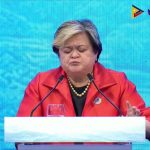
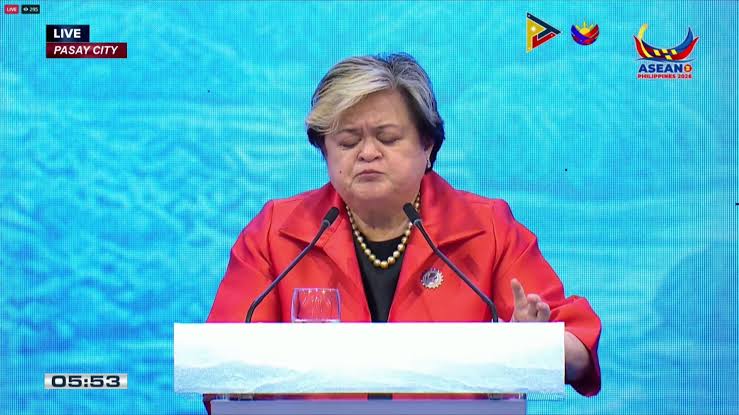
MANILA, Philippines: Amid renewed tensions around competing claims over the South China Sea, the ASEAN summit in Manila marked the completion of over 80 per cent of negotiations on the Code of Conduct South China Sea, but it would only be concluded next year under Singapore’s chairship of the 11-member grouping. Finishing the Code of Conduct (COC) in the South China Sea will now be in Singapore’s hands, the Philippines Foreign Affairs Secretary Maria Theresa Lazaro said here on November 15.
With the region listening intently, the Philippines foreign minister underlined that Manila considers the progress in the COC one of the successes of its chairship of ASEAN.
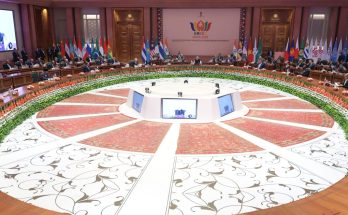
Speaking to journalists at the International Media Center for the 49th Association of Southeast Asian Nations (Asean) Summit, Ms Lazaro said that only 80 percent of the COC has been finalized and the code may only be concluded during Singapore’s turn as the Asean chair in 2027.
“The parties agreed to continue to work constructively with a view to concluding the negotiations on an effective and substantive code of conduct at the earliest possible time — and actually this means that we give it up, we leave this almost 80 percent finished document to Singapore as the next chair,” Ms Lazaro said.
“I have to emphasize that it is one already of the achievements of the Philippines as chair, because what was the COC before we shepherded it? It was only about 50 percent, perhaps? But to go to 80 and even moving, then it’s a little more discussions when it’s in Singapore, but indeed, this Code of Conduct is really something that we can be proud of,” she added.
Asean members and China decided in 2023 to accelerate negotiations and finalize the Code of Conduct by 2026. The COC will set rules to manage maritime disputes and prevent confrontations over the South China Sea, in which five ASEAN countries and China have competing territorial claims.
There is a consensus that the COC, when concluded, would be consistent with international law, particularly the 1982 United Nations Convention on the Law of the Sea (Unclos).
In a boost for India and other dialogue partners of ASEAN, Ms Lazaro clarified that the Code will not undermine the rights of countries not parties to the agreement.
In response to a question by India Writes Network, Ms Lazaro said that the Middle East crisis figured in discussions between the leaders of ASEAN at the Manila summit. Alluding to the closure of the Strait of Hormuz, she underlined that ASEAN has concerns over food security, energy security and the safety of ASEAN nations in the Middle East region.
(Manish Chand, CEO, Centre for Global India Insights and India Writes Network, is in Manila to report on and analyse ASEAN and related summits)

Author Profile

- Manish Chand is Founder and Editor-in-Chief of India Writes Network (www.indiawrites.org) and India and World, a pioneering magazine focused on international affairs. He is CEO, Centre for Global India Insights, an India-based think tank focused on global affairs.
Latest entries
 India and the WorldNovember 16, 2026South China Sea Code of Conduct: Baton passes to Singapore
- India and the WorldNovember 14, 2026Modi set for high-wire Act East diplomacy in Manila
- India and the WorldNovember 2, 2026With China on mind, Quad renews joint plans to bolster critical supply chains
- India and the WorldOctober 19, 2026India-US trade deal soon, says Rubio