Behind India-Nordic Summit: Focus on tech & innovation

India is poised to hold its first summit with the leaders of five Nordic countries which will focus on forging a mutually empowering partnership centered on technology and innovation.
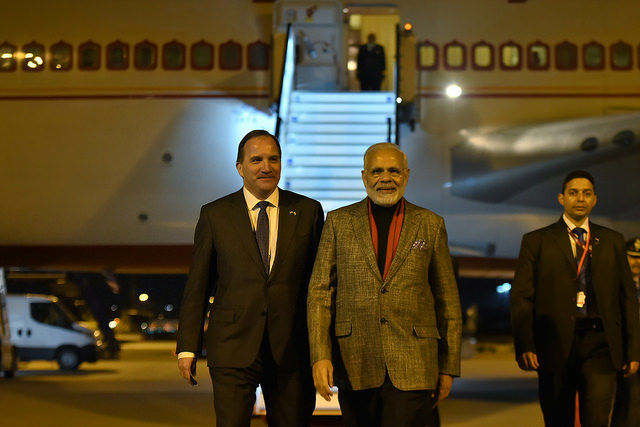
India’s Prime Minister Narendra Modi and his Swedish counterpart Stefan Lofven will co-host the India-Nordic Summit on April 17, in which the leaders of Sweden, Norway, Denmark, Finland and Iceland will participate.
The India-Nordic Summit is designed to accelerate India’s economic and strategic engagement with the Nordic countries which are famous for their high standard of living and exceptional record of eco- friendly development.
“The Nordic countries have globally recognized strengths in clean technologies, environmental solutions, ports modernization, cold-chains, skill development and innovation. Nordic competencies fit well with our vision for India’s transformation,” said Mr Modi in a statement ahead of the summit.

Read More

US-UK-France air strikes in Syria: Russia warns of consequences

The United States, Britain and France have attacked the chemical weapon sites in Syria in response to the chemical attack reportedly launched by the loyalist forces of President Bashar al-Assad’s regime on Eastern Ghouta in the Douma region.
In a televised address, US President Donald Trump said that the three nations had “marshaled their righteous power against barbarism and brutality” which has claimed almost 1,700 civilian lives in Douma. The chemical weapons attack reportedly took place on April 7, 2018.

Read More

AAGC & African Agenda 2063: Synergies and Opportunities

The Asia-Africa Growth Corridor has to be framed in the broader context of the African Agenda 2063. The agenda identifies seven key aspirations that are to be achieved over the next 50 years. The period is divided into 10-year implementation plans which allow for prioritization and easier monitoring of progress.

The first aspiration of the Agenda 2063 is a prosperous Africa based on inclusive growth and sustainable development. Here we are not only talking about living standards, health and well-being, but also about well-educated citizens, about creating economies that are structurally transformed to create shared growth, looking at modern agriculture and taking advantage of Africa’s unique natural endowments.

Read More

China’s Xi rejects geopolitics behind BRI: Will India bite the bait?

Amid persistent anxieties about the nature of the Belt and Road (BRI) project among a host of countries, including India, China’s President Xi Jinping has rejected any ulterior “geopolitical calculations” behind the BRI and underlined China’s commitment to “building a community with a shared future for mankind.”
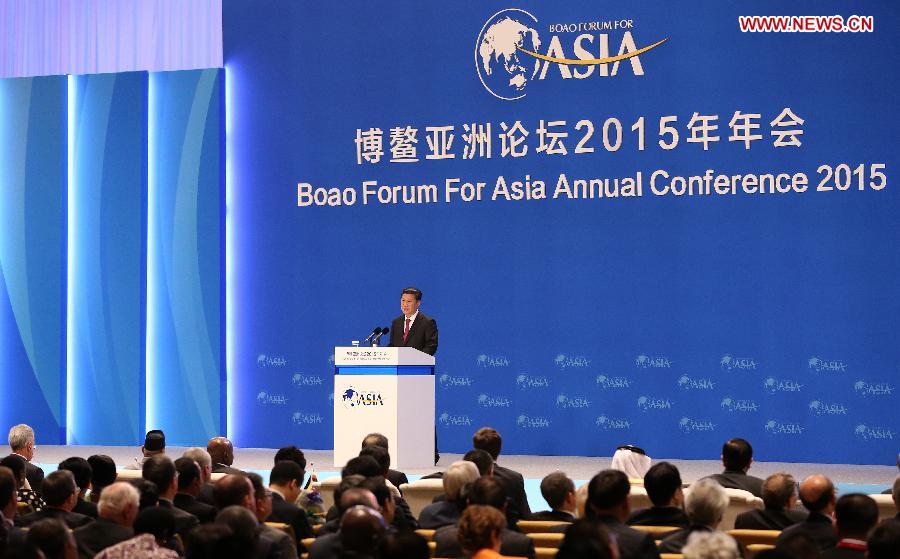
“China has no geopolitical calculations, seeks no exclusionary blocs and imposes no business deals on others,” the Chinese leader said at the Boao Forum for Asia, popularly known as ‘Asia’s Davos’, in the island of Hainan. He also assured that the project does not impose any unfavourable deals on any countries.

Read More

China’s Xi rejects Cold War mentality, pitches for open economy & trade

Amid the rising wave of protectionism and escalating Beijing-Washington trade war, Chinese President Xi Jinping has rejected “Cold War mentality” and projected himself as an apostle of globalization at the Boao Forum for Asia in the island of Hainan.
“China’s reform and opening up will definitely succeed and a Cold War mentality, zero sum thinking and isolationism are outdated,” Mr Xi told top industrialists, entrepreneurs and thought leaders at the Boao Forum. The Chinese leader’s comments were a veiled critique of US President Donald Trump’s America First world view and protectionist policies.

Read More

It is Doklam again: Will it lead to another confrontation?

On last Sunday, 25 March, Defence Minister Nirmala Sitharaman told reporters in Dehra Dun that India is “alert and ready for any unforeseen situation in Doklam”. Adding that the government was constantly working to modernise the forces and that they would be ready to “maintain our territorial integrity.”
This was a day after India’a Ambassador to Beijing, Gautam Bambawale, told the South China Morning Post in an interview that any attempt by China to change the status quo along the Indian border may lead to another Doklam-like standoff.
Earlier in the month, Sitharaman had told the Rajya Sabha that the forces of the two countries had redeployed themselves away from the point of the standoff in last June. In response to a question on Chinese activity there, she said that “in order to maintain these troops during winter, PLA has undertaken construction of some infrastructure, including sentry posts, trenches and helipads.”

Read More

ISIS killed 39 Indians, what took govt 4 years to confirm this?

Union External Affairs Minister Sushma Swaraj told Parliament on Tuesday, 20 March, that the government found DNA proof regarding the death of 39 Indian workers who went missing in June 2014 from Mosul, Iraq, after ISIS took over the city. Her announcement ended years-long speculation, mostly from the government’s part, on the fate of the missing.
DNA matches from bodies exhumed out of mass graves surrounding the infamous Badush prison, on the outskirts of Mosul along the banks of river Tigris, confirmed the deaths of the missing Indians. According to a detailed account by the lone survivor from the group, Harjit Masih, the remaining men were killed, execution style, on 15 June 2014, four days after their abduction.

Read More

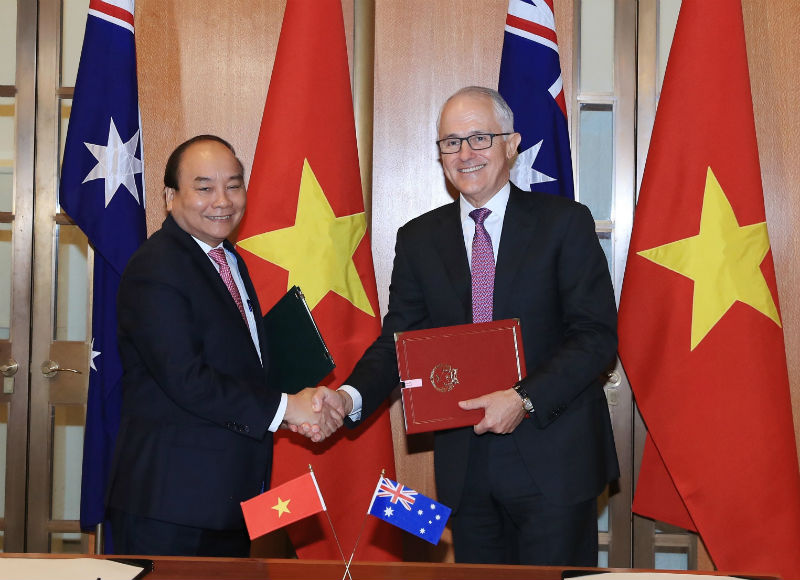
Changing geopolitical scene in Indo-Pacific: Vietnam-Australia & Vietnam-India partnership

The geo-political scene in the Indo-Pacific region is changing rapidly in over the last couple of years. The driving force behind these changes is the rise of China, together with its assertiveness on territorial issues, particularly its claim on most parts of South China Sea in the midst of rival claims from some other countries of the region, namely Vietnam, Malaysia, Brunei and, of course Taiwan that claims everything that mainland China does.
The strengthening of Vietnam-Australia relations and India-Australia relations together offers an alternative narrative to China’s view of the regional order.

Read More

Macron’s visit marks new phase in Indo-France strategic partnership

“France wants India as its first strategic partner in Asia, and it wants to be India’s first strategic partner in Europe, and even the western world,” said French President Macron as the two countries inked 14 crucial agreements in New Delhi, signalling a “big leap” in the bilateral relations. Macron’s was an unambiguous gesture reflecting the deepening of strategic ties between the two countries. The comprehensive nature of the agreements covering defence, economic, nuclear energy and energy security, among others, was an indication of growing convergence between the two countries in the times of dispersed and diverse security threats with global balance of power under transition. Though India and France have maintained cordial relations since the cold war times, the potential of their strategic partnership appeared to have remained largely underutilised. The recent visit by the French President to New Delhi may well be considered as a major breakthrough in strategic ties between the two countries as they are responding to their convergence of interests like never before.

Read More