RSS chief talks tough on Pakistan, says entire Kashmir is part of India

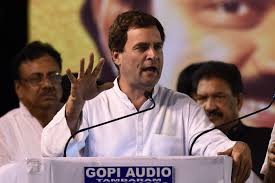
In a strong message to Pakistan, the RSS, the ideological mentor of the ruling Bharatiya Janata Party (BJP), has asserted that the whole of undivided Kashmir, including Mirpur, Muzaffarabad and Gilgit-Baltistan, belongs to India and warned Islamabad against encouraging separatist forces in Jammu and Kashmir.

In a speech at the annual Dussehra rally in Nagpur on October 11, the headquarters of RSS, Rashtriya Swayamsewak Sangh (RSS) chief Mohan Bhagwat backed the government’s surgical strikes against Pakistan and underlined that there is a limit to tolerance. Mr Bhagwat’s remarks reinforced the ruling establishment’s growing exasperation with Islamabad which is resorting to diversionary tactics, rather than addressing India’s concerns over cross-border terrorism.

Read More

No thaw with India? Why Pakistan is indulging in Modi-bashing?

Prime Minister Narendra Modi is surely the hate word among Pakistan’s ruling dispensation, including the military establishment that runs its India policy. And if any proof was needed, one only needs to refer to the giveaway statement of Sartaj Aziz, Advisor to Prime Minister Nawaz Sharif. “Pakistan sees no hope of a breakthrough in relations with India under the Narendra Modi government,” said Mr Aziz, encapsulating the distaste for PM Modi among Pakistan’s ruling elite. This rancour can be understood as Mr Modi has done the unthinkable by launching surgical strikes on Pakistani terrorist camps, patronized by the Rawalpindi establishment, in Pakistan-Occupied Kashmir and launching an effective campaign to isolate Pakistan in the international arena in the aftermath of the Uri terror strike. The message from Mr Modi is quite clear, and it’s no surprise that he is hated by Pakistan’s establishment which continues to use cross-border terrorism with impunity.
Mr Modi’s message is loud and clear: terror and talks cannot go hand in hand, therefore until Pakistan stops supporting terror activities on the Indian soil there can be no fruitful talks. For this reason, Pakistan sees Mr Modi, with his capacity for out-of-box thinking and decisive action, as its arch enemy in pursuing its politically motivated activities in Kashmir.
But it seems Pakistan’s attempts to influence domestic discourse on terrorism in India is not going to succeed given across-the-board support for tough actions against Pakistan in the wake of the Uri terror strike. Pakistan must change its policy of cross-border terror against India if it wants peace with the world’s fastest growing economy, regardless of who is in power in New Delhi.

Read More

India and the NSG Membership: What Lies Ahead

In the pre-2005 period, the Indian government as well as most Indian analysts had approached the four export control regimes – the Nuclear Suppliers Group (NSG), the Missile Technology Control Regime (MTCR), the Wassenaar Arrangement (WA) and the Australia group (AG) – with suspicion. Such an approach was not unnatural considering the fact that the first two, namely the NSG and the MTCR, had actively worked against Indian interests. The NSG denied fuel for the Tarapur Atomic Power station (TAPS) while the United States used MTCR provisions to prevent the transfer of cryogenic engine technology – a purely civilian space technology – by Russia to India thereby setting back the Indian space programme by more than a decade.

Read More

It’s time to act and fix ailing UNSC: India’s envoy in UN

Today, we stand on the cusp of selecting the 9th Secretary General of the UN. The last report of Secretary General Ban ki-Moon contained in A/71/1 on the Work of the Organization is, therefore, an appropriate inflection point to examine what are the main challenges that face us and what are the means and mechanisms to mend. These are not simple issues nor are they small in number. However, due to paucity of time I will focus on just three examples relating to peace and security that are emblematic of the problems we face.

Read More

India to Pakistan: Abandon your futile quest, J& K is and will remain India’s integral part

Abandon your futile quest and stop abusing international fora for Jammu and Kashmir is an integral part of India. This is India’s strongly-worded message to Pakistan which continues to rake up the Kashmir issue to divert the world’s attention from its relentless pursuit of terrorism as an instrument of state policy.

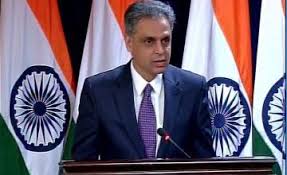
“Our response to Pakistan is consistent. Abandon your futile quest. Jammu and Kashmir is an integral part of India and will remain so,” India’s Permanent Representative to UN Syed Akbaruddin said during a General Assembly debate on ‘Report of the Secretary General on the Work of the Organisation’ at the 71st session of the UNGA.

Read More

Deactivating the Permanent Indus Waters Commission

The Indus Waters Treaty (1960) has not been immune to the vicissitudes currently affecting India-Pakistan relations. In the aftermath of the attack by Pakistani terrorists on an Indian Army camp in Uri on 18 September 2016, the Government of India (GOI) has indicated its decision, at the highest level, to comprehensively review the functioning of the Treaty. India has been a scrupulous adherent to the Treaty over the past 56 years despite the periodic conflictual relations it has had with Pakistan. In the past, India has responsibly reacted to issues raised by Pakistan on India`s water usage in the Indus basin and tried to resolve them within the legal ambit of the Treaty.

Read More