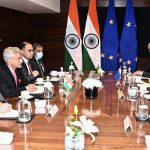
In Indian diplomatic tradition, extending a Republic Day invitation is an exercise in signaling the importance of the partner country for New Delhi’s diplomatic calculus. India’s decision to host Ms von der Leyen and Mr Costa, who are the EU’s most influential political figures, marks the first time the leadership of the European Union in its executive and political capacities will be honored in this manner.
This is a strategic marker in the geopolitical landscape, reflecting India’s intention to elevate the relationship with the EU given their shared interests in a fast-evolving world order.
Against the backdrop of ongoing global recalibration, the summit is poised to be substantive and transformational. Rising geopolitical tensions, fracturing trade regimes, and intensifying technological competition have prompted states large and small to rethink how they anchor their foreign and economic policies. In this context, the India-EU equation, long viewed in New Delhi and Brussels as an untapped reservoir of strategic complementarity, is shifting from polite courtesy to purpose-driven engagement. India, a rising country anchored in democracy and economic dynamism, and the European Union, a civilizational and economic bloc navigating post-pandemic recovery and geopolitical uncertainty, find themselves converging on a shared desire to shape the future rather than merely adapt to it.
The Big Deal
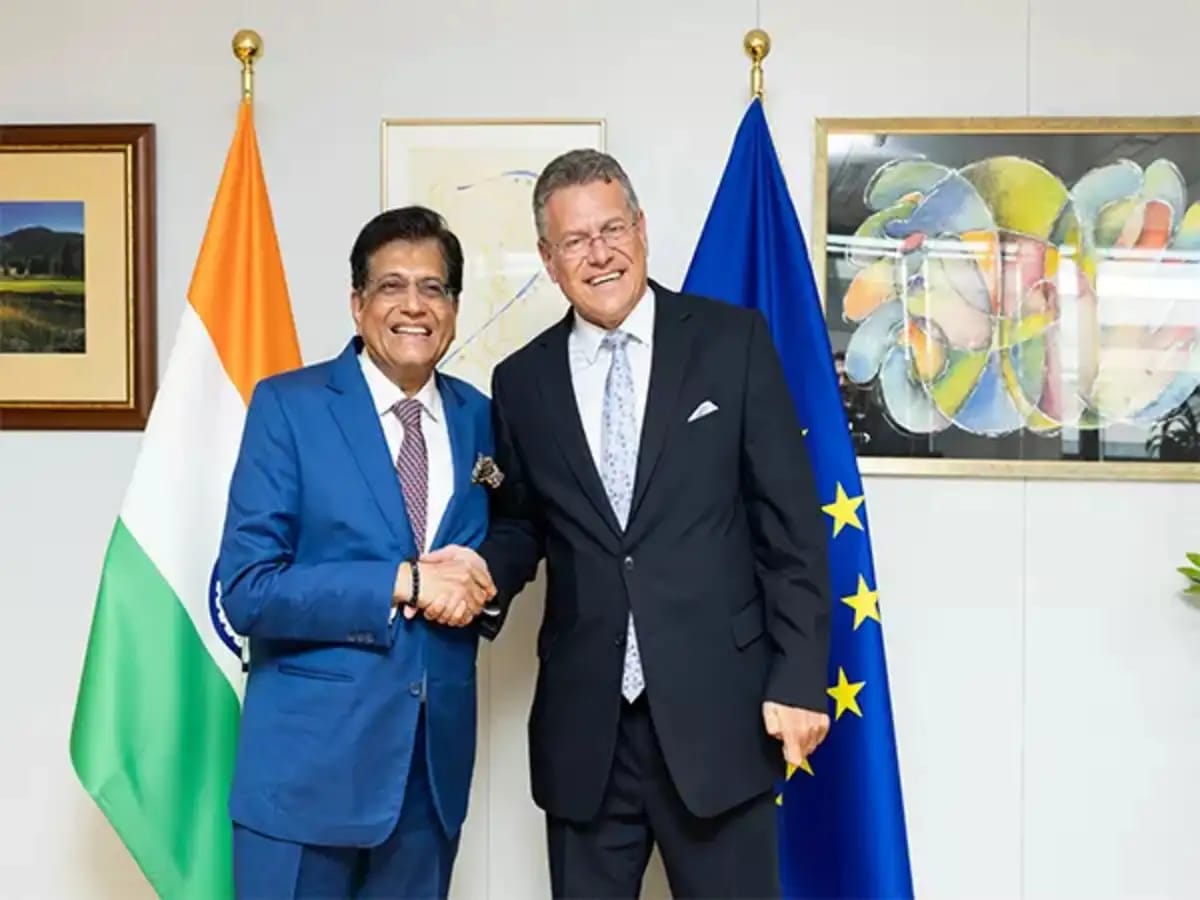
At the heart of this summit is the long-pending Free Trade Agreement (FTA) between India and the EU. Talks on a comprehensive trade and investment pact have been dragging on for nearly two decades, punctuated by bursts of progress and prolonged impasses. Negotiations, formally reinvigorated in 2022 and sustained through multiple rounds of discussions, have at times seemed to inch forward and at others to stall on thorny issues ranging from rules of origin to market access hurdles in automobiles and steel. The EUs Carbon Border Adjusted Mechanism (CBAM) provisions have further complicated the negotiations. As of December 2025, discussions focus on market access, agriculture, and carbon taxes. A separate Investment Protection Agreement (IPA) negotiating track is running in parallel but is lagging and seems difficult to be concluded simultaneously due to India’s Bilateral Investment Treaty (BIT) reform, which continues to be a work in progress, and EU ratification needs. Geographical Indicators (GIs) form a standalone pact for mutual recognition, advancing but not aligned with the FTA timeline; and key issues like Basmati rice persist. The talks in January 2026 will target GIs alongside tariffs. Both sides have signaled an unprecedented resolve to ensure success. Recent diplomatic engagements, including high-level visits and intense negotiations by Commerce Minister Piyush Goyal and the EU’s trade team led by European Commissioner for Trade Maros Sefcovic, suggest that disagreements have narrowed sufficiently. It remains to be seen if there is political will to conclude the negotiations before the summit.
Defence Framework
A successful FTA negotiation will yield commercial gains like tariff cuts, which will boost India’s textile, pharmaceutical and other labor-intensive exports, EUs automobile and machinery sales, as well as enhance FDI in green tech and “Make in India.” The EU will be able to diversify its supply chains via Indian hubs. There are expectations that the summit could see the launch of a defense framework pact enhancing maritime security, cyber defence, and counterterrorism cooperation, plus a new comprehensive strategic agenda on security, sustainability, and connectivity including IMEC, as well as education, skills, and technology.
Beyond the prosperity narrative that trade advocates champion, the India-EU partnership has broadened to encompass a range of strategic domains. Trade may provide the connective tissue, but technology, climate resilience, security cooperation, and global governance have become the organs animating a deeper, more resilient relationship. European policymakers see India not only as a vast and growing market but also as a strategic interlocutor in the Indo-Pacific — a region of mounting geopolitical contestation where EU interests align with India’s vision of a free, open, and rules-based order. From dialogues on cyber-security and defence to collaboration on climate goals and critical technologies, both sides now want to cooperate beyond trade and investments due to their own reasons.
Strategic Calculations
India is also at a crossroads today. Its economic reform trajectory, desire to tap the demographic dividend, and difficulties arising due to an assertive China have made it a sought-after partner among European capitals eager to diversify economic ties and secure reliable partners in uncertain times. The narrative emerging from New Delhi is one of agency and reciprocity. India seeks partners who respect its strategic autonomy, refrain from prescriptive dictates, and engage on terms that balance mutual benefit with mutual respect.
In Europe, the narrative resonates with its own recalibrations. The European Union, navigating a complex post-pandemic recovery and a shifting geopolitical theatre shaped by the war in Ukraine and the rise of China, has made diversification of partnerships a core component of its strategic playbook. India’s stable democratic framework, market potential, and growing geopolitical footprint make it an attractive interlocutor for Brussels. Here, India is seen as a partner capable of anchoring supply chains, advancing technological cooperation, and reinforcing a multipolar global order that counters both protectionist impulses and unchecked authoritarian influence.
Already, the EU supports sustainable farming in India via Horizon Europe’s calls on food security, resilient value chains, and early warning systems for disruptions, aiding small farmer’s market access and biodiversity protection. Horizon Europe funds joint research and development in Artificial intelligence, semiconductors, 6 G and Quantum Technology via the Trade and Technology Council, boosting India’s digital infrastructure and innovation capacities. EU partnerships, including Danish center for Excellence for green shipping and Norwegian MOUs for ice-class vessels, enhance India’s green hydrogen ports and shipbuilding under its $20 billion maritime push.
However, despite positive trends, this summit will not be without its complexity. The sheer breadth of expectations, which range from concluding an FTA to charting a sweeping strategic agenda, means that any outcome is likely to be a blend of deliverables and deferred commitments. Negotiators acknowledge that certain technical aspects of a trade agreement may need post-summit refinement or phased implementation. There is an emerging consensus that a politically binding agreement, endorsed by leaders in January, can pave the way for eventual formalization once detailed chapters are finalized. A political pragmatism which ensures forward movement without ignoring the implementation complexities will be a satisfactory solution for both sides in the circumstances.
As the world watches, the India-EU Summit is poised to become a moment of narrative shaping about trade, strategic partnership, and about two diverse democratic entities committing to chart a course that many observers see as emblematic of 21st-century cooperation. Whether it culminates in the signing of an ambitious FTA or the launch of a phased roadmap, the summit’s true legacy may lie in its potent message: even in an era of great-power turbulence, purposeful collaboration between like-minded partners remains possible, and indeed necessary. The presence of ministers and business leaders from across Europe in January 2026 will frame the future of a partnership animated by shared values and sharpened by global urgency. In the intricate dance of contemporary geopolitics, the India-EU summit is not just a meeting but a statement of intent, and potentially the opening chapter of a deeper, more consequential story.
Author Profile

Latest entries
 India and the WorldJanuary 5, 2026India-EU Summit 2026: A Turning Point in Global Partnership
 DiplomacyMay 23, 2022Indo-Pacific dynamics will drive Tokyo Quad Summit
 India and the WorldAugust 13, 2021Tony Abbot’s Delhi Mission: Revitalizing India-Australia CECA & Economic Ties
- India and the WorldAugust 14, 2019Navigating Indo-Pacific: India’s Strategy