Amid a turbulent global geopolitical landscape, India and Germany, Europe’s economic powerhouse, have elevated their ties across the spectrum by signing 19 pacts in areas ranging from defence and technology to critical minerals and green energy.
The two democracies also deepened their geopolitical connect by launching a new Track 1.5 Foreign Policy and Security Dialogue and another consultation mechanism on the Indo-Pacific underlining their shared intent to collaborate in shaping a rules-based international order amid growing upheavals and uncertainties.
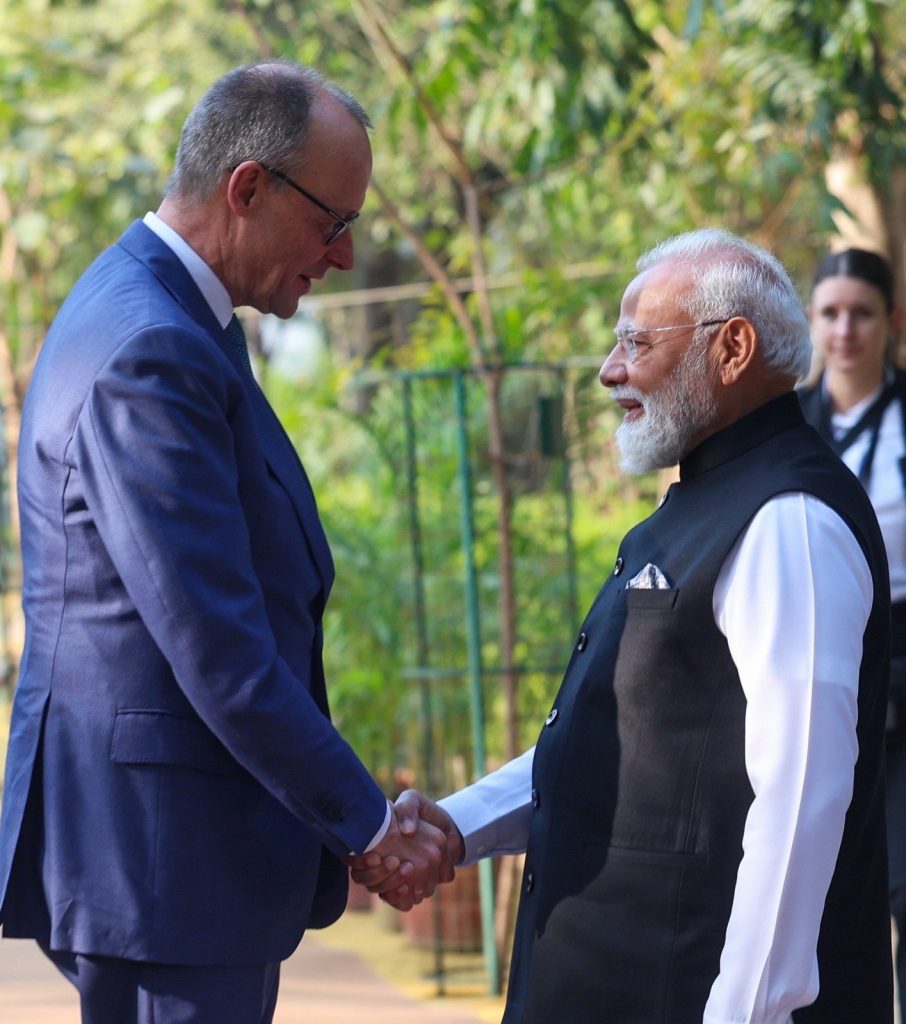
This new elevated phase in India-Germany ties was unveiled after wide-ranging talks between Prime Minister Narendra Modi and Chancellor Friedrich Merz in Gandhinagar, the capital of Gujarat.
This was Merz’s first visit to Asia since taking office last year.
Enhanced defence cooperation was among the key outcomes, with both sides unveiling a slew of proposals for joint production and development of high-end weaponry. “The growing cooperation in defence and security is a symbol of our mutual trust and shared vision. I express my heartfelt gratitude to Chancellor Merz for simplifying the processes related to defence trade,” PM Modi said, referring to Germany’s easing of procedures for defence exports that has helped in bolstering India-Germany defence ties
“We will also work on a roadmap to enhance cooperation between our defence industries, which will open up new opportunities for co-development and co-production,” Mr Modi said.
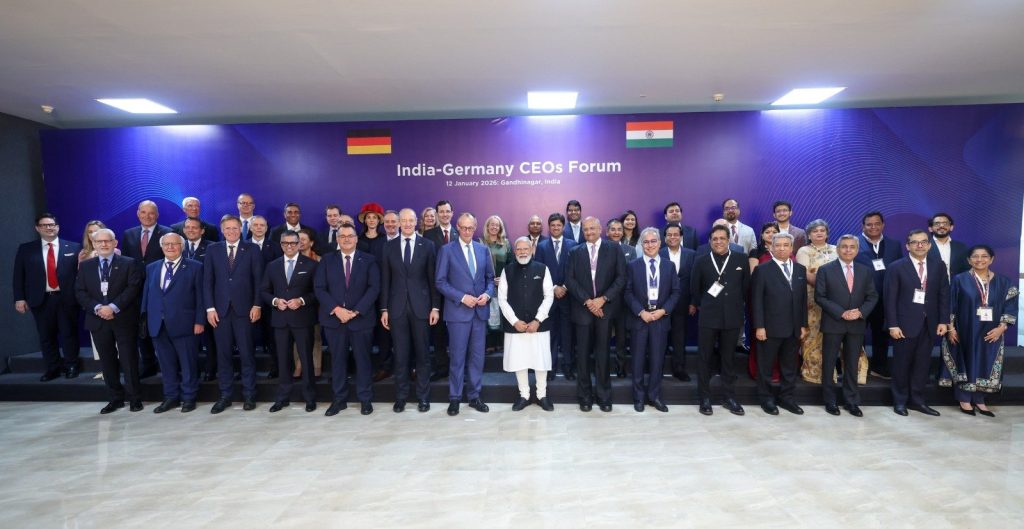
Chancellor Merz underscored the need to deepen the bilateral strategic partnership amid “profound geopolitical changes and upheavals in the world”. “Europe and trans-Atlantic relations remain important to us. Today, we need to forge a broader network of partnerships and we need to do so swiftly,” he said. “India is a desired partner, a partner of choice for Germany, and the preconditions for a renewed and deepened and intensified partnership couldn’t be more favourable.”
Amid their trade frictions with the US, the two countries also raised the bar for their economic ties by deciding to expand bilateral trade, which has already surpassed $50 billion. Chancellor Merz pushed for the speedy conclusion of the India-EU trade deal, which is expected to be finalised during the India-EU summit in New Delhi on January 27.
In an initiative to ease travel, the two sides announced visa-free transit for Indian passport holders transiting through Germany.
Boosting their growing green partnership, the two sides decided to jointly advance new projects in areas such as climate, energy, urban development, and urban mobility. “The new mega project in green hydrogen involving companies from both countries will prove to be a game-changer for the energy of the future,” said Mr Modi.
Author Profile

- Manish Chand is Founder and Editor-in-Chief of India Writes Network (www.indiawrites.org) and India and World, a pioneering magazine focused on international affairs. He is CEO, Centre for Global India Insights, an India-based think tank focused on global affairs.
Latest entries
 India and the WorldApril 10, 2026Why India-Armenia ties are blossoming in a volatile world
- In ConversationApril 5, 2026Pakistan’s Mediation Role in US–Iran Conflict Raises Questions: Alok Bansal
- India and the WorldMarch 24, 2026Trump dials Modi: Focus on ending war and keeping Hormuz open
- India and the WorldMarch 23, 2026US-Iran war: Modi bats for diplomacy, assures energy security for India