India and the US unveiled the details of their interim trade agreement on February 7 under which New Delhi will remove or reduce tariffs on all industrial goods and a “wide range” of agricultural goods imported from the US. The US, on its part, will reduce its tariffs on Indian imports to 18% from the existing 50% by amending the relevant executive order, according to the joint statement between the countries. Prime Minister Narendra Modi promptly lauded the framework for an Interim Trade Agreement between India and US as “great news,” and thanked US President Donald
Trump for his personal commitment to robust ties between the countries. This framework reflects the growing depth, trust and dynamism of India-US partnership, said Mr. Modi in a social media post. PM Modi underlined that the interim agreement strengthens ‘Make in India’ by opening new opportunities for India’s hardworking farmers, entrepreneurs, MSMEs, StartUp innovators, fishermen and more. He added it will generate large-scale employment for women and youngsters. Responding to contention from some trade experts, Commerce and Industry Minister
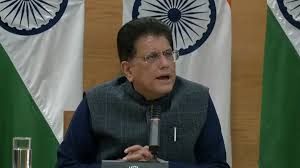
Piyush Goyal asserted that India has made no concessions in the interim trade framework with the United States that would hurt domestic farmers, seeking to counter concerns raised by some trade experts over agricultural tariff cuts. Agricultural products from Indian farmers will be exported to the United States at zero duty. At the same time, no tariff concessions have been granted for
agricultural products from US farmers entering the Indian market. Mr Goyal said. We’ve not done anything that could affect the farmers of India. No genetically modified items will be imported to India. No relief or concession has been given on dairy, maize, soya meal, sugar, millets, citrus fruits, the commerce minister added.
The minister highlighted that several Indian products would attract zero duty, including gems and diamonds, pharmaceuticals—worth about $13 billion in exports—and smartphones. In agriculture,
many Indian exports would also face zero reciprocal tariffs, with additional duties removed, he said. These include spices, tea, coffee, coconut and coconut oil,cashew and areca nuts, and fruits and
vegetables such as mango, banana, guava, kiwi, papaya, pineapple, avocado and mushrooms.The joint statement mentions products such as dried distillers’ grains (DDGs), red sorghum for animal feed, tree nuts, fresh and processed fruits, soybean oil, wine and spirits among those where India would consider tariff reductions.The interim trade agreement will be converted into a legal document and signed as early as next month.
Author Profile

- Manish Chand is Founder and Editor-in-Chief of India Writes Network (www.indiawrites.org) and India and World, a pioneering magazine focused on international affairs. He is CEO, Centre for Global India Insights, an India-based think tank focused on global affairs.
Latest entries
 India and the WorldFebruary 27, 2026Modi visit: India-Israel partnership enters a new era
- India and the WorldFebruary 24, 2026Unravelling Modi’s Israel journey: What to expect
- India and the WorldFebruary 17, 2026South-by-South: Focus on people-centric solutions at India AI summit
- India and the WorldFebruary 7, 2026Modi hails interim India-US trade deal, Goyal says no concessions made on agriculture