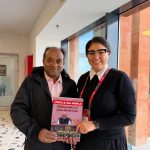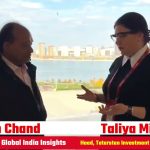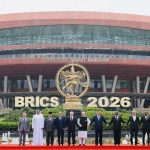
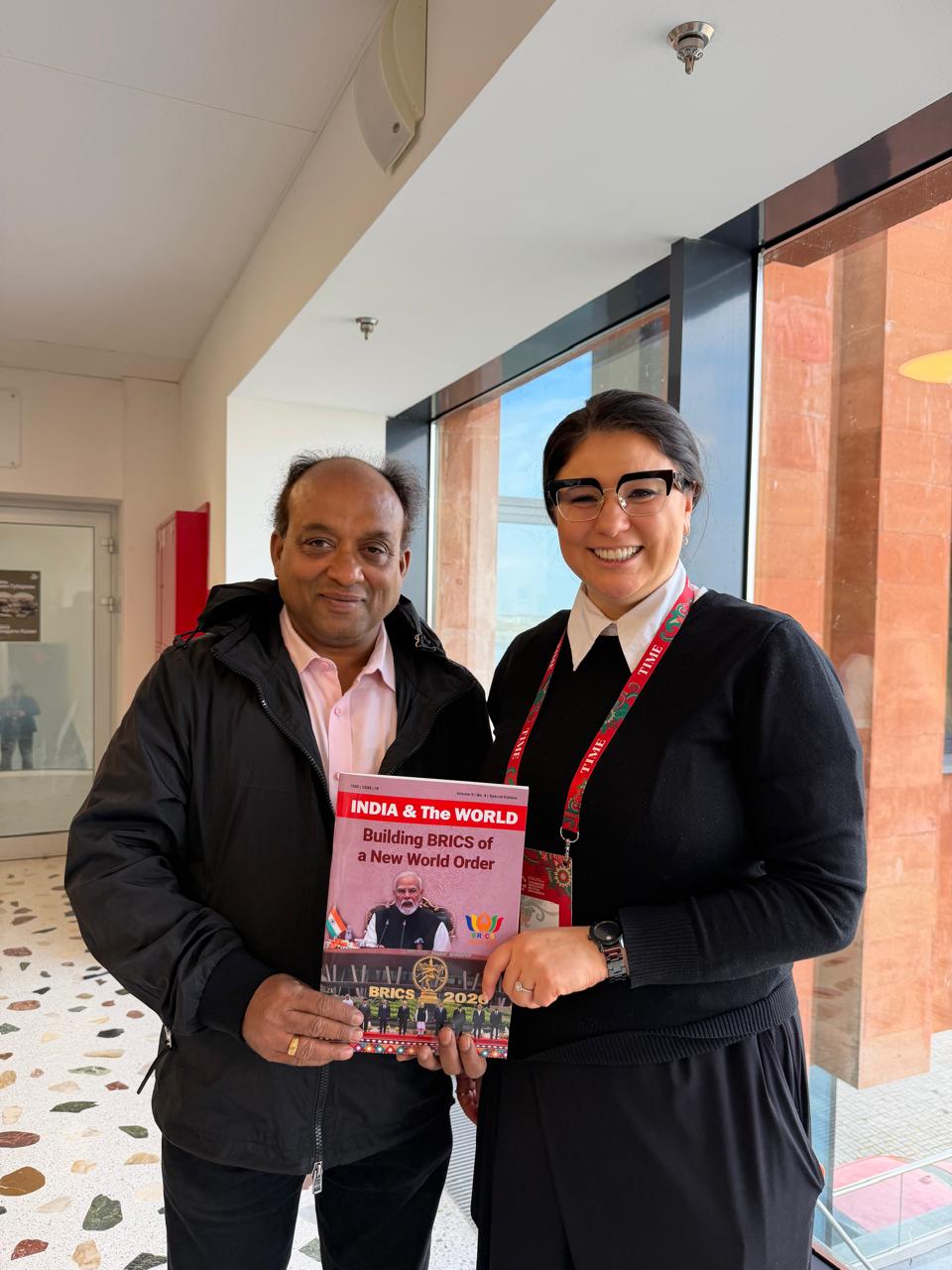
KAZAN: India and Russia, time-tested friends and strategic partners, have raised the bar for their economic relations. The two sides set an ambitious target of scaling up bilateral trade to $100 billion by 2030 during Russian President Vladimir Putin’s recent visit to India to attend the BRICS summit. In this interview with Manish Chand, CEO, Centre for Global India Insights and Editor-in-Chief, India Writes Network in Kazan, Taliya Minullina, Head, head of the Tatarstan Investment Development Agency, about expanding trade with India, investment opportunities, the impact of Western sanctions and her impressions of India.
(Excerpts from the interview)
Q: India–Russia trade has reached $60 billion, and the two leaders have set a target of $100 billion. What are your ambitions for India–Tatarstan trade, and how do you plan to achieve them?
A: Our ambitions are very, very high, to be honest with you. Last year, our trade turnover was about $300 million. In just six months this year, our trade turnover has exceeded $1 billion. So, we have tripled it.
Last year, we established this forum, which I chair, to organise the Russian-Indian Business Forum because we believe we need more platforms for collaboration.
People don’t know each other. We need to have discussions, and these discussions should be focused on specific sectors. They should cover IT, pharmaceuticals, Ayurveda, industry, oil, machinery building, sports, education, culture, youth and many other areas.
We have a lot in common, but we need to push the process forward. Our leaders are working hard. They meet each other a couple of times a year, but the regions of Russia and the states of India need to work more closely together.
Q: India–Russia trade is growing, but the trade deficit is also increasing, partly because of oil imports. India–Tatarstan trade appears more balanced. What are the priority sectors, and what more could India export to Tatarstan and Tatarstan to India?
A: As for Indian exports to Russia, or to Kazan, pharmaceuticals are certainly important. There is also potential for equipment and machinery, particularly industrial equipment, because half of our GDP comes from industry. We are a heavily industrialised region. New technologies in IT would also be important. There are opportunities in areas connected to the oil, gas and petrochemical sectors, as well as healthcare services.
In the other direction, Tatarstan can sell helicopters. We have already sold 350 helicopters produced in Tatarstan to India. We also produce planes. We have shipbuilding plants, truck-building plants and vehicle manufacturing, including electric buses and trucks.
I feel there is a long way to go. We need to connect the right people with one another. The institutional infrastructure and the TIME Forum we have established in Kazan, the capital of the Republic of Tatarstan, will generate many new initiatives and projects over the next couple of years.
Q: India and Russia want to expand trade, investment and defence cooperation across sectors, but Western sanctions have affected the relationship. Do you think the two countries can move beyond these constraints and further expand trade?
A: There are always some challenges. Challenges mean that there are always problems, and there are different sanctions.
Sanctions also create opportunities. Many EU companies have left the market. The market offers great opportunities for working in India. There are many opportunities for European businesses to come here and open their own branches. I think we need to use this moment to make that possible.
Q: You have visited India seven times. What are your impressions of India as a culture and as a place to do business?
A: One word describes my emotions about India: variety.
Of course, it is a diverse country with many different languages and cultures. Each state is worth visiting.
I know Uttar Pradesh, Punjab, Bihar, Mumbai and other Indian states. Each is worth visiting in its own way. The country has many cultural attractions.
There are many people who are ready to come and participate in meetings. I feel they are very enthusiastic about it. Each time I visit, I feel that India has a strong culture, and its cultural core is deeply embedded in its people. They show great hospitality towards our culture and our people.
I feel warmly welcomed every time I am there.
I think it is very difficult to manage a country like India because it is so large and diverse, and because it has many local challenges. Its internal environment is also constantly changing. In these circumstances, governing the country is not easy.
But I’m sure India has a bright future. It has the world’s largest population, it is the only country growing at 7% GDP per year, and it has a young population, with an average age of just 28. It also has a great philosophical, historical and cultural foundation, which is so fundamental that nothing can change it.
Q: Your enthusiasm is contagious. The sky’s the limit. Thank you for your time, and we look forward to hearing more from you at the forum.
A: Thank you very much.
Author Profile

- Manish Chand is Founder and Editor-in-Chief of India Writes Network (www.indiawrites.org) and India and World, a pioneering magazine focused on international affairs. He is CEO, Centre for Global India Insights, an India-based think tank focused on global affairs.
Latest entries
 In ConversationOctober 16, 2026Sanctions create new opportunities, invest in Tatarstan: Taliya Minullina
- Photos / VideosOctober 16, 2026Live from Kazan: India–Tatarstan Connect | Manish Chand in conversation with Taliya Minullina
- India and the WorldSeptember 13, 2026BRICS transcends Gulf divide, pitch for UN fast-tracking reforms
- DiplomacySeptember 13, 2026BRICS bonding bolsters India-Vietnam ties