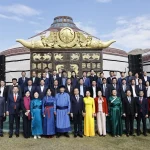
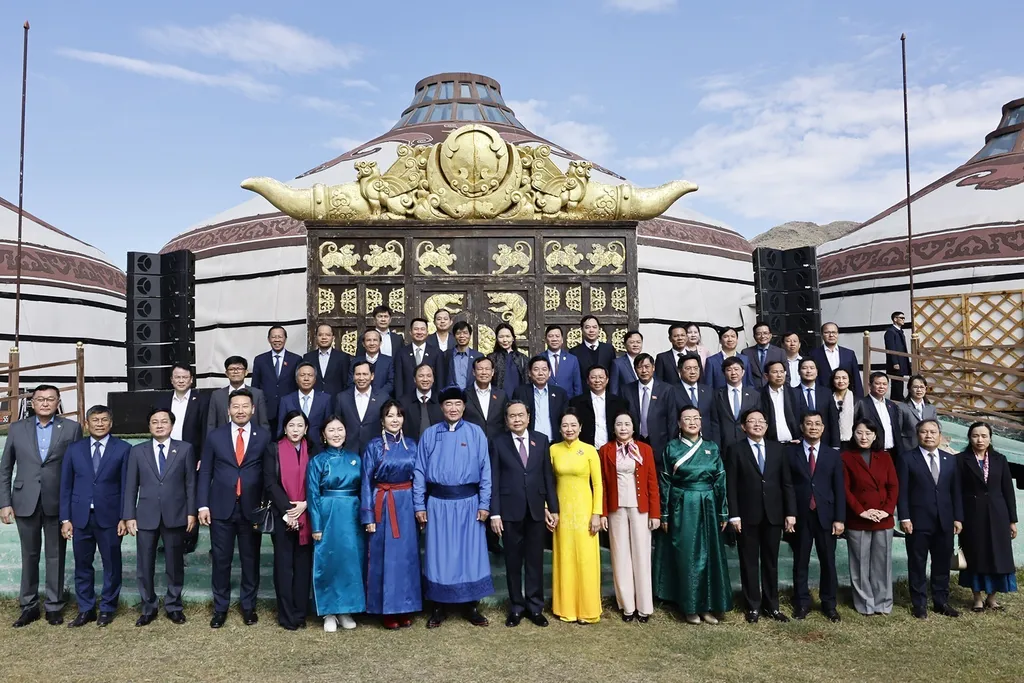
The official visit to Mongolia by Chairman of the National Assembly of Viet Nam Tran Thanh Man from 9–11 September 2026 took place against the backdrop of the ongoing development of Viet Nam–Mongolia relations under their Comprehensive Partnership, established in 2024. The visit was notable as Chairman Tran Thanh Man was among the first senior foreign leaders to visit Mongolia following the establishment of the country’s new parliamentary term. The two sides placed emphasis on strengthening parliamentary cooperation, economic and trade ties, people-to-people exchanges, and the implementation of high-level agreements.
For Viet Nam, Mongolia is neither a major market nor one of its leading economic partners. Nevertheless, Hanoi has maintained regular high-level exchanges with Ulaanbaatar and gradually expanded cooperation across a range of areas. What is noteworthy about the visit, therefore, is not the immediate scale of economic outcomes, but the way Viet Nam has sought to maintain and enhance the strategic value of its relationship with a relatively small country located between Russia and China. This also provides a useful case for India to consider in its own engagement with Mongolia.
- Viet Nam shows that relations with Mongolia are not measured solely by economic size
One notable feature of Viet Nam’s approach to Mongolia is the relatively high level of political attention given to the relationship compared with its current economic scale. The two countries established diplomatic relations in 1954 and have maintained long-standing ties. During the visit of General Secretary and President To Lam to Mongolia in 2024, the two sides upgraded their relations to a Comprehensive Partnership. Only two years later, Chairman Tran Thanh Man’s visit provided another channel to translate this new framework into more substantive cooperation.
This approach indicates that Viet Nam does not assess a partner solely on the basis of trade turnover or investment volume. Mongolia’s value also lies in its geographical position, its role in regional structures, its relations with Russia and China, and its potential contribution to Viet Nam’s broader network of partners in Northeast Asia.
This is relevant for India. New Delhi and Ulaanbaatar have maintained a Strategic Partnership since 2015, while India has described Mongolia as a strategic partner and a “spiritual neighbour” and “third neighbour.” The two countries also enjoy a distinctive historical and cultural connection through Buddhism.
However, geographical distance and connectivity constraints have limited the scale of India–Mongolia economic relations. Against this background, Viet Nam’s experience suggests that regular high-level engagement, even with partners whose economic weight is limited, can help maintain political momentum and create a foundation for expanding cooperation over time.
- Parliamentary diplomacy can become an important instrument for maintaining influence
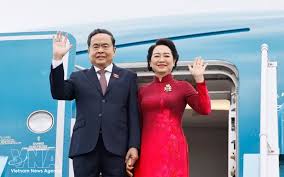
Another notable aspect of the visit was Viet Nam’s use of parliamentary diplomacy as a complement to high-level political and governmental diplomacy.
During the visit, Chairman Tran Thanh Man held talks with the Chairman of the Mongolian Parliament, met with the Prime Minister and interacted with the Mongolia–Viet Nam Parliamentary Friendship Group. The two sides also promoted cooperation between their respective legislative bodies. This approach creates a broader network of institutional links extending beyond governments and foreign ministries.
This is an area where India has a particular advantage. As a major parliamentary democracy, the Indian Parliament can potentially play a more active role in strengthening ties with Mongolia through parliamentary exchanges, friendship groups, sharing of legislative experience, capacity building and contacts between parliamentary institutions.
The Vietnamese experience suggests that parliamentary diplomacy need not remain merely symbolic. When linked with economic cooperation, education, culture and sub-national exchanges, it can become a channel for building long-term relationships, particularly with countries where India does not yet have a large economic presence.
- Moving from political relations to areas that generate tangible benefits
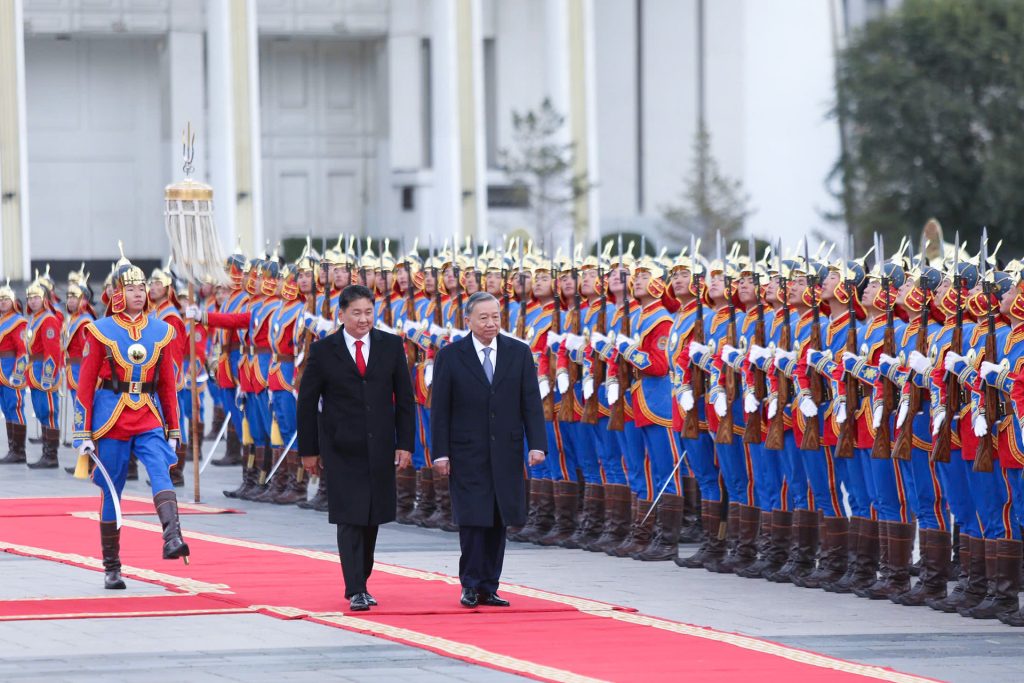
A notable message from Chairman Tran Thanh Man’s visit was the need to translate political agreements into concrete programmes and projects.
Viet Nam and Mongolia are exploring greater cooperation in trade, investment, agriculture, energy, tourism, culture and education. At the same time, efforts to strengthen business connectivity and address trade barriers have been placed alongside political and parliamentary activities. This approach is particularly relevant given the considerable room for further development in Viet Nam–Mongolia economic relations.
For India, this issue is especially significant. New Delhi has several important projects and initiatives in Mongolia, but economic cooperation continues to be affected by geographical distance and limited transit connectivity. Mongolia, meanwhile, has significant needs in energy, infrastructure, technology, education and economic diversification.
The Vietnamese experience therefore suggests that India could consider moving from maintaining political relations towards developing a limited number of high-visibility projects with the potential to generate wider spillover effects, thereby creating a more visible Indian presence in Mongolia.
- Mongolia’s value extends beyond the size of its market
Perhaps the most important point for India is that Mongolia’s strategic value cannot be assessed solely through the size of its economy.
Located between Russia and China, Mongolia has pursued a foreign policy aimed at maintaining relations with multiple “third neighbours.” In recent years, Ulaanbaatar has developed strategic partnerships with a number of countries outside its immediate neighbourhood, including the United States, Japan, South Korea, Germany and India. This creates space for external partners to expand their presence without necessarily engaging in direct competition with Russia or China.
For India, this is consistent with New Delhi’s broader approach of multi-alignment and expanding its strategic space. Relations with Mongolia can be viewed as part of a wider network encompassing Central Asia, Russia, Northeast Asia and the Indo-Pacific, rather than simply as a stand-alone bilateral relationship.
As strategic competition in Asia continues to evolve, maintaining relations with countries pursuing diversified external partnerships can also help India broaden its diplomatic network without turning these relationships into confrontational alliances.
- What India can take from Viet Nam’s experience
The visit of the Vietnamese National Assembly Chairman to Mongolia offers several points that India could consider.
First, India could continue to maintain a level of political engagement with Mongolia commensurate with its strategic value, even when bilateral trade remains relatively modest. This would help sustain India’s presence and create a foundation for longer-term cooperation.
Second, parliamentary diplomacy and people-to-people exchanges could be strengthened. India has considerable advantages in these areas, particularly given the long-standing cultural and Buddhist links between the two countries.
Third, greater emphasis could be placed on a limited number of areas capable of producing tangible outcomes, rather than expanding cooperation across too many sectors simultaneously. Energy, minerals, information technology, education, healthcare, culture and connectivity could offer areas compatible with India’s capabilities and Mongolia’s needs.
Fourth, Mongolia could be viewed as part of India’s wider network of partners across Eurasia. Engagement with Ulaanbaatar could be connected more closely with India’s policies towards Central Asia, Russia and Northeast Asia, thereby enhancing the strategic value of the bilateral relationship.
The Road Ahead
Chairman Tran Thanh Man’s visit to Mongolia demonstrates that a country does not necessarily need to have large-scale economic relations with a partner for that partner to warrant significant political attention. Viet Nam is combining high-level diplomacy, parliamentary engagement, people-to-people exchanges and economic cooperation to gradually deepen its relationship with Ulaanbaatar. This approach is particularly relevant to India, which already enjoys a strong political and cultural foundation with Mongolia but still has considerable scope to translate these advantages into greater economic engagement and more substantive connectivity.
More broadly, the Viet Nam–Mongolia case demonstrates that the value of a partner is not determined solely by market size, but also by its geopolitical position, network of external relations and potential contribution to a country’s strategy of diversifying partnerships. For India, this could serve as a useful reference point as New Delhi implements its Act East policy, strengthens links with Northeast Asia and expands its strategic space towards Central Asia and Eurasia, while maintaining a flexible approach towards different centres of power.
(Shweta Chand is Senior Research Fellow, Centre for Global India Insights)
Author Profile

Latest entries
 DiplomacySeptember 18, 2026Vietnamese National Assembly Chairman’s Visit to Mongolia: What Can We Learn?
- India and the WorldJanuary 26, 2024Macron-Modi bonding elevates India-France ties
 Business with IndiaOctober 23, 2020Act East: Amid pandemic, India pitches for enhancing trade with Vietnam
 DiplomacyMay 5, 2017South Asia Satellite takes off: Linking region via space