UK offers Great Club visa for rich Indians, no breather for students

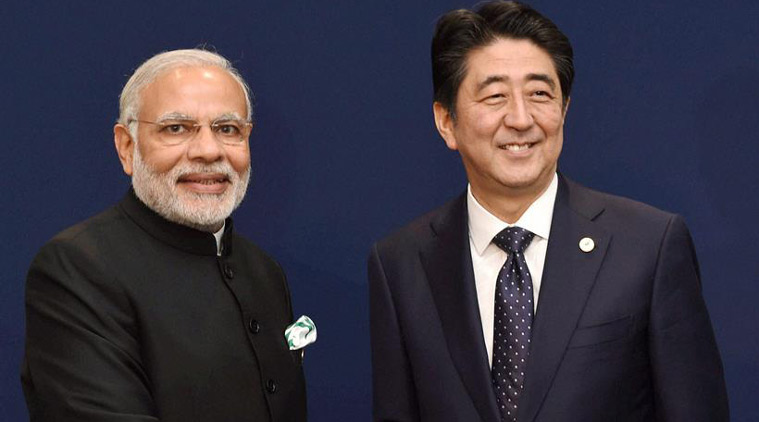
India’s Prime Minister Narendra Modi and his British counterpart Theresa May’s day together began in full swing, with participation in the India-UK CEOs forum and the India-UK Tech Summit, before engaging in one-on-one talks in the gardens of Hyderabad House and proceeding to delegation-level talks over a working lunch.

The outcomes of their wide-ranging discussions have been captured in a joint statement. A new fast-tracked visa regime has been announced for Indian businessmen, “reflecting the UK Government’s commitment to continuing to attract inward investment and business from India.” India will become the first visa country to be offered the Registered Travellers Scheme, which will allow business travellers expedited clearance at the UK border by being allowed to come in through e-Passport gates usually reserved for Europeans and Britons and with no requirement to fill in a landing card.
Much to the disappointment of many in India, no measures were announced to revisit the stringent UK visa regime adversely affecting the access of Indian students and workers to UK universities and workplace.

Read More

Battle for Mosul: Reclaiming the last terrorist bastion in Iraq

The battle lines are drawn for retaking the last terrorist citadel in Iraq. With 25000 of Iraqi soldiers trained and armed by US and its allies, 5000 battle-hardened members of the Kurdish militia Peshmarga, an assortment of Shia militias called Al Hashad Al Shabi groomed by Iran and groups of Sunni tribal fighters in hundreds trained by Turkish army encircling an estimated 10,000 Jehadist fighters of various nationalities in Mosul of the so-called Islamic State in Iraq and Syria (ISIS), the stakes are higher than ever.

Read More

Modi’s Tokyo visit: India, Japan set to sign nuclear deal

Capping years of tortuous negotiations, India and Japan look set to sign a transformational civil nuclear deal during Prime Minister Narendra Modi’s November 10-12 visit to Tokyo.

The negotiations for the civil nuclear deal were completed during Japanese Prime Minister Shinzo Abe’s visit to New Delhi in December last year. The text for the civil nuclear deal has also been finalised, with all contentious issues sorted out. Since then, nuclear negotiators of both sides have completed a technical and legal scrub of the text of the nuclear agreement.

The agreement is expected to be signed after talks between Mr Modi and his Japanese counterpart Abe in Tokyo on November 11.
The signing of the nuclear deal will pave the way for acceleration of India-Japan relations in all areas as it’s the only issue that is restricting the full potential of the strategic partnership between Asia’s leading democracies, which are moving closer in the backdrop of perceived Chinese assertiveness in the region.

Read More

Decoding Tibet’s Investment Boom: A reality check

The term ‘miracle’ recurs as a leitmotif in any discussion on China’s much-touted economic growth rates. Behind this miracle lies massive investments by the Chinese state. Foreign Direct Investments (FDI) are an additional yet enormous factor behind the miracle.
In trying to understand how investments could lay the foundations of future growth, a case study of the Tibet Autonomous Region becomes pertinent. Tibet, which is still one of the poorest provinces in the country, massively lacks infrastructural bases for industrial growth to take off. Tibet’s case stands out even more when compared with the southern and eastern provinces of China. However, given the “new normal” under which the country is currently operating, which means slower growth rates from the medium to long term, provinces which have traditionally not been the best performers in terms of contribution to China’s Gross Domestic Product (GDP), are now being focussed upon by the state.

Read More