
London Tube blast: ISIS claims attack
LONDON: An explosion in London’s tube network has left about 29 people severely injured and has put the city on a high alert after the extremist group ISIS claimed responsibility …
Read More
Global Indian News
LONDON: An explosion in London’s tube network has left about 29 people severely injured and has put the city on a high alert after the extremist group ISIS claimed responsibility …
Read More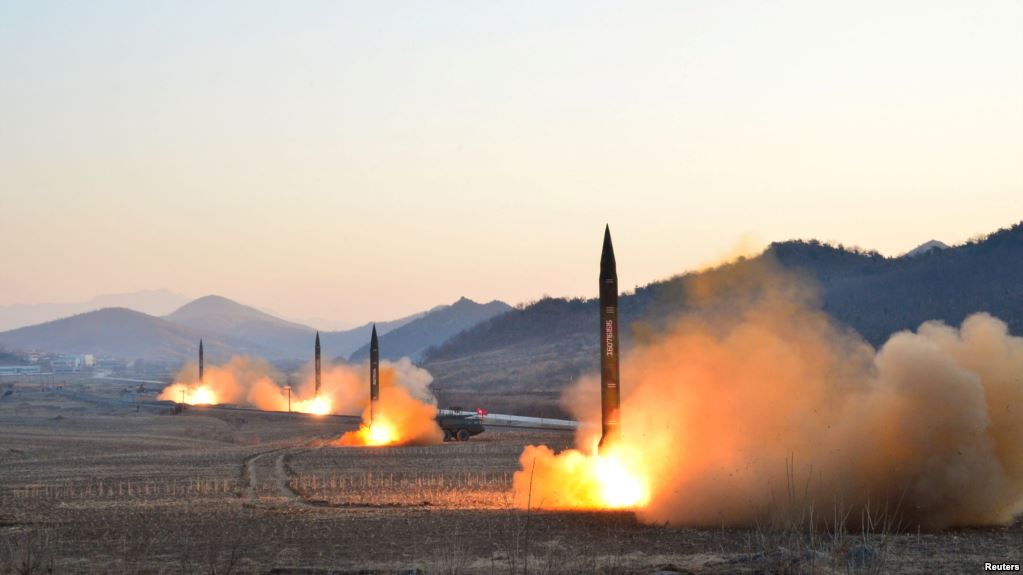
A day after India and Japan pitched for stronger defence cooperation and pledged to combat the nuclear threat that the Asia-Pacific region faces, North Korea fired another missile over Japan. …
Read More
There is nothing like the India-Japan connect that gives an ascendant and assertive China jitters. Given the bonhomie and bonding that was on display between India’s Prime Minister Narendra Modi and Japanese PM Shinzo Abe in Ahmedabad and transformative outcomes that emanated from the summit meeting on September 14, the Chinese media’s backlash hardly comes as a surprise.
Dismissing the “growing intimacy” between India and Japan, the Global Times, the hawkish Chinese tabloid which led the propaganda blitz during the Doklam standoff, has warned India not to get into containment games with Japan.
“After the Doklam standoff, more voices in the Indian media instigate the country to step up cooperation with the US and Japan against China and exaggerate the geopolitical significance of closer India-Japan ties. Yet this to a large degree has exposed the vulnerable feeling of the Indian strategic circle in front of China”, the Global Times said in an op-ed article. It attacked Japan by saying “… Japan has been more narrow-minded in looking for allies globally to encircle China.”

India and Japan have stepped up their mutual collaboration by signing 15 agreements covering diverse areas. These pacts, which were signed after talks between India’s Prime Minister Narendra Modi and …
Read More
Opening a new era in their partnership, India and Japan have inked 15 pacts in diverse areas, including nuclear energy, clean energy, high-speed rail and infrastructural development.
India’s Prime Minister Narendra Modi and his Japanese counterpart Shinzo Abe held wide-ranging talks in Gujarat’s capital Gandhinagar on September 14 that will upscale economic and strategic partnership between two of Asia’s leading democracies.
Against the backdrop of China’s increasing assertiveness in the region, India and Japan decided to expand their defence ties and jointly called for “achieving a free, open and prosperous Indo-Pacific region.” The strategic connect between India and Japan was detailed in the joint statement which envisages an alignment of Japan’s free and open Indo-Pacific strategy with India’s Act East Policy, joint exercises and enhanced collaboration in producing military hardware.

AHMEFDABAD: Japan’s Prime Minister Shinzo Abe got a taste of India’s syncretic culture as he visited the 16th century Sidi Saiyyad mosque in Ahmedabad. Cultural diplomacy was in full flow …
Read More
A resplendent roadshow, garba dance, vegetarian delicacies, Buddhist monks, and chants of Khem Chho….In a series of unprecedented gestures, India’s Prime Minister Narendra Modi literally rolled out the red carpet for his Japanese counterpart
Shinzo Abe, as the latter touched down in Ahmedabad on a two-day visit.
In a departure from protocol, Mr Modi personally received his honoured Japanese guest at Sardar Vallabh Bhai Patel International airport in Ahmedabad. As both leaders walked the red carpet they were greeted by folk artists along the way dancing to popular Gujarati beats and a group of Buddhist monks who presented Abe and First Lady Akie Abe a white scarf. Both leaders then travelled from the airport to Sabarmati Ashram in a colourful roadshow, stretching over eight kilometres.
The spectacular welcome for Mr Aabe imparted a new resonance to India’s age-old tradition of treating a guest as God: “Atithi Devo Bhava.”
The city of Ahmedabad wore a festive look as onlookers thronged along the entire stretch of the road through which the cavalcade made its way to the Sabarmati Ashram. Every roundabout had troops of dancers performing and school children cheering the leaders.
“These special gestures are designed to underscore the importance India attaches to developing a multi-dimensional relationship with Japan and the pivotal role Japan will play in India’s transformation, specially in areas of infrastructure and technology,” said Manish Chand, Editor-in-Chief of India Writes Network and India and World magazine.

After more than ten weeks of posturing and charged rhetoric during the face-off at Doklam plateau in Bhutan, India and China have signaled their intention to start afresh and improve their relationship. This was reflected in the meeting between Prime Minister Narendra Modi and Chinese President Xi Jinping on the margins of the BRICS summit in Xiamen on September 5, when they decided to take a forward looking approach to the bilateral relationship.
In an interview with Soumya Nair, former diplomat M.K. Bhadrakumar talks about India’s options in dealing with a rising China and the course of India-China relationship, post-Doklam.
Read More
India and Belarus, the resource-rich East European country, have signed 10 pacts in diverse areas, including energy and agriculture and decided to explore joint development and manufacturing of hi-tech weaponry …
Read More
Days after North Korea trumpeted its successful testing of a hydrogen bomb, the United Nations has slapped the strongest-ever sanctions to punish the rogue regime in Pyongyang, with the larger aim of resuming six-party talks to denuclearize the Korean peninsula.
The 15-member United Nations Security Council approved new sanctions after the US struck a deal with China and Russia, veto-wielding members of UNSC and North Korea’s top economic partners, and relented on its demand for a total ban on oil imports. Washington abandoned its hawkish stance after China and Russia cautioned about dangers of taking a harsh stand.
China and Russia, key economic allies of North Korea, fear that harsher sanctions will only worsen the crisis and a regime collapse would be a major destabilizing force for the region. China has also expressed its concerns over the deployment of Thaad, the anti-missile defence system, that poses a security threat and will only push North Korea further towards its nuclear ambitions.
The new sanctions are set to put onerous economic pressure on the deviant North Korean regime, but given President Kim’s mercurial way of functioning and his penchant for brinkmanship, it’s not clear whether this will work to bring Pyongyang to the negotiating table.
The North Korea nuclear threat will also figure in talks between Prime Minister Narendra Modi and his Japanese counterpart Shinzo Abe in Gujarat’s capital on September 14.