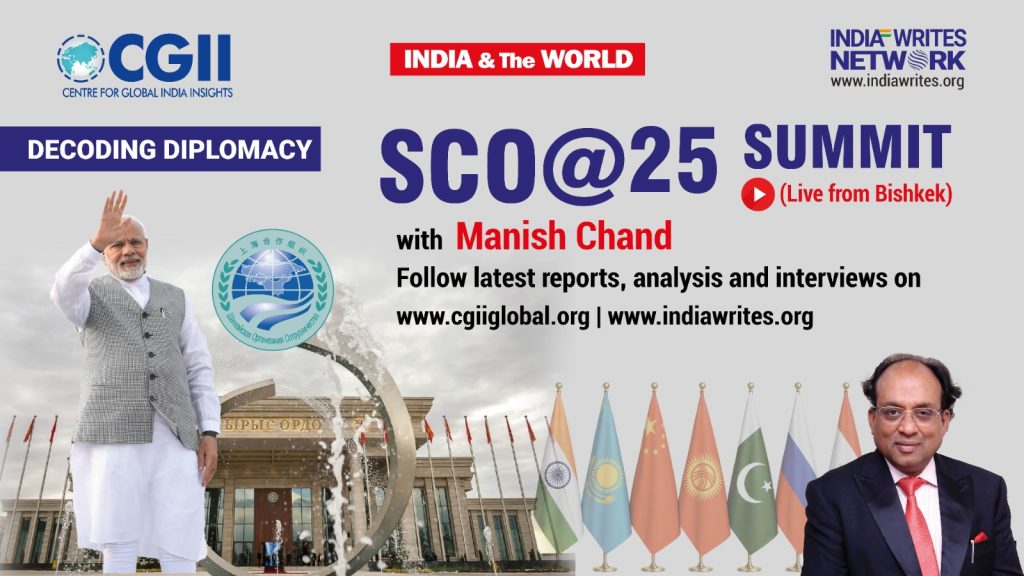
BISHKEK: With the mantra of “Security, Connectivity and Opportunity (SCO),” Prime Minister Narendra Modi has embarked on visits to Uzbekistan and Kyrgyzstan to deepen relations with the two key states of the resource-rich Central Asia, and to participate in the SCO summit that that help shape an inclusive and terror-free region.
PM Modi has set the tone for this latest diplomatic outreach to Central Asia, India’s extended neighbourhood, by stressing on the overarching importance of enhancing cooperation to combat the scourge of terrorism that afflicts the region in myriad ways.
No Double Standards on Terror
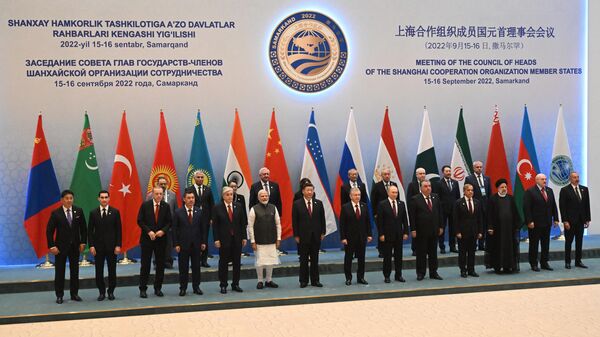
“I look forward to advancing India’s vision for the region, anchored in Security, Connectivity and Opportunity, and to working with fellow members for a region free from the scourge of terrorism, separatism and extremism, which continue to threaten peace and stability in our neighbourhood and beyond,” said PM Modi in a statement on August 29, 2026, ahead of his participation in the SCO summit in Bishkek.
By placing terrorism on the top of his SCO agenda, PM Modi has made it clear that India would like to see the 10-nation grouping to speak in one voice, sans ambiguity and double standards, on the issue of forging a united stand against terrorism. Like in the Tianjin Declaration last year, India will insist on a strongly worded formulation in the SCO joint declaration, with a clear-cut reference to perpetrators of cross-border terrorism and urge the SCO to take a joint stand against states that sponsor terrorism. He need not overtly mention Pakistan, but his reference will be obvious for anyone to miss it, especially as Pakistan takes over the chairship of the SCO after Kyrgyzstan.
In his remarks at the SCO summit, and in his bilateral interaction with the leaders of Central Asian states, PM Modi is expected to renew the call for bringing the masterminds and perpetrators of the April 22, 2025, Pahalgam terror spree which killed 26 civilians, mostly Hindu tourists, in Jammu and Kashmir. In response to the Pahalgam terror attack, allegedly masterminded by Pakistan-based terrorists in collusion with their patrons, India launched “Operation Sindoor,” but Islamabad predictably remains in denial.
Countering terrorism will be India’s major priority at the SCO summit, but that’s the first S of SCO, as Modi has propounded his vision of SCO. Connectivity and Opportunity will be the other two major priorities at the SCO summit in Bishkek.
Rules-based connectivity
Promoting rules-based connectivity, underpinned by transparency and fiscal prudence, will be another major priority of India at the SCO summit. Like in previous summits, China will manage to get the rest of SCO to endorse the Belt and Road Initiative. India will be the lone hold-out which will express reservations over BRI and refuse to endorse BRI in the joint declaration. As a counter, India will propose alternative modes of organising cross-border connectivity corridors like the International North-South Transport Corridor and the Chabahar port. India will also support trans-national energy grid initiatives as important components of the region’s economic resilience. India has objected to BRI as China-Pakistan Economic Corridor, a key component of BRI, passes through Indian territory of Jammu and Kashmir, which amounts to violating India’s sovereignty. Against this backdrop, India will seek support for rules-based connectivity, which includes respect for national sovereignty and territorial integrity, based on the principles of transparency, inclusivity and financial sustainability.
O for Opportunity
Taking a long-range view, PM Modi is expected to highlight new opportunities that will bind the region in a web of win-win prosperity. India would like to expand the agenda of SCO to go beyond traditional areas and focus on forging collaboration in the crucial area of critical and emerging technologies. In this regard, PM Modi, in his remarks, is likely to position India’s Digital Public Infrastructure as a model that will bring tangible benefits to SCO countries. India will also press for enhancing collaboration among SCO countries in innovation, information and communications, and artificial intelligence.
Enhancing trade and investment and cooperation in emerging technologies will help shape a prosperous region. India will also leverage the SCO to promote interests and aspirations of the Global South, which dovetails with the agenda of the BRICS summit in New Delhi in September. In accordance with its broader strategic goals and priorities, India will enhance outreach with Central Asian nations to expand its visibility in SCO geography and to counter the China-Pakistan axis.
Reforming global governance
Amid growing geopolitical turbulence and shifting alignments, India will leverage the SCO summit to renew its call for accelerating reform of global governance architecture, political and economic. The SCO comprises two permanent members of the UN Security Council (Russia and China). India has been campaigning vigorously for a permanent seat in the United Nations Security Council. India has officially launched its bid for a non-permanent seat on the UN Security Council for the 2028–2029 term. In his remarks, PM Modi is likely to highlight the central theme of India’s UNSC campaign, centred on the “SHANTI” (Securing Holistic Advancement through Norms, Trust, and Integrity) vision, which emphasizes Global South representation, reformed multilateralism, and maritime security. The election for non-permanent seat will be held in June 2027.
From time to time, some sections in India’s strategic circles have called for India to withdraw from the China-dominated SCO, but the Indian government has rightly rejected such reasoning as it would amount to ceding the crucial space to China, which does not bode ill for India’s core strategic interests in the region. PM Modi’s presence at the SCO summit in Bishkek will send an unambiguous message about India’s strategic design to shape SCO as a peaceful region that will support its long-term developmental aspirations.
(Manish Chand, CEO, Centre for Global India Insights and Editor-in-Chief, India Writes Network, is in Bishkek to report and analyse the SCO summit and PM Modi’s visit to Central Asia)
Author Profile

- Manish Chand is Founder and Editor-in-Chief of India Writes Network (www.indiawrites.org) and India and World, a pioneering magazine focused on international affairs. He is CEO, Centre for Global India Insights, an India-based think tank focused on global affairs.
Latest entries
 India and the WorldSeptember 13, 2026BRICS transcends Gulf divide, pitch for UN fast-tracking reforms
- DiplomacySeptember 13, 2026BRICS bonding bolsters India-Vietnam ties
- India and the WorldSeptember 11, 2026Decoding India’s BRICS moment: Forging an Inclusive World
- In ConversationSeptember 9, 2026India’s BRICS Chairship Critical for Global South: South Africa’s Envoy