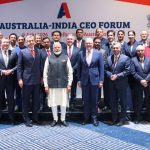
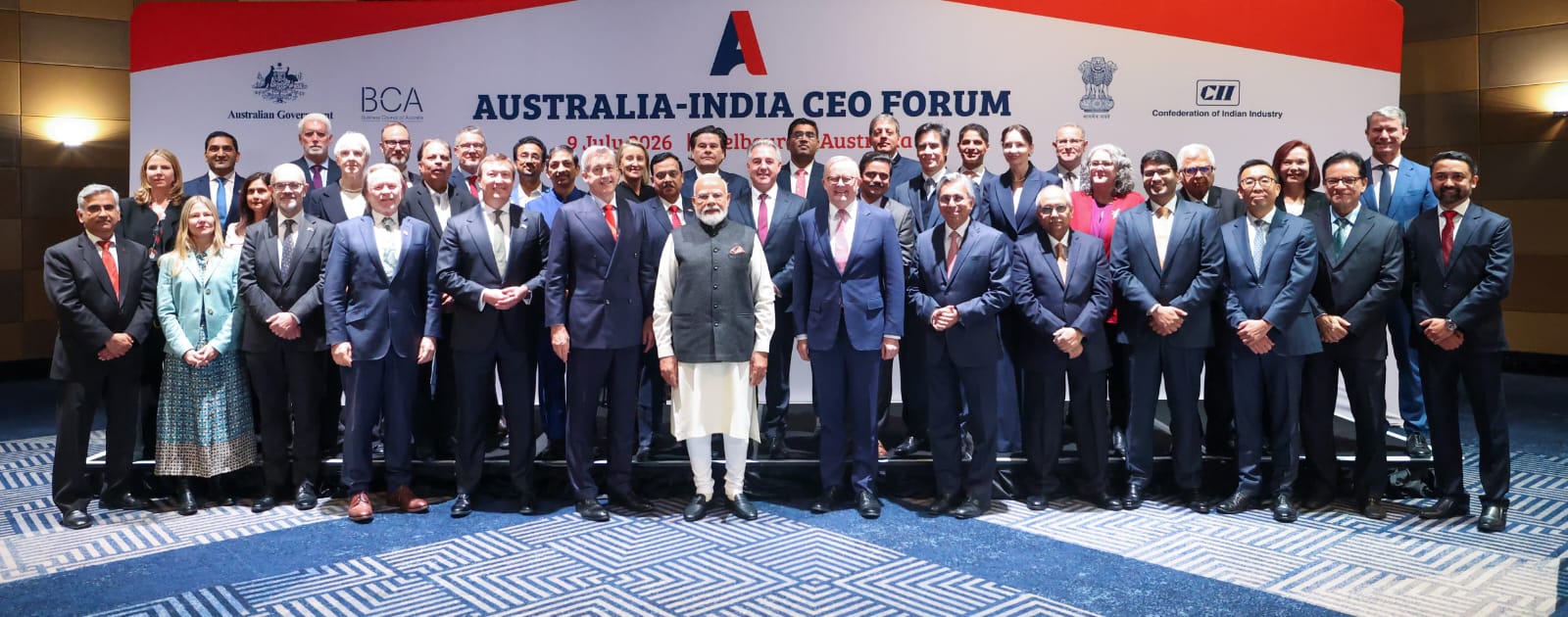
Going by the tone and content of discussions between business leaders at the third India-Australia CEO Forum, held during PM Modi’s visit to Melbourne, India-Australia business ties are headed on an upward trajectory. Whether it’s real will show up not in the next joint statement, but in how many of these conversations turn into signed, operating projects over the next year or so, says Bharat Joshi.
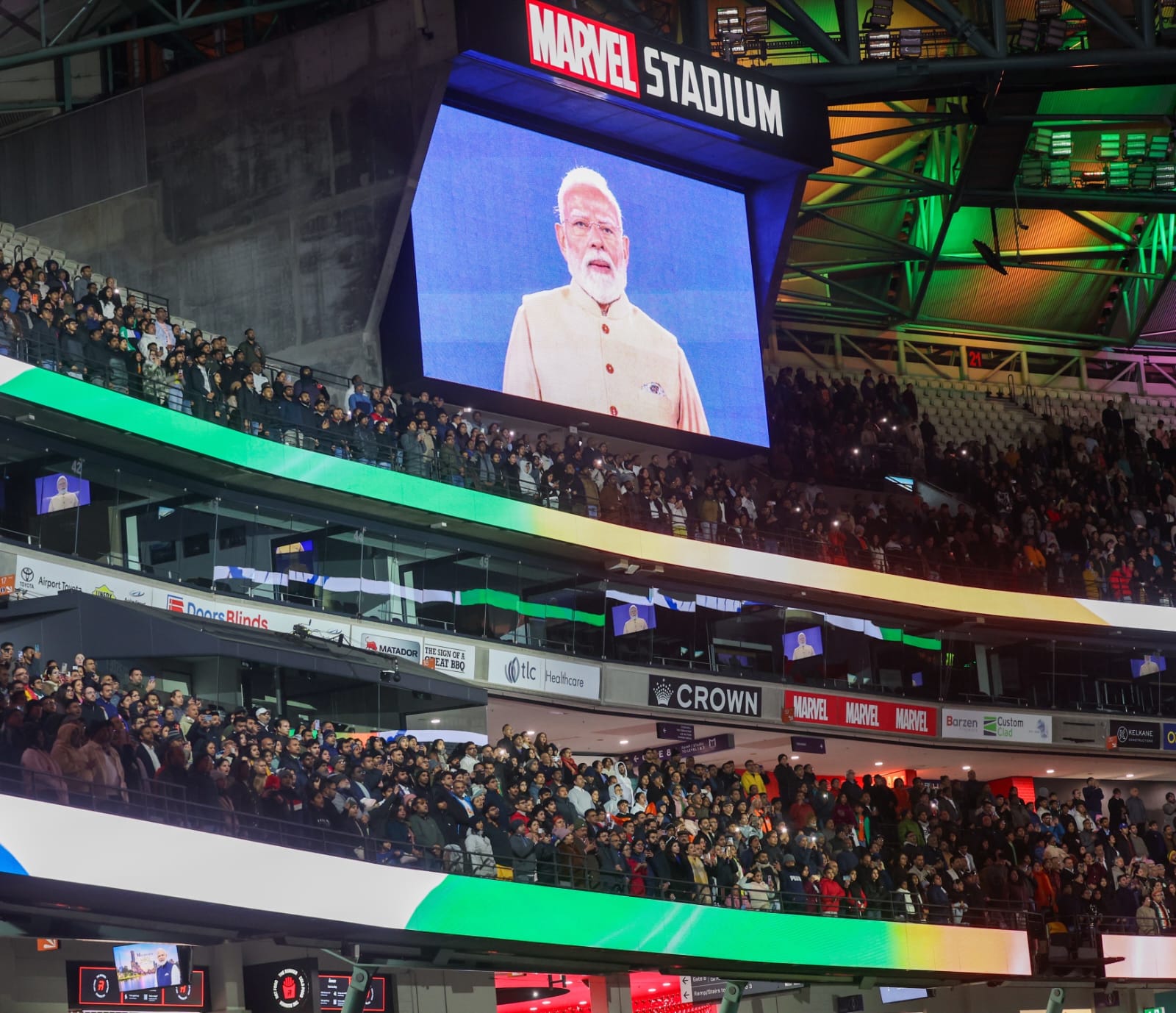
AU$500 million doesn’t move because a joint statement asked it to. That’s roughly what Australian Super put into India’s infrastructure fund during Prime Minister Modi’s Melbourne visit this July, on top of money it had already committed back in 2019 — and pension funds don’t take multi-decade bets on sentiment. It’s a useful place to start, because it tells you that the CEO Forum, convened alongside the Third Australia-India Annual Summit, wasn’t just another round of the usual diplomatic choreography.
Start with where the Forum actually sat. It wasn’t a side event squeezed in between photo calls. The same visit produced a renewed defence and security declaration, the administrative step needed to get Australian uranium moving to India for civilian power use, and further work toward turning the existing trade agreement (ECTA) into a broader Comprehensive Economic Cooperation Agreement. PM Modi and Australian PM Albanese both leaned on the idea that “Make in India” and “Future Made in Australia” aren’t competing slogans but complementary ones — India needs manufacturing scale, Australia needs someone to build with. Business wasn’t an afterthought to that agenda; it was built into it.
And this Forum has stopped being a one-time gesture. It has met alongside every summit since 2023, with superannuation funds, university leadership and CEOs from both sides in the room each time. That continuity is the real story — a standing channel, not a photo op reassembled from scratch every couple of years.
Prospects of Investment
So will more Australian money actually show up?
I think so, though I’d stop short of calling it a certainty.
The sectors that keep coming up — critical minerals, clean energy manufacturing, uranium-linked supply chains, advanced manufacturing, and now digital and AI-linked services — aren’t new, but they are now being talked about with more specificity than in previous rounds. Critical minerals, in particular, make obvious sense: Australia has what’s in the ground, India has a 500 GW renewable target and nowhere near enough domestic supply to hit it.
That kind of fit tends to outlast the political cycle that produced it.
What’s harder to fake is capital actually moving, and here the summit gave us more than talk. AustralianSuper — the country’s biggest super fund — put a further AU$500 million into India’s National Investment and Infrastructure Fund, taking its total India exposure to around AU$3.3 billion, on the back of a 2019 bet it now calls one of its best-performing infrastructure holdings. Pension money doesn’t chase headlines; it chases returns over decades. That’s a more honest signal than anything in the joint statement.
The Perdaman urea project is worth watching for a different reason. It’s an actual operating supply chain, gas into fertiliser, not a plan on a slide. And the newly launched Australia-India Partnership for Cyber, Critical Technologies and Supply Chains (PACTS) gives the critical minerals and digital resilience conversation a home of its own, sitting alongside the CEO Forum rather than inside it.
The View from Australia
How does the Australian side actually see us?
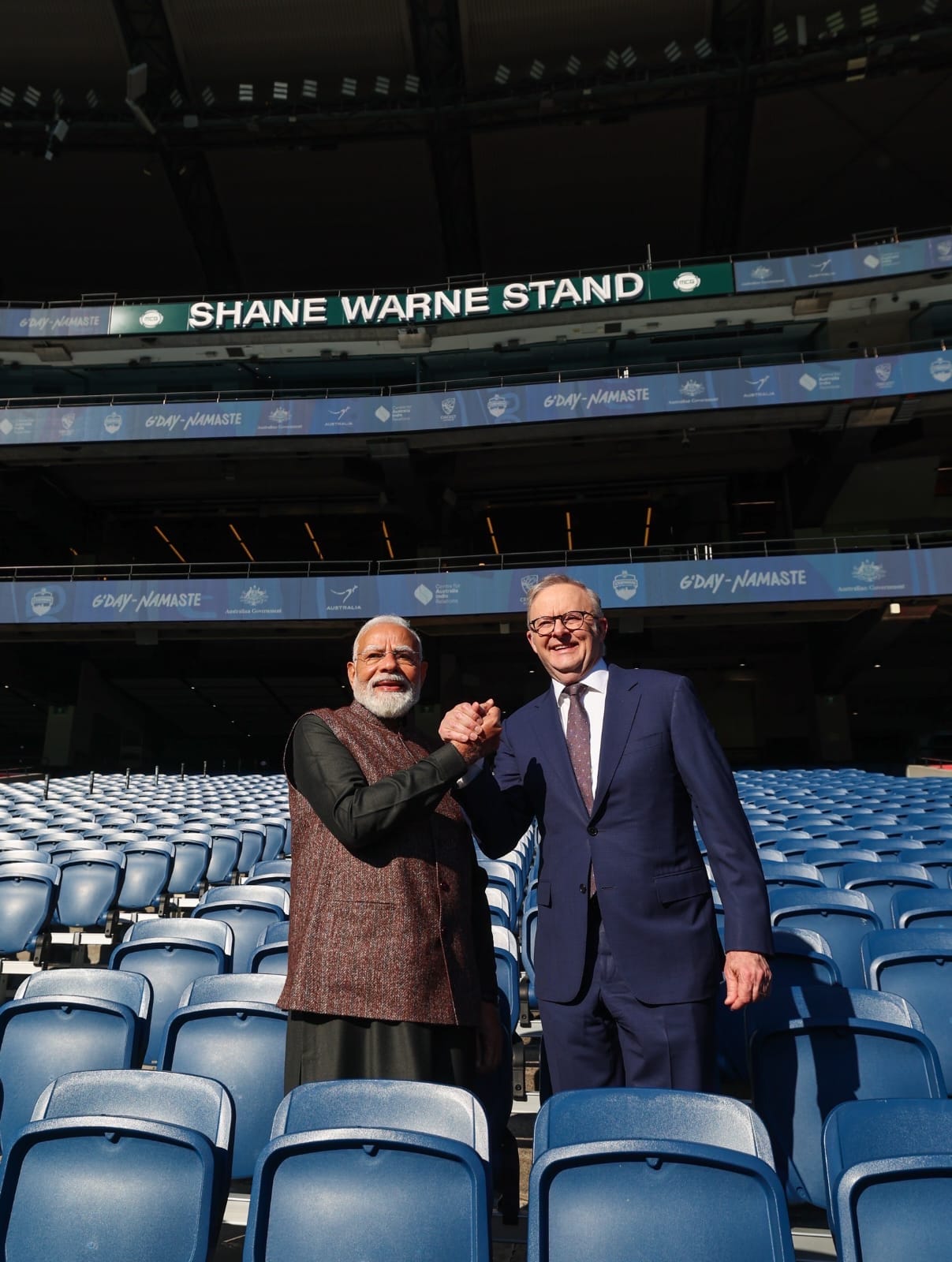
Warmer than five years ago, but not uncritically. In the rooms I’ve sat in, Australian business leaders talk readily about India’s growth numbers, its digital public infrastructure, its innovation ecosystem — and, more than people expect, about the diaspora and even the cricket, which does more relationship-building than it gets credit for.
But ask them privately about ease of doing business and the tone shifts. Land acquisition still drags. Regulation looks different in Maharashtra than it does in Gujarat than it does in Tamil Nadu, and that inconsistency costs more trust than any single reform announcement earns back.
Dispute resolution timelines come up more than we’d like. The perception is catching up to the reality, slowly — it just hasn’t fully arrived.
Next Steps
A firm timeline for the CECA talks would do more for confidence than another round of reaffirming intent — businesses plan against dates, not sentiment. The CEO Forum, now that it’s a fixture rather than an experiment, should split into sector tracks — critical minerals, clean energy, agribusiness — instead of one broad conversation trying to cover everything at once.
Early movers like Perdaman need company, which means faster approvals in the sectors both governments keep naming. A good chunk of the ease-of-doing-business complaint sits at the state level, not the national one, and that’s where the next round of attention should go. And AustralianSuper’s move is a template, not a one-off — more NIIF-style vehicles could bring in the kind of patient capital that trade numbers alone won’t. PACTS, meanwhile, shouldn’t stay confined to cyber and digital resilience; there’s an obvious case for pushing it toward joint investment in refining and processing critical minerals, not just trading the raw material.
None of this is guaranteed to hold. But the intent this time feels less rehearsed than usual. Whether it’s real will show up not in the next joint statement, but in how many of these conversations turn into signed, operating projects over the next year or so.
Author Profile

- India Writes Network (www.indiawrites.org) is an emerging think tank and a media-publishing company focused on international affairs & the India Story. Centre for Global India Insights is the research arm of India Writes Network. To subscribe to India and the World, write to editor@indiawrites.org. A venture of TGII Media Private Limited, a leading media, publishing and consultancy company, IWN has carved a niche for balanced and exhaustive reporting and analysis of international affairs. Eminent personalities, politicians, diplomats, authors, strategy gurus and news-makers have contributed to India Writes Network, as also “India and the World,” a magazine focused on global affairs.
Latest entries
 India and the WorldOctober 23, 2026BRICS: Building a Vibrant Community of People
- India and the WorldOctober 21, 2026From Voice to Impact: BRICS and Push for Global Governance Reform
- India and the WorldAugust 4, 2026What Melbourne CEO Forum Actually Tells Us
- India and the WorldApril 1, 2026Eyewitness recalls: US-Israel-Iran war, up close and personal