For nearly eight decades, the transatlantic alliance has been one of the defining pillars of the international order. The United States underwrote Europe’s security, financed the bulk of NATO’s military capabilities, extended its nuclear umbrella across the continent, and ensured that no hostile power could again dominate Europe. That arrangement survived the Cold War, adapted to the collapse of the Soviet Union, weathered crises in the Balkans, Afghanistan and Libya, and was dramatically reinvigorated after Russia’s invasion of Ukraine in 2022.
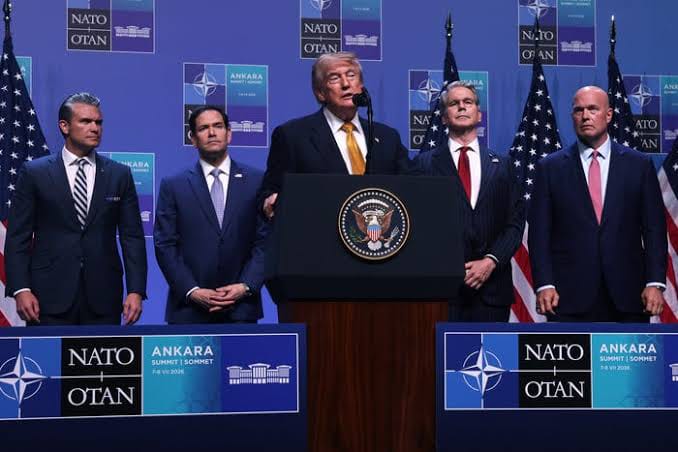
Yet today, the foundations of this security compact are being questioned with a seriousness not seen in generations. The debate is no longer confined to academic circles or strategic think tanks. European governments, military planners and political leaders are openly discussing a possibility that until recently appeared almost unthinkable: what if American military primacy in Europe gradually recedes? More importantly, what if the United States, while remaining a treaty ally, no longer possesses either the political appetite or the military capacity to shoulder Europe’s defense as it once did?
This is not simply a question of American intentions. It is increasingly a question of capability, competing strategic priorities and the changing distribution of global power. The United States remains the world’s pre-eminent military power, but it confronts simultaneous challenges across multiple theatres — from managing strategic competition with China in the Indo-Pacific to sustaining commitments in Europe and responding to recurring crises in West Asia. No great power, however capable, can indefinitely expand its commitments without confronting limits.
Europe has begun to recognize this reality. The question confronting European capitals is no longer whether Washington remains committed to NATO. Rather, it is whether Europe can afford to continue assuming that American military dominance will remain the permanent foundation of its security. The answer carries consequences far beyond the Atlantic. For India, whose strategic partnerships increasingly span both Europe and the Indo-Pacific, the outcome of this debate will shape the evolving global balance of power.
Europe’s Dependence
The origins of Europe’s dependence on American security are well understood. The devastation of the Second World War left Western Europe economically exhausted and militarily weakened. The United States filled the resulting vacuum through the Marshall Plan, NATO and a long-term military presence that gradually evolved into the backbone of European defence. American forces stationed across Germany, Italy, the United Kingdom and elsewhere became both a military guarantee and a political signal that Washington regarded European security as inseparable from its own.
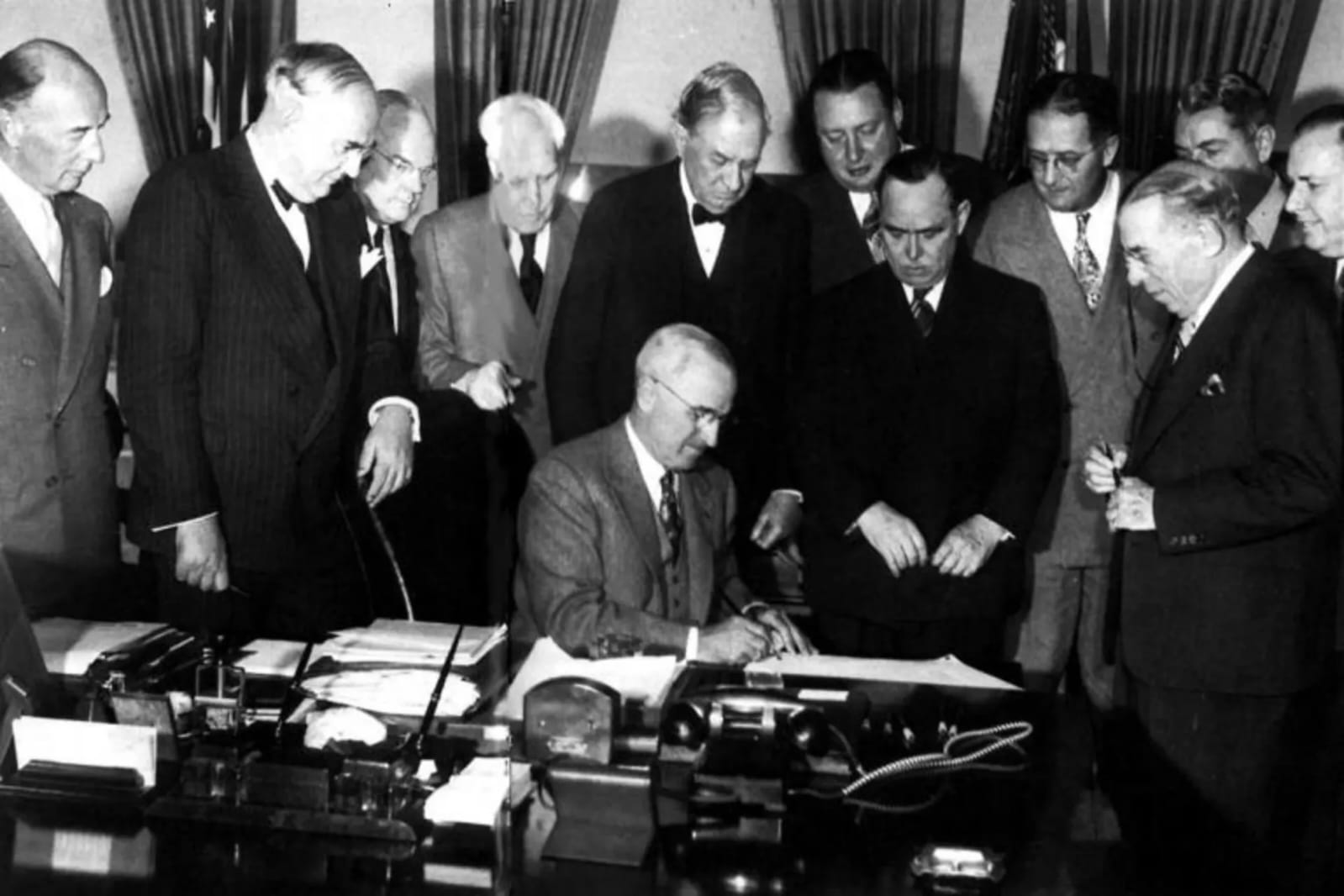
This arrangement allowed European governments to devote greater resources to building prosperous welfare states while spending relatively modest sums on defense. Strategic dependence became institutionalized over decades. Even after the Soviet Union disappeared, many European countries continued reducing military expenditures, convinced that major interstate war on the continent had become improbable.
Ukraine Conflict
Russia’s annexation of Crimea in 2014 challenged that assumption. The invasion of Ukraine eight years later shattered it altogether. Ironically, the Ukraine conflict initially appeared to reaffirm American indispensability. Washington mobilized allies, coordinated unprecedented sanctions, supplied sophisticated military equipment and reinforced NATO’s eastern flank. Finland and Sweden sought NATO membership, transforming the alliance’s northern geography. Defence spending across Europe increased sharply, and NATO rediscovered its original purpose. Yet the Ukraine war has also exposed the depth of Europe’s military dependence on the US. Intelligence, strategic airlift, satellite communications, integrated air and missile defense, logistics, precision munitions and command-and-control capabilities continue to rely overwhelmingly on American assets. Even Europe’s most advanced militaries struggle to sustain high-intensity operations without substantial US support.
China Factor
The conflict has therefore produced a paradox. Europe has become more united in confronting Russia, yet it has simultaneously become more conscious of its own strategic vulnerabilities. Behind this debate lies a broader transformation in American grand strategy. Since the Obama administration’s “rebalance to Asia,” successive administrations of different political persuasions have increasingly identified China as the principal long-term strategic competitor. The Indo-Pacific has become the primary theatre in which future technological, economic and military competition is expected to unfold.
This shift inevitably creates competing demands on American military resources. Aircraft carriers, advanced submarines, long-range bombers, missile defense systems, cyber capabilities and space assets cannot be concentrated simultaneously in Europe and the Indo-Pacific. Strategic prioritization becomes unavoidable. For American policymakers, this presents an uncomfortable dilemma. Russia remains an immediate military threat to Europe, but China represents the more comprehensive challenge to American global leadership. Maintaining credible deterrence in both regions simultaneously requires unprecedented levels of investment at a time when domestic fiscal pressures are growing and political consensus has become increasingly difficult to sustain. The result is not necessarily American disengagement from Europe. Rather, it is an expectation that Europe should assume far greater responsibility for its own conventional defense while the United States increasingly concentrates on global force projection and Indo-Pacific deterrence.
Europe’s response has been uneven but unmistakable. Defense budgets are rising across much of the continent. Germany’s decision to launch a historic military modernization programme marked a profound psychological shift in European security thinking. Poland has emerged as one of NATO’s fastest-growing military powers. Nordic countries have accelerated defense integration. France continues advocating greater European strategic capability, while the European Union has expanded initiatives aimed at strengthening defense industrial cooperation.
Yet higher expenditure alone cannot rapidly overcome decades of underinvestment. Building military capability requires trained personnel, industrial capacity, resilient supply chains and sustained political commitment over many years.
Europe’s defense industry illustrates both progress and continuing fragmentation. Multiple countries manufacture competing tanks, fighter aircraft, naval vessels and missile systems, often duplicating effort rather than achieving economies of scale. Procurement remains largely national, limiting interoperability and slowing production. The Ukraine conflict exposed shortages of artillery shells, air defense interceptors and other critical munitions that modern warfare consumes at extraordinary rates. Expanding production is no longer merely an economic objective; it has become a strategic imperative.
Strategic Autonomy
The debate over strategic autonomy has therefore acquired renewed urgency. Originally championed primarily by France, the concept has often been misunderstood as an attempt to weaken NATO or distance Europe from the United States. In reality, strategic autonomy increasingly reflects a practical recognition that Europe must possess sufficient capability to act when American attention is directed elsewhere. This does not imply strategic separation from Washington. Rather, it seeks a more balanced partnership in which European allies contribute proportionately to collective security. Achieving that balance, however, requires political cohesion that Europe has historically struggled to sustain. Threat perceptions differ significantly across the continent. Eastern European states priorities Russian deterrence. Southern Europe remains preoccupied with migration, instability in North Africa and terrorism. Western Europe often focuses on technological competitiveness and economic resilience. Reconciling these priorities into a coherent defense strategy remains an ongoing challenge.
Another unresolved issue concerns nuclear deterrence. For decades, Europe’s ultimate security guarantee rested upon the American nuclear umbrella. Should doubts emerge regarding the permanence or credibility of that guarantee, difficult questions inevitably arise. France possesses an independent nuclear arsenal and Britain maintains its own deterrent. Yet neither can simply substitute for the extensive strategic reassurance historically provided by the United States. Any discussion of a more Europeanized nuclear architecture involves profound political, legal and strategic complexities that remain far from settled.
Meanwhile, Russia continues adapting to prolonged confrontation with the West. Despite significant battlefield losses and extensive sanctions, Moscow has demonstrated considerable resilience. Defence production has expanded, military mobilization has continued and strategic partnerships with countries outside the Western alliance have deepened. Europe therefore confronts a long-term security competition rather than a temporary crisis. This evolving landscape also intersects with broader geopolitical transformations. The distinction between European security and Indo-Pacific security is becoming increasingly blurred. Technology, supply chains, cyber networks, critical minerals, semiconductor production and maritime trade connect the two regions more closely than ever before.
China-Russia Nexus
China’s growing relationship with Russia has further reinforced these linkages. While the two countries pursue distinct national interests, their expanding strategic coordination complicates Western security planning. European governments increasingly acknowledge that developments in the Indo-Pacific directly affect European prosperity and security, just as instability in Europe influences strategic calculations in Asia. This convergence has created new opportunities for cooperation between Europe and countries such as India, Japan, Australia and South Korea.
Opportunity for India
For India, these developments are of particular significance. India has consistently supported a multipolar international order in which no single power dominates global affairs. At the same time, New Delhi has cultivated increasingly close partnerships with both Europe and the United States while preserving strategic autonomy.
If Europe assumes greater responsibility for its own defence, India’s engagement with European partners could acquire a stronger security dimension. Defence technology cooperation, maritime security, cyber resilience, critical infrastructure protection, artificial intelligence and defence manufacturing are likely to become more prominent areas of collaboration.
The recently concluded India-European Union Free Trade Agreement provides an economic foundation upon which broader strategic cooperation can be built. As Europe diversifies supply chains and reduces excessive dependence on individual markets, India stands to benefit from expanded trade, investment and technology partnerships.
Defence industrial collaboration offers another important avenue. European governments seeking to expand production capacities may increasingly view India not merely as a market but as a manufacturing partner capable of supporting resilient supply chains. Joint research, co-development and co-production could gradually become central features of the relationship.
Maritime security provides another area of converging interests. European naval deployments in the Indian Ocean have become more frequent as concerns over freedom of navigation, piracy and protection of sea lanes have intensified. India’s central location in the Indian Ocean makes it an indispensable partner in ensuring the security of global commerce. Energy security, digital governance, resilient telecommunications, quantum technologies and space cooperation similarly offer expanding opportunities.
However, India must also recognize that a Europe assuming greater responsibility for its own security may become a more assertive geopolitical actor. European strategic priorities will increasingly reflect not only transatlantic coordination but also independent assessments of global developments. This may occasionally produce differences with India on issues relating to sanctions, export controls, technology governance or climate policy. Managing these differences will require sustained diplomatic engagement rather than assumptions of automatic convergence.
The larger lesson for India concerns the changing character of international politics itself. The post-Cold War expectation that American power could indefinitely provide global public goods is gradually giving way to a more distributed system in which regional powers assume greater responsibility for their respective neighborhoods. This transition will not be orderly. Periods of adjustment inevitably create uncertainty, miscalculation and strategic competition. Institutions designed for an earlier era will face mounting pressures to adapt. For India, the appropriate response is neither anxiety nor complacency. Instead, it should continue strengthening partnerships across multiple centres of power while preserving the flexibility that has long characterized its foreign policy. Strategic autonomy in the twenty-first century does not imply equidistance; it requires diversified relationships capable of withstanding geopolitical turbulence.
The future of American power in Europe is therefore unlikely to be defined by abrupt withdrawal or dramatic collapse. Rather, it will be shaped by gradual redistribution of responsibilities within the transatlantic alliance. The United States will almost certainly remain Europe’s most important security partner for years to come. Yet the era in which Washington alone carried the overwhelming burden of European defense is steadily drawing to a close.
Europe’s challenge is not merely to spend more on defence but to think strategically, build industrial capacity, strengthen political cohesion and develop the military capabilities necessary to protect its own interests. Success will require patience, sustained investment and political leadership capable of preparing European societies for a less predictable world.
For India, this transformation represents both opportunity and responsibility. A stronger and more strategically capable Europe would emerge as an increasingly important partner in shaping an open, rules-based international order. As power becomes more diffused and alliances more flexible, India will find itself engaging not simply with the United States or Europe individually, but with a wider constellation of capable partners committed to preserving stability across an increasingly interconnected world.
The debate over America’s future role in Europe is therefore about much more than troop deployments or defense budgets. It reflects the broader transition from an era of uncontested American predominance to one of shared strategic responsibility. How successfully Europe adapts to that transition will influence not only the future of the Atlantic alliance but also the wider architecture of global security in which India’s own rise will play an increasingly consequential role.
(Anil Wadhwa is a former Secretary (East) in the Ministry of External Affairs and has served as Ambassador to Poland & Lithuania, Oman, Thailand and Italy & San Marino. He is Distinguished Adviser to Centre for Global India Insights and India Writes Network.)
Author Profile

Latest entries
 India and the WorldOctober 2, 2026Enhancing Indo-Pacific Diplomacy for India’s Rise
- India and the WorldJuly 17, 2026When US security umbrella for Europe shrinks: Implications for India
- India and the WorldJanuary 5, 2026India-EU Summit 2026: A Turning Point in Global Partnership
 DiplomacyMay 23, 2022Indo-Pacific dynamics will drive Tokyo Quad Summit